


(this paper was studied and published by the management consulting corporation of shanghai
A complete system consists of the five components of architecture, functional positioning, business approach and control, performance management, business plan and control (figure 1 below). After a period of development, many enterprises often need to regulate and refine existing marketing systems in these five areas。
Marketing architecture
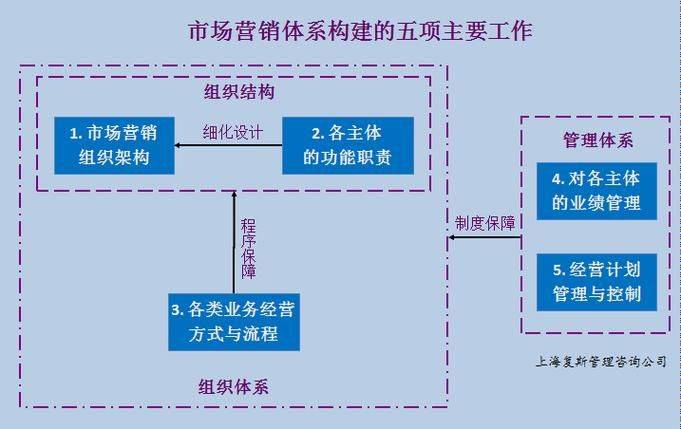
The marketing structure is the backbone of the marketing system, which defines the specific level of marketing, the main set-up at each level, the management relationship between the various marketing agents and the manner in which the various types of business resources are allocated. Among these, in addition to marketing staff and marketing managers, operating resources will include other resources that are important to business and competition, such as pre-sale technicians, engineering budget personnel, excavators, etc., and will also need to be integrated into the marketing system。
In general, the thinking and construction of marketing structures should follow five steps in turn, as shown in figure 2 below. This is illustrated by a typical multi-type business enterprise, where a single business type enterprise can save a fourth step。
1 the marketing architecture is tailored to the demand characteristics of each type of business. There are often significant differences in the demand characteristics of different operations, and these differences tend to vary in the way they are marketed. Where focused, long-tracked marketing is more suitable for important customers or for major corporate operations, its use in general design operations is either ineffective or too costly; furthermore, different marketing modalities for different types of business often require different marketing structures to support and safeguard them. For example, the way in which a systematic business (cross-subject or multi-regional) is marketed typically involves the participation of the head office or the regional and sub-companys, while the sub-companys are less in need of assistance, such as regional assistance, i. E., the hierarchical requirements in the marketing structure, the requirements of the participating subjects, etc. Thus, the first step in thinking about marketing structures is to analyse in depth the demand characteristics of each type of business in the portfolio and to design the basic structures that each requires。
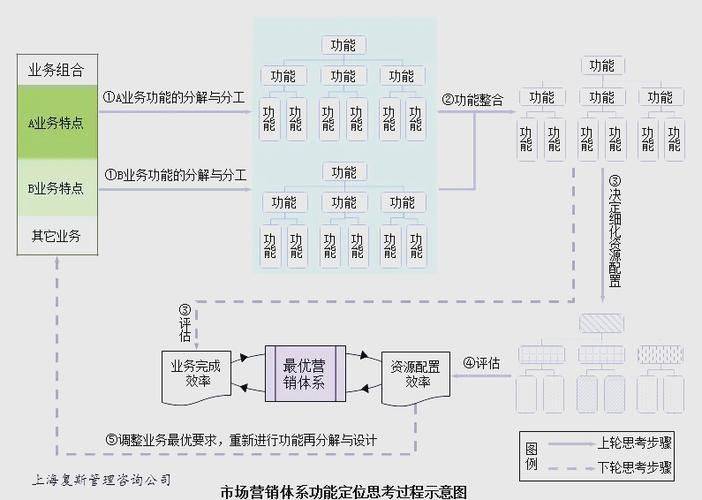
2 design their respective marketing structures based on the regional distribution of each type of business. For different businesses, different regional distribution characteristics need to be met by different marketing structures. Where the client base of an enterprise-type business is relatively clear and concentrated in several major regions of the country, the two-level marketing structure can meet basic needs, while the regional distribution of another business is very dispersed and numerous, requiring at least three or even four levels of marketing to fully meet its sales and sales management requirements。
3 the basic architecture for each type of operation is constructed through “one-time integration”. The basic structure presented on the basis of the needs characteristics and regional distribution of each type of operation may not be fully consistent, as there may be differences between the two in terms of hierarchy, main set-up or allocation of resources, which requires integrated design. System integration, on the other hand, is not simply a hierarchy or a combination of principals, much less a merger of the same items, and the organization that results in it may not be acceptable whether it is efficient or cost。
4 the basic architecture for all operations in the business portfolio is constructed through “secondary integration”. If one integration is not easy, then the differences between the marketing system structures are even greater because of the type of business. Based on the experience of brahma, such secondary integration is usually much more difficult and is a common challenge for multi-business business organization design (see methodologies and examples of strong mission design for more details)。
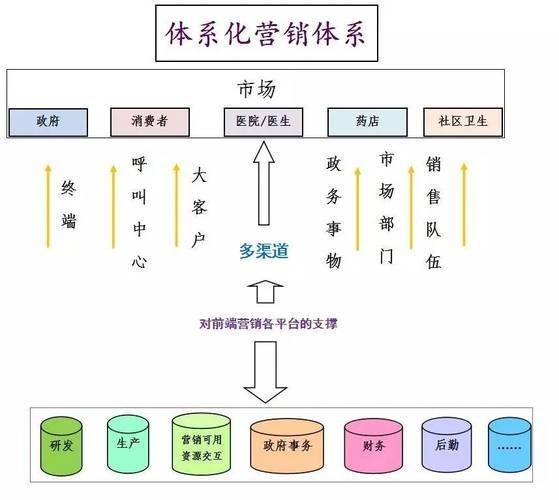
5 make necessary amendments to improve marketing structures. The thinking that has preceded is primarily holistic and general, and what has been obtained is only basic architecture, with many other important factors influencing the establishment of marketing structures. For example, the basic architecture has been further revised according to the position of each type of business in the portfolio, the requirements for phased development and the focus; the main set-up and resource allocation of the marketing structure has been re-adjusted according to differences in the maturity of the market in each region for the first type of business, differences in the timing of the entry of enterprises into each region, differences in the pattern of competition in each region, etc。
(to be continued)
**** [shanghai shoes management consulting corporation/psychic management column]***



