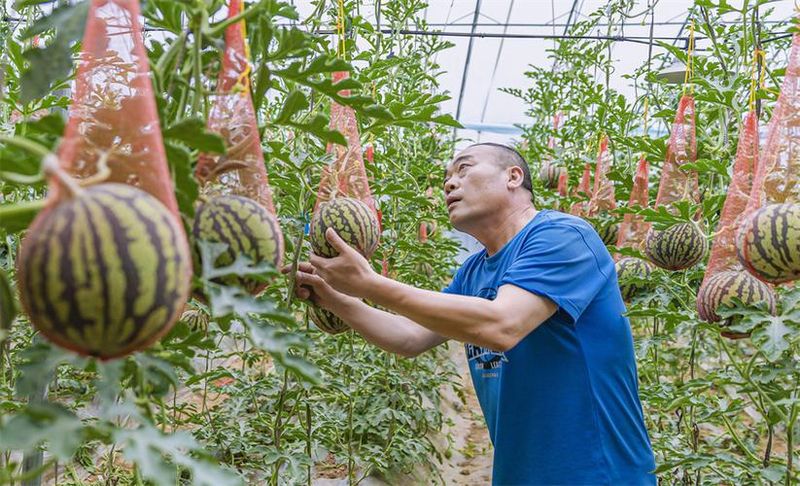
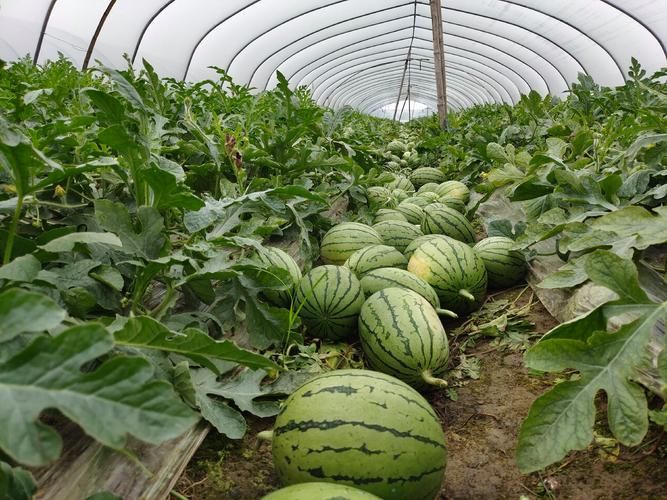
Peach trees, which are the tree of quavico, have been born for many years with fruit trees that are beautiful in their fruits, tender in their flesh, rich in many nutrients, a fruit that is very popular in nature, growing fruit under natural conditions, matured early in june, and matured in late october and early in november. Peaches are not stored like apples and pears, making it difficult to eat delicious peaches in winter and spring. As the economy develops and the people's standard of living improves, demand for fruits tends to diversify and diversify, requiring supplies for the anniversary year, so that the cultivation of the shantytons emerges。
Peach larvae grow at a fast and easy pace, and in the winter of the year when the tree was planted, the result was the immediate flowering of strangulation, with economic benefits for the following spring. Sun, lacey city, shandong province, was planted in the town, producing 240-488 kg of spring acreage in the second year of tree planting, 1350 kg in the third year of spring, 2250 kg in the fourth year of spring, and an income of 20,000 yuan in acre. The economy of zhang village, in the city of weihai, shandong province, where the pomegranate protected land was planted, amounted to 877 kg of spring acre production in the following year. Compared with land-based cultivation, a high-input, high-output production model, in which a unique set of technologies has been developed, we present below the main technical measures for peach-tree cultivation。
I. Types and structures of plastic sheds
Peach tree sheds are usually grown in a plastic thin-film solar greenhouse known as the plastic shed. Depending on the size of the tree and the earlyness of the expected fruit to be marketed, a different plastic shed is chosen, and in order for the fruit to mature at the end of march and the beginning of april, a winter-heated plastic shed is to be used, which is generally 7 to 8 metres wide, 50 to 80 metres long, with a back of 2. 8 to 3. 2 metres high, a back wall of 1. 6 to 1. 8 metres high, a back slope of 1. 5 metres long, a back wall and a wall on both sides, usually with a dry stubble wall of 60 to 80 centimetres thick, low price, good temperature protection, a pillar generally being a concrete pillar, a skeleton structure of 60 to 80 centimetres apart, and a new polyethylene-free membrane. The shed is about 23 degrees above ground angle. Construction of a 60-metre-long, 8-metre-wide shed at a cost of approximately $800-900. Where possible, a steel-free, winter-heated plastic shed, with brick structures and higher prices, would require approximately $20,000 for a 60-metre-long, 8-metre-wide shed。
The winter-heating plastic sheds, which are east-west and north-southward, could be built on two slopes if the trees planted on the land for several years were planted。
Ii. Varieties selection and cultivation density
In order to achieve the current demand for pre-planting, i. E. The early marketing of fruit, which is grown in large sheds, it is necessary to choose early ripening, i. E. The characteristics of varieties suitable for protected cultivation。
The fruit period is 60 to 70 days, or more than 8 days。
Refrigeration: the cooling of the selected species is low, i. E. The cumulative time required to satisfy natural hibernation is short and the cumulative time below 7. 2°c is less than 850 hours. In addition, large-plant farming should, to the extent possible, choose varieties that are self-pushed, have high yields, have large fruit, are well coloured, of good quality and are more transport-resistant. The variety of plants currently being tested is common peaches: spring buds, early blooms, etc. Peaches: may red, dawn, rae 1; peach peach: morning peach。
Configure pollination trees: despite the high rate of self-absorption in most of the peach species, differentiating pollination can significantly increase sit-in rates, so that pollinating trees are generally cultivated, with the ratio of pollinating trees to the main plant species being 1:3-4 and lined or interlined. The larvae are generally planted north-south, with a permanent range of 2 m 2. 5 - 3 m or 3 m 4 m. The length of the line of the pre-plantation, with a variation in the method of planting during the post-harvest period, is 1 m 1. 5 m or 1. 5 m2. One year later, the plants fell or were planted elsewhere. During planting, organic fertilization of 4,000-5,000 kg per acre was combined with soil improvement。
Iii. Management in front of shacks
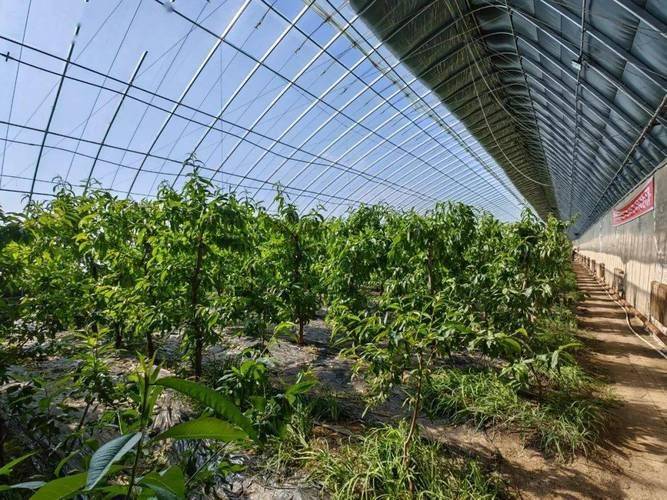
The peach tree sheds are heavily invested, thus making full use of the rapid growth of the peach tree and its early characteristics, strengthening its management and achieving the benefits of the year in which it was planted, the year in which it was flowered, the year in which it was held, and the spring in which it was produced。
Strengthening of larvae management:
After planting, they are set to dry at 30 to 40 centimetres, usually with two main branches each, and when new branches grow to 30 centimetres, they take care of them, prompting a second increase in the nutritional area。
Creaming: new steps in other areas need to be trimmed and removed in a timely manner, and new steps with a better angle should be sprained, with branches to support them, and two years of direct seeding。
Fertilizer: starting at the end of april and beginning of may, urea is followed up three times every 15 to 20 days, urea is 8 kg/acre, potassium dihydrophosphate is 5 kg/accre, fertilization is followed by water and gill temperature increases. The rapid and long birth of new leaves, with every 10 days a leaf fertilizing, 300-500 times a urea or 400-500 times a photolytic microfat, can significantly increase the light co-operation of the leaves and promote new growth. In mid-july, a general cooling volume of 333150-200 times more can be effective in inhibiting new growth and promoting bud formation, combining 300 times more potassium phosphate and 500 times more photolytic micro-fertilizers for sprayed leaves to improve the quality of buds。
Time of the shack
The increase in temperature depends on the completion of the natural hibernation of the plant varieties, which generally require low-cooling varieties, and the early and late confinement of the shacks, which runs from late december to late january. The sooner you cover, the sooner you mature. To ensure full natural hibernation. In the middle of december, it is safer to use the first cooling of the shack, artificially facilitating the completion of the hibernation by covering the lawn curtains during the day, in late november, preventing the sun from coming into the shed, keeping the temperature below 7. 2°c below that of the shed, lifting the straw curtains cold at night for 15 to 20 days, then moving to heating, gradually increasing the area of the curtains during the day, and slowly adapting the peach trees to the normal warming phase。
Another basis for determining the time of the shack was the expected date when the fruits were on the market, and the expected lateness of the slots, which could avoid centralization。
V. Table management
Temperature control: the roots of the peach tree begin to grow at 5°c, i. E. At 17 - 18°c, and in order for the roots to grow earlier than the top of the ground, the membranes become warmer one month before the stubble, so that the membrane rises in harmony between the ground and the upper part of the ground, starting with the stairwell with a warming period of 7 - 10 days, the temperature in the stairwell gradually rises to 15-20°c, the temperature rises to 14 - 18°c and the relative humidity of the air reaches 40 - 60%. The temperature in the flower shed is appropriate at around 20°c, not higher than 25°c and not less than 5°c at night. In order to ensure that the temperature is not less than 5°c, a fireplace is used to heat up or light alcohol lamps in the event of a cold flow. Relative humidity does not exceed 60%。
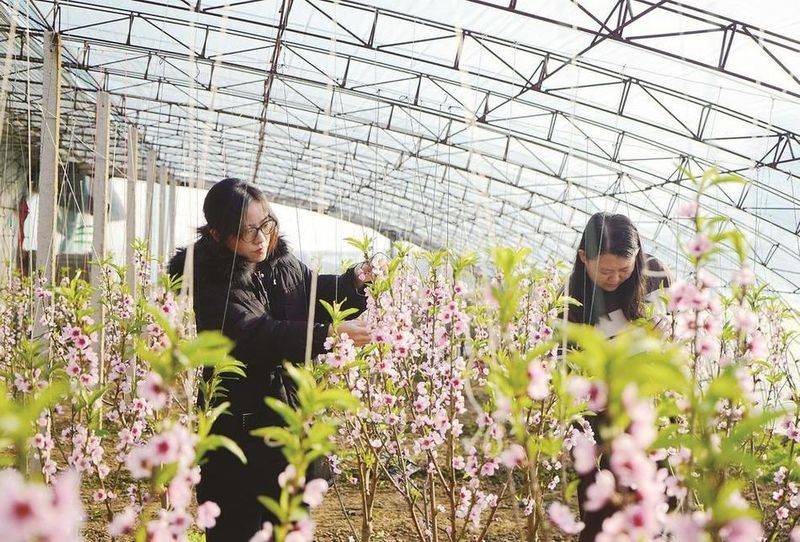
Fruit expansion period: the day temperature is controlled at around 25°c, not exceeding 28°c and not less than 10°c at night. When the temperature and humidity are high, the ventilation window and the operating door are opened, the ventilation vent is replaced by the ventilation vent, which is generally open at the height of the shed, and when the temperature is high at a later stage, the vent is also opened on the edge of the front slope of the shed, so that the hot air rises from the top and takes the heat and water。
Light control: lighting is essential for plant photosynthesis, and peach trees are also radiant crops, so light in the shed is important for normal growth results, with artificially assisted light when light is too weak to ensure normal growth。
Flower management: in order to increase sit-in rates and ensure a sufficient number of fruits, artificial pollination, such as the use of chicken pellets, hand-powdering, the planting of beehive pollen, and the spraying of fertilizers, which are to be put in one week before the blooming of flowers, is to bees are to be adapted and insecticides are to be banned during bees。
Succeeding: too many fruit must be artificially treated to ensure an increase in the fruit, which usually takes place three weeks after flowering, with three or four long fruit branches, two or three medium fruit branches, one or two short fruit branches, and one or two large fruit varieties。
The principles of tree management are to ensure adequate nutritional space while controlling excessive nutrient growth, promoting fruit growth, timely leaves, heart-picking, twisting and control of new steps left behind, suspension of downfalls, improvement of light conditions and promotion of fruit colour。
Fertilizer management: in order to reduce the evaporation of surface water, reduce humidity and increase the temperature of the ground, the ground is to be covered, water is to be pumped in front of the shacks, and water is to be kept to a minimum or not. The pursuit of fat should take place before the bud, during flowering and fruit expansion periods, in the best interest of compound fatting, with special attention to the application of leaf-faced fats, and take 10 days to spray urea or phosphate with urein or potassium phosphate once every 10-15 days, two or three times in a row。
Pests and pests control: pests and pests in large poaching trees are mainly aphids, ashilosis, bacterial perforation, etc。
Prevention and control of the pests and pests of the giant peach trees:
Aphids: pre-premature: graphite combinations of 3 to 5 readings in bomi. After 10-15 days: aphids are treated with 1. 5 times the wettable powder of 2. 5% lice。
2. Ashilosis: 80 per cent of the irradiable powder is treated with 800 times more liquid when it occurs in the shed. It is also possible to use 250-450 grams of fumes per acre or dust agents, such as: 5 per cent mirex, 6. 5 per cent carolin, 5 per cent mecium, etc., and 1 kg per acre。
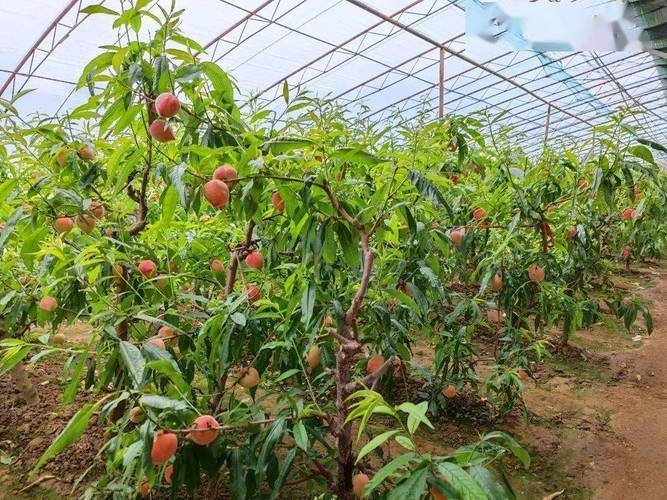
3 bacteria perforation: 200 mg/l sulfate. Post-cancer pest control is based on terrestrial cultivation. The price of the fruit grown in the protected area is high in one early word, and the sooner the market is ready to buy it, the sooner the fruit is ready for harvest, but the harvest is timely, the early harvest tastes poor, the late harvest is not durable for transport, usually takes eight or nine maturity, the maturity of the fruit in the different parts is not consistent, the harvest is divided and is sold in small boxes。
Vi. Administration
After the harvest of the fruit, the long overlaps, the vertical rise and the cross-cutting of the branches were removed. There is a space for the straightness of the angles to be sprawled or twisted to induce them to form buds. The result branches were retrenched, re-emerged, the main branches were removed from the competition, and in mid-august, they were retweeted repeatedly, and multi-effected tectonic controls were sprayed。
Autumn stimuli: lay the groundwork for the second year of production, perform plastic trims after the fall of the peach tree and before the shacks, wipe the twigs and long backs, wipe the twigs of the peach trees that have been born for many years, and have space for large branches to be shorter in the right places. Cultivation results are sprawled and tree heights are controlled in order to facilitate the continued holding of sheds. Growing in large huts changes the natural growth rhythm of peach trees and turns spring and spring into winter. The following issues should be highlighted in order to pick up the peach trees。
1. The selection of varieties suitable for large shed cultivation, such as spring buds, may fire。
2. The type of plastic shed to be selected and the appropriate time to hold it, depending on the scheduled time of listing。
3. Reasonable control of the humidity in the shed, the requirement to ensure cooling during the preceding period, the result of flowering and the need for long leaves and long fruit for mild humidity。
The introduction of artificial pollination to increase the rate of nuts, the use of such measures as chicken pellets, and artificial pollination to ensure that sufficient fruit is produced, thereby ensuring greater productivity。
5. Strengthen the management of fatty water to ensure the demand for fatty water during the growth of peach trees。
6. The introduction of an anniversary trim will now control the height of the tree body to meet the requirements of shantytown cultivation, as well as sufficient nutritional space to ensure balance between results and trees. My nursery has oil no. 4, which is suitable for new varieties of peaching trees in large sheds, and which include absconding, spring snow, sprout, sprouts, typhoid, red may, etc., which are pure and disease-free and have no middleman in their home, and which is an ideal option for farmers and their friends to grow wealth. 15688823020