


In 2025, the year of admission to the “1455” programme, china handed over a bright “checklist” in the field of international cooperation on intellectual property. Over the past five years, china has adhered to the concept of the “community of the destiny of mankind” and has integrated international cooperation on intellectual property rights into the country's overall foreign policy. It has fully participated in the reform of the global intellectual property governance system. It has deepened bilateral and multilateral cooperation mechanisms. It has contributed to the creation of an open world economy and to the promotion of innovative and sustainable global development。
To serve the country's foreign service
“china has always attached great importance to the protection of intellectual property rights (iprs), has advanced further in the building of a strong intellectual property power and has made historic achievements in the cause of intellectual property rights (iprs), and has moved beyond a path of development of chinese-specific iprs. China is ready to work with all parties to continue to strengthen cooperation, firmly uphold the international multilateral system of intellectual property rights, contribute chinese wisdom and chinese programmes to create an international environment conducive to innovative development, promote a more just and rational development of the global intellectual property governance system, and contribute china's energies to the well-being of humankind.” in october 2024, the president, xi jinping, addressed a message to the international association for the protection of intellectual property (iipi) world intellectual property assembly in 2024, demonstrating china's high priority for intellectual property work, declaring china's commitment to working together to advance international intellectual property protection and giving new impetus to deepening international cooperation on intellectual property。
During the “1455” period, intellectual property rights, as a strategic resource for national development and as a core element of international competitiveness, were proactively integrated into diplomatic top-level design, served the diplomacy of major powers of the new era and “resonant with national strategies”。
In may 2024, the memorandum of understanding on cooperation between the national intellectual property administration of the people's republic of china and the ministry of economy of the united arab emirates in the field of intellectual property rights was successfully signed in the presence of the head of state of china (united arab emirates); in the same year, the leaders witnessed the signing of the agreement on cooperation in intellectual property rights between china (seyland), china and china, which incorporated the foreign affairs of the leaders, and the joint declaration of the ten-year vision for cooperation in intellectual property rights between the three countries was issued by the china-japan leadership conference
In this diplomatic chart of international cooperation, intellectual property cooperation along the way is undoubtedly a heavy chapter。
In september 2024, the beijing fall was marked by the convening of the third high-level meeting on intellectual property “the way forward”. More than 150 foreign representatives from nearly 70 national and international organizations working together to build a “one-way street” to explore new opportunities for intellectual property cooperation. Since the launching of the “one-way” initiative, china has established cooperation with more than 60 national intellectual property institutions and international and regional organizations that have established the “one-way road” and are implementing more than 110 documents on cooperation in the field of intellectual property. The results of this cooperation are reflected not only in digital growth, but also, more importantly, in the creation of a new paradigm of intellectual property-based external cooperation that effectively translates the institutional advantages of intellectual property rights into soft power for external interaction, as well as in the establishment of an institutionalized and normative platform for dialogue on scientific and technological cooperation, economic and trade exchanges between countries。
“during these years, we have been deeply involved in a series of `across the road' of bilateral and multilateral cooperation with countries along the border, which has led foreign investors to become more convinced of kazakhstan's development prospects and more willing to develop and implement new technologies in kazakhstan and to accelerate our development in education, ecology and the economy.” according to the deputy minister of justice of kazakhstan, botagoz zakselekova。
Those who will not take the mountains and the seas far. With the convergence of innovative consensus, china's “friend circle” has gradually expanded. As of september 2024, china had established bilateral cooperation on intellectual property with more than 80 countries and international organizations around the world, and was implementing more than 200 intellectual property cooperation agreements. It was deeply involved in institutional cooperation between china, the united states, japan, china, asean and central africa. It promoted the upgrading of intellectual property cooperation among the brics countries. It had achieved the mutual recognition and protection of 246 central european geographical marker products and had completed the second batch of 350 product lists。
Active participation in global governance
“for 50 years, china has been firmly committed to the international multilateral system of intellectual property rights and has continued to expand and deepen in cooperation with the world intellectual property organization (wipo). China has always attached great importance to the protection of intellectual property rights (iprs). China has further implemented the construction of a strong state of intellectual property rights (iprs). It has strengthened the legal and regulatory guarantees of intellectual property rights (iprs). It has improved its intellectual property rights management system. It has continuously strengthened the protection of intellectual property rights throughout the chain and continuously optimized the innovation and business environment.” in april 2023, president xi jinping addressed a message to china on the occasion of the fiftieth anniversary of its cooperation with the world intellectual property organization (wipo) and the promotion of the events held at the main venue of the week, which gave full recognition to the fruitful results of china's 50 years of cooperation with wipo, and reaffirmed the chinese government's principled position on the protection of intellectual property rights。
During the fourteenth five-year plan, china participated in negotiations and negotiations between the world intellectual property organization (wipo) general assembly and professional committees to improve international rules on intellectual property. To contribute chinese wisdom in areas such as big data, artificial intelligence, genetic resources, etc.; to provide chinese programmes in the implementation of global development initiatives and in upholding sustainable development。
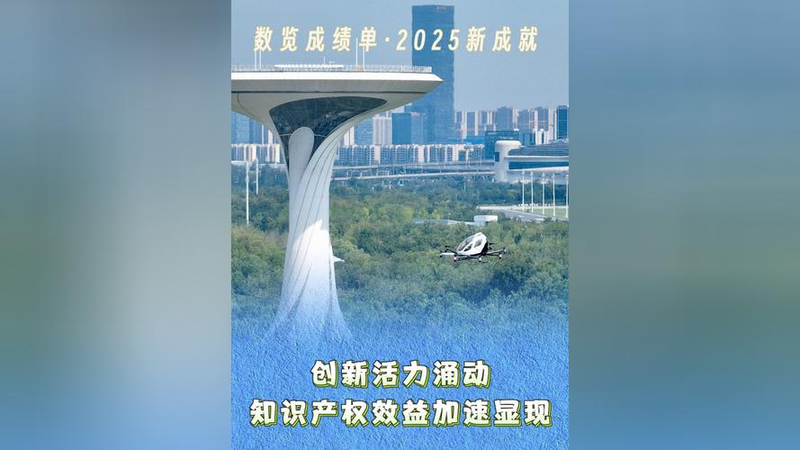
In 2024, china achieved a double breakthrough in global intellectual property governance - promoting the successful conclusion of the wipo treaty on intellectual property, genetic resources and related traditional knowledge (hereinafter referred to as the wipo treaty) and the riyadh treaty on appearance design law. China has played a constructive role in this process and has earned the highest appreciation of the international community。
After 25 years of negotiations, the wipo treaty was another important new treaty on intellectual property protection adopted following the marrakesh treaty on facilitating access to published works for persons with blind, visually impaired or other print impairment. “the wipo treaty, which has the dual purpose of enhancing the transparency of patent applications and protecting genetic resources and traditional knowledge, sets coordination objectives that take into account the interests of developing and developed countries, and is expected to play a coordinating role in the relevant national or regional legislation. Zhang naegen, director of the centre for intellectual property research of the university of jordan, assessed this。
From 11 to 22 november 2024, at the diplomatic conference of the world intellectual property organization on the conclusion and adoption of a treaty on the design of appearances, held in riyadh, saudi arabia, the chinese delegation took a constructive, professional and flexible stance to help bridge the differences between developed and developing countries and promote the successful conclusion of the treaty. The president of the foreign affairs assembly wishes to express his appreciation to the chinese delegation for its role。
“in recent years, china has continued to explore innovations in the field of intellectual property, and the intellectual property ecosystem has been optimized. It has contributed significantly to domestic innovation and has set an example for global intellectual property development.” the director-general of the world intellectual property organization, deng hun sen, highly valued the intellectual property industry in china。
At present, china's innovation subjects have been the world's largest in the number of international patent applications submitted through the patent cooperation treaty (pct) for six consecutive years; the number of pph partners has risen to 33 covering 84 countries; and 151 technology and innovation support centres (tiscs) have landed in china. China has become an active builder, an important contributor and a firm defender of the international intellectual property system。
Building a culture of innovation
“china was, is and must be an ideal, safe and productive destination for foreign investment, and it is with china that it is with opportunity and believes that tomorrow, investing in china is investment in the future.” in march this year, president xi jinping made a sincere invitation to foreign-owned enterprises to share opportunities and develop together when he met with representatives of the international business community at the beijing people's hall。
During the “1455” period, china insisted on equal treatment and protection of intellectual property rights (iprs) of domestic and foreign enterprises, and responded positively to the concerns and demands of various types of enterprises, attracting an increasing number of foreign enterprises to invest in china. The data show that, as of february 2025, more than 119,000 foreign invention patents were authorized in china; more than 160,000 foreign trademarks were registered in china. In 2023, the satisfaction of foreign enterprises with intellectual property protection in china reached 80. 55 points, an increase of 1. 44 points over the previous year。
“a system of administrative protection of intellectual property with chinese characteristics has given us an unprecedented sense of support and convenience. The joint administrative and judicial protection model provides both a quick, flexible advantage of administrative protection and guarantees the authority of judicial protection, providing a comprehensive and multi-layered guarantee of intellectual property protection for foreign enterprises in the chinese market.” in an interview with the newspaper’s correspondent, the vice-president of technology and chief indigenous innovation officer of phoenix electric china corporation stated that china’s exploration and practice in intellectual property administration had not only provided a more secure, stable and predictable market environment for foreign enterprises, including phoenix electric china, but had also injected more dynamism into the global intellectual property protection system。
And behind this is a strong support for china's comprehensive and multi-layered system of intellectual property protection and services. By the end of 2024, the national intellectual property agency had approved the construction of 124 national intellectual property protection centres and fast-track defence centres, with more than 193,000 new subjects registered, more than 75 per cent of them private enterprises; a cumulative 80 sub-centres for the management of foreign intellectual property disputes had been set up, providing professional and public-interest overseas defence guidance through the docking of enterprises; the pool of experts in the management of overseas intellectual property disputes had been continuously expanded; and the shipping of private enterprises had been “off to sea”。
A year and a spring to start a new game. For the “fifty-five”, china will contribute more to global innovative governance with a more open posture, more innovative thinking, and more inclusive rules, so that the light of intellectual property rights will light up the future of common human development. (reporter zhang binbin)



