Article title
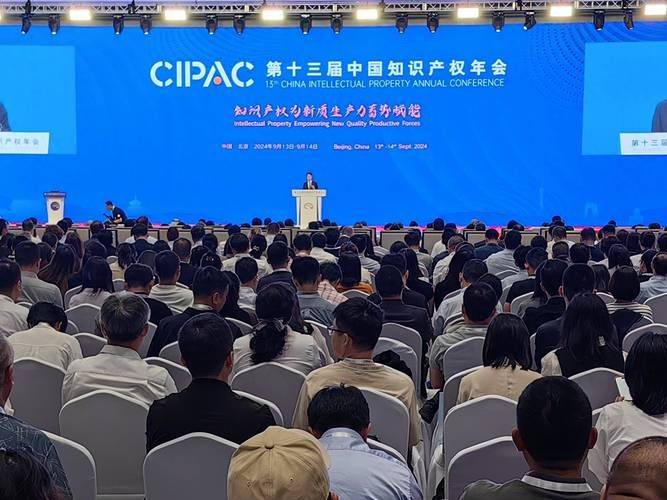
Recently, the national intellectual property agency, the ministry of education and others issued the opinions on further optimizing the business environment in the area of intellectual property. It is clear that by 2027, the level of commercialization, rule of law, internationalization and facilitation in the area of intellectual property rights will have increased significantly, intellectual property rights will have improved their quality, efficiency in application, protection effectiveness, management level and overall service capacity, intellectual property rights governance services will have been optimized, business and public satisfaction, access will continue to grow, and the role of the business environment in the area of intellectual property rights will have increased in promoting high-quality development。
The opinion suggests that mechanisms for the marketing of intellectual property rights should be improved to help build a high standard market system。
Sound intellectual property innovation incentives. (b) sound distribution systems that are oriented towards increasing the value of knowledge, and increasing the autonomy of universities and research institutes to dispose of intellectual property rights, including through transfers, licences or investments at a price, to facilitate the realization of intellectual property values. Strengthening the regulatory management of job inventions, deepening the reform of the empowerment of job science and technology outcomes, improving mechanisms for the distribution of the benefits of intellectual property rights, including the equal rights and obligations of firms, researchers and technology transfer agencies, and improving due diligence and tolerance mechanisms for patent conversion. (c) promote the in-depth integration of productive studies and strengthen guidance on the development of intellectual property rights provisions of the technical research cooperation agreement, leading to a reasonable agreement on the form of cooperation, division of tasks, investment, intellectual property rights, distribution of interests, risk sharing and liability for default. Support to universities, research institutions to establish intellectual property management funds and operating funds。
Promote the healthy and orderly development of intellectual property services. (b) actively promote the delegation of supervision of patent agents, entrusting the supervisory functions of provincial patent agencies to the municipal level (municipality of the municipality directly under its jurisdiction) and strengthening the monitoring capacity at the grass-roots level. In-depth evaluation of patents, trademark agents ' credit evaluations, timely disclosure of the results of evaluations by agencies and practitioners, and guidance to enterprises and people in selecting agents. Strengthening the regulatory regulation of the copyright agency industry. Strengthening administrative enforcement, credit regulation and sanctions for breaching intellectual property rights agents in accordance with the law. Improving the self-regulatory rules governing intellectual property agents, strictly restraining the disruption of market order such as low-priced competition, improper commitments and the maintenance of good industrial ecology。
Improving market-based pricing and trading mechanisms for intellectual property. Improve the valuation criteria for intellectual property rights, continuously publish patent enforcement licensing statistics and copyright registration data, and guide patent holders to scientific, fair and reasonable estimates of royalties. Pilot internal evaluation of bank mortgage financing to guide financial institutions in improving their capacity for autonomous evaluation. Encourage innovation in financial products such as intellectual property insurance, credit guarantees, and take full advantage of financial support for intellectual property conversion. Accelerate the establishment of a sound intellectual property trading market, improve the mobility and disposition of intellectual property assets and promote intellectual property regulatory transactions。
Enhance the synergistic protection of intellectual property rights. Increased protection of original innovation for private msmes. Strengthening administrative enforcement protection of intellectual property and combating intellectual property violations by law. The development of rapid mechanisms for the handling of intellectual property administrative decisions, such as referrals, assistance in investigations, service to enforcement, and for the rapid and coordinated protection of intellectual property decisions, as well as in close collaboration with the state. The system of intellectual property credit regulation is well established, the criteria and procedures for identifying persons who are seriously disbelieving in the field of intellectual property are regulated, and the penalties for those who are seriously disbelieving in the field of intellectual property are prescribed by law. (c) strengthening the dissemination of information on trademarks, patents, intellectual property products, administrative licences, administrative penalties, etc., based on the national system for the publicity of business credit information. Strengthen anti-monopoly regulatory enforcement, prevent and suppress abuse of iprs to exclude, limit competition, protect fair competition in markets and promote innovation。
Promoting synergistic innovation between standards and patents. Strengthening the linkage between patent review and standard-setting, the development of promotional standards involves patent policy guidance and the integration of autonomous intellectual property rights (iprs) into technical standards. Develop standard necessary patent licensing guidelines to promote fair and reasonable licensing of standard required patents and to prevent enterprises from using standard required patents to enforce monopolistic practices. Establish databases on the subject matter of patents required for standards and open access to the necessary patent information for standards。
The opinion makes it clear that the rule of law guarantees of intellectual property rights are strengthened to better support comprehensive innovation。
Improving intellectual property laws and regulations. (c) expedite the development of a new version of the trademark act and its implementing regulations, strengthen the obligation to use trademarks and further strengthen the regulation of acts such as malicious pretences. Expedite the revision of the accompanying legislation on copyright law. Improvement of the design code for integrated circuit maps. (c) to promote specific legislation on geographical indications and to develop a unified system for the protection of geographical indications that is coordinated with the protection of trademarks. (c) directing the strengthening of local regulatory systems for intellectual property rights。
The development of intellectual property protection rules in new areas. To advance research, such as rules on intellectual property protection in frontier technology, and to provide intellectual property protection in emerging areas. In-depth pilot work on data intellectual property rights to expedite the construction of rules for data intellectual property protection. Explore the refinement of open-source standard norms, study the development of open-source intellectual property compliance standards, open-source community contribution rules standards and raise the level of open-source intellectual property protection。
Innovative model of patent and trademark diversity review. The multiple review models, such as the integrated priority review, serve the key core technical hurdles, further expanding the pre-trial areas of local intellectual property protection centres, in line with regional development needs and local priority industry needs, to better meet the pre-trial needs of innovative subjects for rapid patent determination. Optimizing the fast-track review model for trademark registration applications, allowing for rapid review of graphic trademarks, improving the enforcement of priority review decisions in the context of trademark rejection of applications for review and challenge, and better supporting parties to defend their legitimate interests quickly. Expedite the establishment of a collaborative evaluation mechanism for trademark reviews and continuously improve their quality and efficiency。
Improving the rules for the review of patent trademarks. Publication of guidelines on patent applications and typical cases of irregular patent applications to guide the improvement of patent quality. (c) deepen the mechanism of proxy quality monitoring and trigger regulation, centred on the management of irregular patent applications, in order to achieve precision and precision. Promote the establishment of conflict resolution mechanisms for business names, acronyms and trademark rights and strengthen regulation. In the context of ensuring data security, promote the sharing of information on patents, trademarks and business owners, deepen synergies in the field of trade marks review and the registration of business owners, explore mechanisms for the marking and disposal of registered trademarks that have disappeared as rights holders, release trademark registration resources in a timely manner and help solve the problem of trademark registration difficulties。
Improving institutional mechanisms for the registration of copyright. To promote the establishment of a unified national copyright registry system and to further regulate the registration of works, the registration of copyrights in computer software, the registration of copyrights, the registration of foreign copyright contracts, the licensing of copyrights and the filing of assignment contracts. (c) detailed standards for the registration of copyrights, research into the development of an information platform for copyright data services, the enhancement of the digitization of copyrights, the progressive development of online copyright registration, the development of a system of public access to copyright registration, data transmission and statistical analysis, and the promotion of the integration of copyright registration, searching, monitoring and advocacy, with a view to providing better quality and easier services for the development of related industries。
The opinion notes that increasing the internationalization of intellectual property services is a strong incentive for openness。
Deepening international exchanges in the public service. Cooperation with national intellectual property review bodies to deepen review information-sharing is continuously strengthened. (c) to promote cooperation with the project on intellectual property information and data resources for countries and regions in the context of the establishment of a “one way forward”. Support to the conditional technology and innovation support centre (tisc) for the international exchange of intellectual property information public services. High-level foreign institutions are encouraged to come to china for intellectual property services. Deepening international cooperation on geographical indications and encouraging the development of research on the external language versions of the standards related to geographical indications in order to enhance the international impact of our brand of geographical indications. To provide guidance and support to chinese enterprises in upgrading the value added and competitiveness of their brands, improving their ability to operate internationally and creating a good image of their brands. Cooperation with national copyright authorities to enhance copyright influence and voice continues to be strengthened。
Strengthening guidance on responding to overseas intellectual property disputes. Local deployments in trade-intensive countries and regions are encouraged to establish intellectual property desks. A professional and efficient overseas dispute management guidance service is provided to enterprises based on the overseas intellectual property dispute management guidance sub-centre. Subsectors have been organized to create a directory of priority export enterprises and to increase assistance for the defence of rights. Support insurance institutions to develop and roll out more overseas intellectual property insurance products, and promote the establishment of overseas intellectual property rights aid funds to assist enterprises to reduce the cost of advocacy. Timely collection and dissemination of information on foreign legal regimes governing intellectual property rights, development of databases of foreign intellectual property litigation cases, development of case studies, and provision of information support to enterprises in responding to foreign intellectual property disputes. Increase the development of foreign-related intellectual property legal services, strengthen the capacity of foreign-related intellectual property legal personnel, and enhance the professionalism and relevance of corporate guidance in dealing with overseas disputes。
The opinion calls for the facilitation of intellectual property policy services and the enhancement of the efficiency of enterprises。
Advance process optimization and model innovation. The continuous reduction of patent and trademark change processing cycles, and, in general, the review of book changes involving the transfer of patent rights should be completed within one month, and the initial review of trademark transfers and changes should be completed within 40 and 20 days respectively. Full implementation of notification of commitments at the patent fee reduction chain, improvement of ex post verification and risk prevention mechanisms, and further facilitation of business and public access. Based on the pooling of resources of regional government service centres and platforms for government services, the promotion of business registration and brand change “one application, one set, one window, one window,” explores the integration of intellectual property business with other sectors of the enterprise that are more relevant throughout its life cycle, and provides more “one-stop-shop” services to enterprises and the public. It regulates the national intellectual property agency's political services hotline, continuously upgrades its access rate and the capacity of its responders, and establishes a robust “on-demand” mechanism to better function as a window for the public at enterprise level, keeping abreast of questions and suggestions and responding to corporate demands。
Deepening the digital empowerment of public services. Based on the national intellectual property protection information platform and the copyright-related information platform, the right-holders ' exclusive service space is constructed to facilitate the right-holders ' access to all patent, trademark, copyright, geographical indications, integrated circuit chart design information, and to send timely reminders of payment deadlines, progress, etc. To explore the application of technologies such as large models of natural languages, to improve intent recognition and precision of responses to online smart passenger service, and to optimize services such as smart questions and answers, smart searches, smart coaching, etc., in order to better guide the corporate public to work efficiently. Accelerate the development of an integrated public service platform for the digitalization of national intellectual property rights, deepen data-sharing and operational synergies between intellectual property rights and economics, science and technology, administrative law enforcement, judicial protection, market regulation, further promote the application of electronic licensing of intellectual property rights, and achieve cross-regional cross-sectoral cross-fertilization of electronic certification。
Optimizing the public service system of intellectual property rights in private enterprises. (b) continuous improvement of the intellectual property public service network, further enhancement of the effectiveness of the national intellectual property information service (niisic) and the national intellectual property information public service point (nips) services at the tertiary level, and strengthening of support for strategic science and technology and services in priority industries. Support the establishment of service stations in priority industrial parks and science and technology parks by public service institutions for intellectual property, with full coverage of priority parks for intellectual property services. The publication of the national standards for intellectual property public services, which promote non-discrimination in intellectual property operations throughout the country. Strengthening brand-branding public services, conducting analytical use of brand-branding information, and leading and supporting public-service institutions to increase service support for regional brand-building and enterprise brand-building。
Standardize service assessment evaluations. Improve communication mechanisms for business-based business-based business, conduct ipr public service satisfaction assessments, go-live the ip service's “good rating” system, publish evaluation results in a timely manner, and develop a service evaluation mechanism for evaluation, rectification, feedback and monitoring the process interface. Maintaining a high-quality development orientation, optimizing the design of intellectual property-related evaluation indicators, and not directly incorporating quantitative indicators such as intellectual property registration authorizations, transfer transactions and so forth into evaluation indicators, will accelerate the shift in intellectual property from quantitative to qualitative improvements。