Zan trees are a perennial cash crop that, once planted, can benefit for many years. In the past, under traditional agricultural methods, farmers did not plan scientifically for the planting of sanctuaries, mostly on the basis of the size of the crop and the demand. As a result, the traditional sanctuaries in many places have not grown in size, or even in number. In some areas, san gardens are planted in the surroundings of the cropland of the main food crops, forming four-side sanctuaries. Although this method of planting makes full use of arable land resources, it does not allow for large-scale salve output and high economic returns. This must be avoided in modern sanctuaries. The planting is therefore preceded by scientific planning and implementation in stages and stages. Today, the tea breaker talks about the details that need to be taken into account in the sauna science plan, hoping to give some reference to the needing sanon friends。
I. Selection of suitable planting areas for high yield
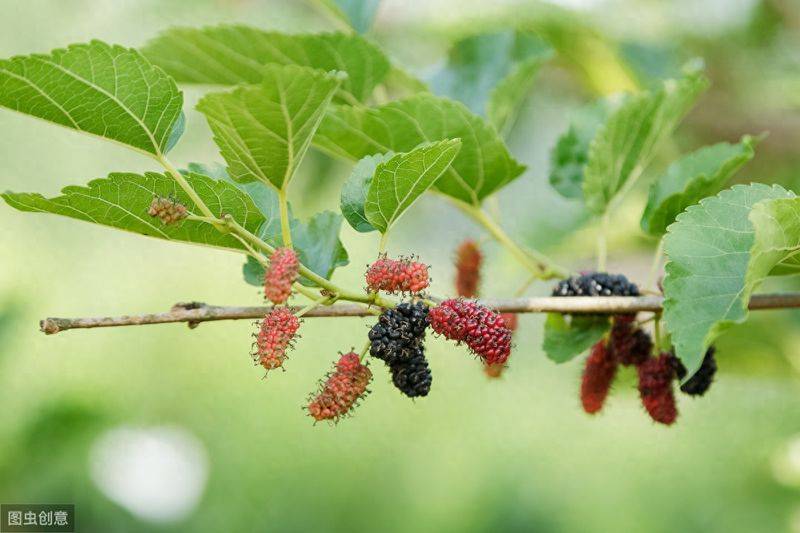
We are all aware of the wide range of areas where san trees are cultivated in our country, as it is highly adaptable and less demanding for environmental factors such as temperature, moisture, soil and light. But being able to grow and obtain high-yield quality is a completely different concept. It's just a sign of survival. The quality of production is not only to survive, but also to live well and be able to provide additional economic value to sanon friends. It is therefore important to select suitable areas for planting during modern scale sanctuaries。
First, the average annual temperature should not be too low, otherwise it would result in shorter growth cycles for san trees. The normal growth temperature of the sank is 25-30 degrees. It is usually less than 12 degrees, and sank trees will enter hibernation. At temperatures above 40 degrees, the growth of san trees is inhibited。
Second, rainfall must not be too low, otherwise it must be irrigated. The water content of the soil most suitable for the growth of san trees should be maintained at 70 ~ 80 % of the maximum water holding in the field。
Thirdly, the soil must not be too infertile and the cropping layer must be at depths above 40 cm. Soil alkalin ph values between 5. 5 and 7. 0 are most suitable for sank growth. The soil is mainly fertilized or sandy。
Fourth, the infrastructure around the san park should be robust to facilitate harvesting and management. In essence, san tree cultivation is a labour-intensive industry, and sauna harvesting is entirely manual. Growing on a scale must take into account the adequacy of the labour force and the simplicity of its operations, which, with labour savings, can lead to increasing labour efficiency。
Ii. Avoiding industrial pollution as much as possible to ensure salve quality
Industrial environmental pollution such as factories, mines and so on must be taken fully into account in the planning of modern-scale sanctuaries. Because the silk is a very precious animal that can't be poisoned. A brick kiln was built at the village's entrance at the tea house. Coal burning at brick factories produces toxic substances such as sulphur monoxide and sulphur dioxide, which seriously affect the growth of sank trees. A large number of sannon harvests contaminated salves, causing poisoning and heavy losses. Finally, at the strong request of the villagers, the brick factory was able to recover from the environment。
Thus, sanctuaries of scale must be built at least 5-10 km away from mines and factories. In particular, attention should be paid to observing the trend of the local perennial winds, especially during the production season. Sandland must be built up in factories and mining areas to mitigate its impact. In addition, we need to note that in areas where some of the crops are grown, such as tobacco and pyrethroids, cultivation is also to be built separately from the san park. The distance between the two must remain at least 100 metres or more。
At the same time, in areas where there are a large number of factories and mines around san tree cultivation, the direct use of groundwater and river water during san tree irrigation is minimized, as they are likely to be contaminated by effluent from the plant. There are even highly toxic chemicals and oil pollution, as well as heavy metal elements. Clean and non-polluted water sources must be used during sauna irrigation。
Iii. Optimizing the benefits of selecting the appropriate scale of cultivation
The country has a complex rural economy and a diverse industrial structure. Although sanctuaries are grown in most parts of the country, many of these areas are not predominantly sanctuaries, but are more often side industries. As a result, in the process of modern sanctuaries, it is not said that the greater the scale, the greater the benefits, but rather that it is measured in an integrated manner, based on actual local developments and the type of major industrial structure。
In general, it is desirable that the economic benefits of planting sauna trees in a given area account for 25-30 per cent of the total agricultural revenues of the region. This is in line with the overall planning requirements for the development of modern sanctuaries. If sank cultivation is too small and results in poor economic performance, it can significantly affect farmers ' motivation to grow. This is a vicious circle, where farmers are less motivated, and the scale of cultivation is further reduced, ultimately leading to lower economic benefits。
Of course, it's not as good as the size of the tree. The larger the size, the better the accompanying infrastructure, the more human and land resources are invested and the greater the other costs. If the level of business management fails to keep pace, the production and quality of san tree cultivation will decline and economic efficiency will be affected, resulting in more and less cropping。
Based on current spring-spring farming techniques, approximately 100 boxes of silk sanctuaries require basic sanctuaries of 6-7 hectares. One thousand grams of ants in cocoon sauna require basic sauna of 10-13 hectares. There is, of course, a combination of local labour resources, the number of specific arable land, food and other crops of their own, in terms of the size, size and quantity of the specific cultivation of the cinnamon. For some of the heavy-breeding towns and large-breeding households, an appropriate expansion can be made, as determined by their actual production needs。
Fourth, a rational tree age structure is needed to stabilize development in the long term
In planning for modern sanctuaries, we must take into account the age structure of the trees, not that one-off lots of planting is a joyful one-off. Because sanctuaries have their own patterns of growth, they cannot be maintained at high-yield quality levels. There is a certain difference in the number of years of high production depending on the species of san trees. In general, the periods of high birth are 5 to 9 years for low-lying and 9 to 15 years for middle-gansang and up to 20 to 30 years for high-birth periods。
It is therefore important to rationalize the timing of planting for different sanctuaries and to achieve it in a phased and proportional manner. After planting, proper maintenance and management are carried out to reach a reasonable and appropriate proportion of tree-age positions. In general, there are more than 80 per cent of the sabbatical trees that can be harvested in large quantities, and no more than 20 per cent of the sabbaticals and sabbaticals are in need of care。
San leaves can only be avoided as far as possible if they are managed in an orderly manner. Large ups and downs of leaf production can ensure a generally stable number of per-year larvae and long-term sustainable development, thereby guaranteeing the long-term economic benefits of the san farmers。
Fifth, selecting the right species to ensure economies of scale
Many sannons buy sorbents on the market, often because of too many varieties. In fact, there are many species of pine trees, but in addition to genetic factors, local planting environments and climatic characteristics must be taken into account, and better economic gains can be achieved only if they are adapted to local conditions and are selected for cultivation。
In the two broad regions of south china, because of high temperatures and abundant rainfall, the choice should be made for larger leaves, thicker leaves, faster maturity and more productive varieties. For example, the terms "gui sang-yo 12", "sang 11" and "sang guangdong". In the eastern part of china, where the climate is mild and rainfall moderate, preference should be given to high-yield, high-pregative and disease-resistant sanctuaries. For example, “anosan 14”, “sun of toyota” and “lusan 32”. Sichuan zhongqing has planted a variety of varieties, such as little crown san, flower san, black oil san, and west farm 6071. In the hebei region, it has been economically efficient to produce wind sands in “destrian” and to prepare agricultural tools and skin paper in a balanced manner。
In addition, the use of modern technology in sanctuaries must be taken into account in planning modern sanctuaries. For example, mechanization has been replaced by earth-opening, construction of modern irrigation facilities, automation of mechanization of fertilizer, scientific monitoring and forecasting of pests and diseases, etc. The real modernization of cultivation is possible only with the constant improvement of scientific planting and cultivation management, which will save the labour force, increase its productivity and maximize its economic benefits. This is the role and ultimate destination of planning prior to the sauna planting。