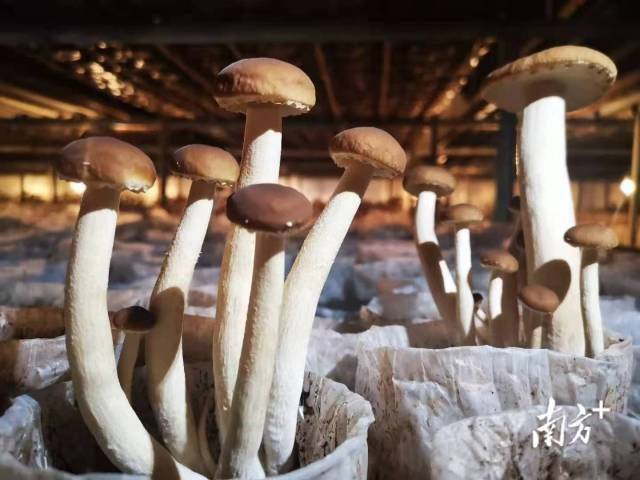
Tea mushrooms, commonly known as tea mushrooms, yang mushrooms and so on, are known as agrocyde cylindracea (dc.) gillet, which is tasteful, fresh, fragrance-free and nutritious. It is reported to have a high protein content of 29. 51 per cent (dry products), 0. 16 per cent in fat, 0. 06 per cent in fibres and 46. 22 per cent in carbohydrates, mainly carbohydrates and proteins. There are 177 amino acids forming proteins in tea mushrooms and essential amino acids in humans account for 27. 94 per cent of the total volume of free amino acids; trace element analyses of minerals show that: zn79. 3 μg/g, fe 79. 2 μg/g, cu 18. 9 μg/g, mn 25. 2 μg/g, mag 3021 μg/g, ca 3607 μg/g. Chinese medicine considers tea mushrooms to be flat, glycerine, wetting, urine, spleen stomach, etc., as one of the most popular fungus foods of today's feasts and drinkers。
The country's artificial cultivation of tea mushrooms began in 1972, and in 1990 a large area of artificial cultivation was successfully and on a scale in jiangxi guangchang county. In recent years, there has been a rapid increase in the production of tea mushrooms, which, according to the chinese association of pesting bacillus, amounted to 92,000 tons in 2003 and to 73,000 tons in 2016。
I. Developmental requirements
1. Substrate nutritional conditions
Tea mushrooms are wood fungus but have less capacity to use woody. The activity of the protein enzyme is 10 times greater than that of the fungus, and the incorporation of suitable sources of carbon and nitrogen in the culture base, such as cotton seed shells, corn straw, rice mills, beak skin, soybean bread powder, peanut powder and teaseed powder, can significantly increase the production of mushrooms。
2. Environmental conditions
Tea mushrooms are medium-temperature edible fungus, which grow at temperatures of 6-30°c and at a maximum temperature of 25-27°c; the original base division is wide, with a physical division of 10-30°c at 18-24°c, which is more difficult to produce under 17°c, and no mushrooms under 10°c。
During the growth phase of the fungus, it is appropriate to have a growth base of around 60 per cent with water content, which is faster and slower than the other. When a sub-entity is formed, the relative humidity is 85 per cent, which promotes the growth of the sub-entity。
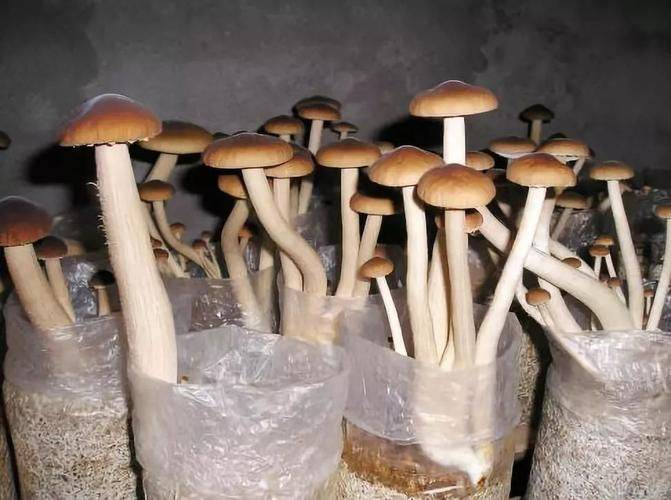
Light, light can inhibit the growth of the fungus. The luminous irritation of the original foundation formation and sub-entity development takes 500 to 1,000 lekdis, and the mushrooms are clearly photogenic. In the process of surrogate planting, the use of a cardboard system, like a golden needle and mushroom cultivation, allows for the acquisition of small, long-stamped products
Ventilating tea mushrooms are good aerobics. During the growth phase of the fungus, the bags are ventilated with cotton, and during the physical development period, normal ventilation is required. A per-hour ventilation is required。
The ph range is between 5 and 6. 5. The ph value of the culture base has not changed significantly during the mushroom-producing phase, ranging from about 5. 77 to 5. 87, which means that there are very few organic acids produced in the metabolic process。
Type of strain
The strains currently used for production are relatively uniform, mainly in tea and brown, and white species are not used for commercial cultivation because of their lower quality and production than tea and brown。
Iii. Plantation raw materials and matrix preparation
The planting material is based on cotton husks, maize cores, wood crumbs, and is supplemented by a small addition of gills, corn powder, teaseeds, with the following recommended formulations:
1 cotton seed shell, 83 per cent, gill skin, 15 per cent, lime 2 per cent
2 cotton seedshells, 40 per cent, maize cores, 20 per cent, soybean straws, 23 per cent, americ skin, 15 per cent, lime 2 per cent
20% cotton seed shell, 20% wood crumb, 20% corn core, 23% soybean straw, 15% wheat, 2% lime
Forty per cent of wood crumbs, 35 per cent of cotton seed cases, 6 per cent of maize powder, 18 per cent of wheat mill and 1 per cent of beans. Add 1. 5% lime to the total。
5 wood crumbs 38 per cent, cotton seed shells 38 per cent, gill skin 16 per cent, corn powder 7 per cent and lime 1 per cent。
6 tea seedshells, 40 per cent, wood crumbs, 20 per cent, maize cores, 18 per cent, lime, 1 per cent and beans, 1 per cent。
Seven tea seed shells, 40 per cent, cotton seedshells, 20 per cent, maize cores, 20 per cent, millet, 18 per cent, lime, 1 per cent and beans, 1 per cent。
8 lsd 20%, cotton 20%, maize core 40%, wheat 18%, lime 1%, beans 1%。
Iv. Cultivation methods and processes
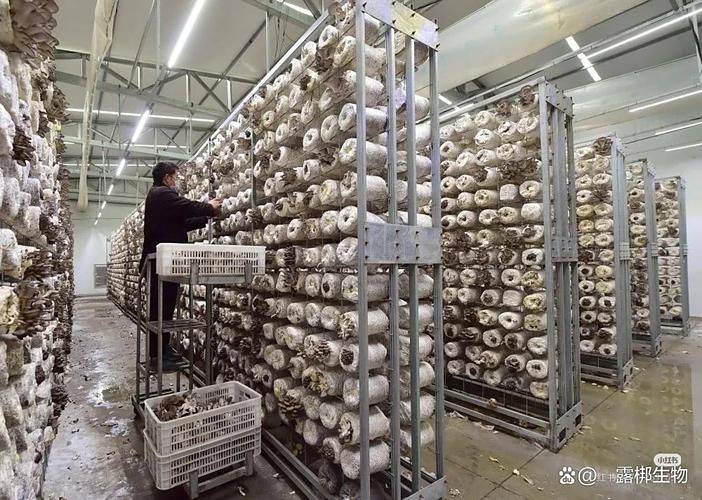
At present, tea and mushroom cultivation is generally carried out in plastic bags, with both of the wall-shaped mushrooms, and one-sided and one-sided mushrooms. Cultivation seasons are based on different geographical climatic conditions, with the southern sector dominated by spring mushrooms from the fall and winter poles, and the northern cold areas with spring sticks, summer mushrooms, and the southern sector with the wrong season. The introduction of the plastic bottle factory chemical cultivation model has become a new trend in tea mushroom cultivation。
(a) the tea mushroom bagging process: the pre-treatment of pre-package raw materials for the preparation of suitable formulations is determined on the basis of local resources。
Nutrient-based mixers, bags, fungicides: bag sizes of 15-17 x 33-35 cm, approximately 400 g of dryware per bag, water ratio of 1:1. 2 ph are generally not subject to special adjustment. The material is made from the base or side of a mushroom, which affects production and quality. When bagged, use constant or high-pressure vapour inoculation. It cools down to less than 30°c and is moved to inoculation rooms (boxes)。
(b) bacillus culture: the slower rate of fungulation of tea mushrooms, the weaker life of the fungus, and the average time of the fungi for 40 to 50 days, thus preventing the contamination of the fungal bags, strictly controlling the temperature of the fungi, and preventing high temperature fungi, such as if the temperature was below 15°c, should be appropriately warmed, and the temperature should be reduced by 30°c to make it normal。
Shroom management: when mybs grow full of bags, they are moved into the nursery (preferably disinfected), they are unplugged, they are emptied with small spoons, they are emptied to the surface, they are properly discharged on the floor or on the shelf (80 bags per square metre), or they are spread over the walls. Under normal conditions, mushrooms can be produced about 60 days after the vaccination of the tea mushrooms, and the filament changes from nutritional to reproductive growth, and the colour of the fabric changes, with yellow water at first, then brown and little mushroom buds. During this period, all doors and windows are fully ventilated and light is increased, room temperature is maintained at 18-24°c, the relative humidity of the air is controlled at 90%-95%, and the light is controlled at 300-500 lex, with two to three ventilations per day for 30 minutes each, in case the oxygen is too high to lead to the early opening of the umbrella, short bacterial handles, and thinness. The relative humidity of the air is controlled at 85% to 90% after the length of the mushroom bud to 3 to 5 cm, reducing light intensity and increasing ventilation as appropriate, i. E., as the body develops. But be careful that the mushroom period avoids a strong wind blowing straight to the mushroomlet, which causes death. Be careful with ventilation during the rainy season, which could also cause the death of mushrooms。
Collecting and laying mushrooms management: when the submersible bacterium lid begins flattening and the bacterium ring is not removed. Due to the brevity of the bacterium, which can easily be broken, the extraction should be carried to the base to prevent injury to the young mushrooms. After harvesting, the bag is cleaned, the bag is assembled, the fungus is given about three days' rest, or the fruit is given less water, water is added to the bag, extra water is poured out after 8-10 hours, air moisture is increased to 90-95 per cent and a mushroom is grown after 5-7 days. And repeat this management. Seven days later, another mushroom can be grown, or 5-8 mushrooms can be harvested。
V. Major disease types and control
During the mushroom season, tea mushrooms are most vulnerable to multiple pests, especially spring and summer festivals, mushrooms and mushrooms are very attractive to mushroom flies, mushrooms are highly fertile, a female flies can produce 300 eggs, mushrooms are larvae-like, and larvae are ferocious in material, entering the fungus from the base and eating the whole body of mushrooms in serious cases. An effective way to prevent mushroom flies is to install webs in the doors and windows of the planting house; to take care of the environmental health of the mushroom house and the eradication of mushroom fly breeding grounds outside the house; to fly sticky cedars or insecticidal lamps; and to spray pesticides regularly on and around the premises of the mushroom. If the fungus bag has already been affected by mushroom flies, the fungs have been sprayed with a sharper 5% suspended agent, 1,500 times more liquid, or 0. 1% of the cactus and its surroundings, and the spraying time has been selected during the fungus interval; fifthly, the enticing insects can be lured into insects by the use of sweetenergic baits, which are made by imitating rice or flavour with insecticides such as sugar, vinegar and dichlorvos; sugar and vinegar are used to the degree that stronger sugar flavour can be distributed; the bait can be placed at the door of the saloon house and in other non-operational locations; or the space of the house can be placed in mosquito nets. (ho qing soo)