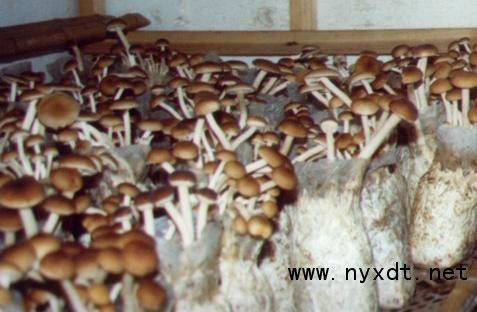
The tea mushrooms are grown under natural conditions on and around the rotting roots of the woody tea forest, mainly in the spring, summer and mid-fall. Regenerative forests are more likely to occur after deforestation. Owing to the strong nature of the oily trees and the slow rate of decay, the filament of the tea tree has a long growth cycle。
The mushrooms are considered by chinese doctors to have the effect of retrieving kidneys, urine, acreage pain, dampness, spleen and ablution, and are the ideal food for patients with hypertension, cardiovascular disease and obesity. It is delicious, delicious and has better health effects, and it is one of the delicious and rare edible bacteria. Tea mushrooms are so valuable, let's share their cultivation and management with you
I. Elements of cultivation
Nutrition: the tea mushroom is a wood fungus with less capacity for woody and cellulose decomposition. After artificial incubation, large leaves, such as oils, maple trees, willow trees, eucalyptus trees, and turquoises, can be used as planting material, but wood chips with less loose content and less mononins are more adapted to the growth of tea mushrooms。
Because of the weak capacity of the fungus fungus to decompose wood, and the high ability of the protein to decompose, it is necessary to add suitable organic nitrogen sources to the formulation to improve the production and quality of tea mushrooms, such as fresh rice beaks, beaks, peanuts, cottoncake。
In addition to the use of crumbs, sugar cane, straw, cotton seed shells, and grass can also be used as carbon sources. Single and double sugar are the best sources of carbon, and the use of starch, cellulose, etc. Is weak. Maximum c/n is 54:1。
Temperature: tea mushrooms are medium-temperature edible. Its fungus can grow at 4-35 °c, cease to grow at below 0 °c and above 35 °c, and die at above 45 °c. The fungus grows fastest at 25°c, stretching 7. 5mm, 20-28°c per day and growing faster。
Humidity and humidity: cultivation of tea mushrooms should have a water content of 60-65 per cent, i. E., hand-stamping of a culturer, force-stamping, wetting between fingers, a little water but not flowing, loose fingers, suitable for spreading after landing. However, there is a slight difference between the different types of wood crumbs and the finer, which should be managed flexibly. The relative humidity of the air is required to be less than 70 per cent when the fungus grow; the developmental period of the sub-entity is 85-95 per cent, with appropriate long-term reductions to prolong product preservation。
Air: tea mushrooms are gaseous large fungi that are sensitive to co2 and have a high concentration of non-gasic co2 that can lead to slow growth of the fungus, coarse bacterium handles, small bacterium caps, early umbrellas, malformations. The fungus chamber has to be ventilated between one and two times a day at the time of its growth, while the plant room at the stage of its growth has to be ventilated three to six times a day, depending on the circumstances。
Light: no light is required for the culture of mybs, and 150-1000 lx light is required for the physical growth of the foundation formation. Sub-entity growth is clearly photogenic and, under certain conditions, products with small covers and long handles, such as golden fungus cultivation。
Acid alkalinity: the tea mushroom fungus filamental acidic environment is most suitable for ph5. 5-6. 5, ph up to 4 or above 6. 5 microcosm growth is thin and slow。
Cultivation season: the tea mushrooms show relatively high temperatures and have longer reproductive periods. The subtropical areas can grow on an anniversary, depending on their climatic characteristics, as long as they manage winter warming。
Choice of place of cultivation: the tea mushroom bag can be planted indoors and the plastic shade can be built outdoors。
Ii. Cultivation methods
1 seasonal arrangements allow for spring and autumn cultivation under natural conditions, with an average annual humidity of 19. 7°c in fukuzhou, so that the autumn plant is usually vaccinated at the end of july-september, mushrooms grow after october, and mushrooms have a long duration until june of the following year. Spring plantings are scheduled for vaccination in march and mushrooms are released in may-june, but spring plantings need to be kept warm, sub-entity temperatures are high in the later stages of growth, poor quality and prone to pests and pests, and yield less than autumn plantings。
2 – plant formulation – a suitable source of organic nitrogen, such as fresh rice mills, beryllium, groundnuts, peanut shells, etc., must be added to the formulation to improve the production and quality of tea mushrooms, given the weak capacity of the fungus filamentation of wood and the high capacity for decomposition of proteins. Taking into account the high cost and low usage of cotton in the fukuo region, adjustments were made to the conventional formula to select the most appropriate nitrogen ratio of 54:1 formulation, i. E. 52% wood crumb, 26% cotton crust, 19% gill, 1% sugar, lime, 1% plaster, 1:1. 3 water, planting results, thickness, high quality and high yield of the fungus, compared to the conventional formulation。
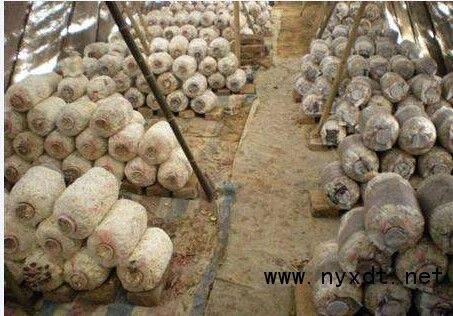
A polypropylene bag of 1. 5-17 cm x 34-38 cm is used to plant the above-mentioned formulations in a bag, with a hole in the middle of 0. 25-0. 35 kg (wet 0. 5-0. 7 kg) per bag of dry materials, with rings and thongs or ropes, with a large amount of cultivation, and a group of five persons may be arranged for semi-mechanized bags with multi-cylinders and mixers. The bag should be filled with 1. 5 kg/cm 22 hours in time, and the temperature should rise to 100°c within four hours, then remain at 10 hours and be suffocated overnight, with care to protect the cotton plume from the tide。
Inoculation is carried out in a timely manner in the cooling room, at 30°c, in an inoculation box or in an sterile room, with an appropriate increase in the inoculation rate of about 30 bags per bottle. In addition to keeping warm and humid, bacterial insecticidal during cultivation, proper ventilation and air exchange, repositioning of the tubes to balance growth, and timely clean-up of the bacterial bags found to be contaminated, for approximately 30 days, will be sufficient。
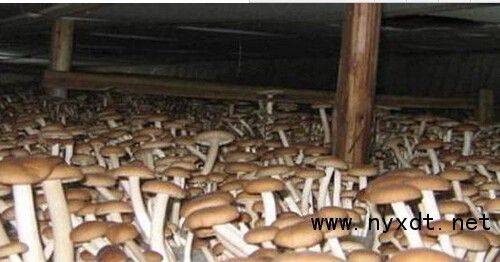
Five, mushroom management moves my fungus bags out of the mushroom field. An indoor mushroom room or an outdoor shampoo may be chosen to be carefully infested with insecticidal grounds, with the fungus being removed from the bag and placed on the floor or on the shelf, with a straight bag of thin film, covering the newspaper (a mass production can cover the plastic sheet), spray water to keep the air wet by 90 per cent. Temperatures are controlled at about 20°c and can be ventilated once in the morning and one hour in the middle night. In order to keep the mushrooms in shape, the fungus can be found to remove approximately 0. 3 cm of mycelium on the surface, but care is taken to prevent bacterial infections. In some places, directly covered on the bacterium bag, 1-2 cm thick, ground level, 10 days later, mushrooms sprayed into the soil, two times a day, after three days of continuous spraying, and three to five days of fungus leeches, with only some water being spilled on the ground to keep it wet, with a good quality and high yield。
6. After two to three weeks of mushroom management, the sub-entity can grow to eight years of maturity, and the fungus cover of the membrane membranes is not expanded. At this time, the product is of high grade, and it is generally appropriate to collect the whole range, after each wave, to clean the foot of the mushroom, to level the ground, to stop spraying and restore the fungus silk after five days, and to grow mushroom buds a week later. After winter, there will still be mushroom harvests in well-nourished springs, which will yield 3-5 tides, with an average bioefficiency of over 90 per cent。
Apart from root culture material, which can be marketed, a large number of classes can be sold to large, medium-sized cities in refrigerated lacquer packaging, with high-quality mushrooms requiring that the fungus be coloured, not umbrellaed, equal in size, thick, close to white, full in length; the baptism is spread, dark, thin or distorted and is secondary. In recent times, the market has sold more dry goods and the value of the goods has been higher, owing to the delicate taste and fragrance of dry products。
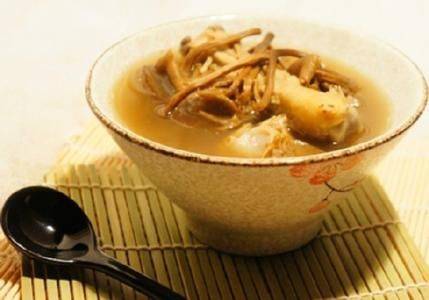
Finally, i want to introduce you to the healthy eating of tea mushrooms:
Tea mushroom chicken soup
Function: leathering, gastrointestinal cleanup, thinning。
Materials: dry tea mushrooms, 50 g, cut in small fractions, immersed in water for about 35 minutes. Four hundred grams of chicken, cut into small pieces, go to the kernel, ten dates, one date, one piece of ginger。
Practice: to burn water in the pot, to put all materials in open water, 15 minutes in the fire and 30 minutes in the fire。