


Soil sheeting, retortling, salinization without food ... These problems can be solved by a “bag”
In the spring of 2026, more and more growers chose to plant their vegetables in bags — that is, prime bags without soil。
During his visit to the facilities' agricultural parks, the author found that, unlike traditional farming in previous years, which had “slided towards the ground”, many “new gates” had emerged in the shed this year。
In modern agricultural bases such as shandong, jiangsu and jilin, a row of green vegetables is no longer rooted in the soil but is grown in a white “marine” bag. This model, known as “basic bag cultivation”, is becoming a “gold key” for addressing endemic diseases, salinization and obstacles。
Why do facilities agriculture target “bags” in the 15th year of operation
The year 2026 was the beginning of the “fifty-five” programme. According to the rural green paper, the central direction of agricultural development this year has been the shift from “stable supply” to “quality efficiency and weight” and, in particular, the investment in facilities and smart agriculture is increasing significantly。
In this broader context, the greatest pain faced by growers is no longer “inhabited”, but rather how to address the soil's “tired syndrome” in high-intensity replanting. The soil sheeting, the prevalence of the root vermin and the high salinization are “heart diseases” in many old areas. Traditional soil improvement is long-term and costly, and the cylindrical bag cultivation provides an entirely new idea — since the disease is over, we do not force a change of land, but build a “new home” for crops。
Depth science: why does the growers start to favor the “basic bags”
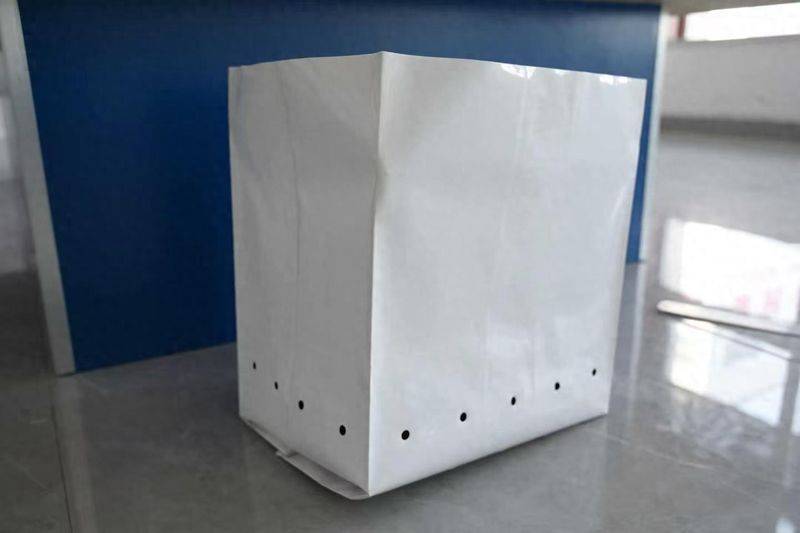
The landing of agricultural technologies is crucial for effectiveness. This model of “planting vegetables in bags” shows great practicality in spring tillage production this year, compared to traditional soil cultivation:
1. A complete farewell to endemic diseases and the breaking of the “re-emergence” topic
When growing through base bags, we use scientifically matched and completely disinfected matrices (e. G., coconuts, grass-grain, etc.). This environment cuts off the path of disease and nematode transmission in the soil. As li guangchou, an expert in lifelight agriculture, emphasized: “the bagging matrix has been treated, there is no vermin in it, there is no endemic disease, and nutrition is integrated and accurate through water fertilizer, which is better than a planting model.”
2. Precision control of water fertilizers, efficiency gains
The traditional cultivation of water for fertilization “dry water” is a waste and easily leads to roots. The matrix bags are combined with the drip irrigation system and form the microcycle of the drop arrow-base-root system. When fertilized into the bag, the matrix is fully adsorbed for slow absorption of the root system, with almost no leakage waste. In the spring of this year, in particular, water fertilizer integration has been introduced, and the use of fertilizers has been increased to more than 80 per cent by the use of the base bag cultivation, which has saved costs and reduced the humidity of the sheds and reduced the incidence of frosty and greyy disease from the source。
Breaking geographic constraints and changing “no hairy land” to “basket”
In jilin town county, where heavy saline lands were once “white flowers, unscathed” have now grown strong paddy seedlings by using biomass to breed the base; in jiangsu, since the local soil is so heavy as not to grow ginger, for the first time indigenously fertilized and soilless cultivation of ginger has been achieved by agrotechnical personnel through base bags, with an acre of approximately 2,500 bags, not only containing a disease rate of less than 0. 5 per cent, but also using waste recycling to reduce costs significantly。
This is amply evidence that the base bags have completely removed agriculture from dependence on primary soils. High-quality vegetables and vegetables can be produced, whether on saline, sand, or on the roofs and balconyes of cities, with a base bag and a water fertilizer system。
Practical guide: a good base bag. What should we do
With the proliferation of foundational cultivation technologies, the quality of planting bags on the market is uneven. As a consumer of modern facility agriculture, the choice of the base bag is directly related to the harvest of the season. In spring farming procurement in 2026, in addition to focusing on matrix formulations, growers tend to ignore the quality of the “containers” carrying all this — the planting bags themselves。
A high-quality base bag shall have the following characteristics:
Strong resistance to aging: the long growth cycle of a melon fruit and vegetable (e. G. Up to eight months of winter tomato) would result not only in the release of the matrix but also in the stripping of the roots, which would be lost all year round. Water permeability: roots need to breathe. Professional base bags are designed and material balanced between “lock water” and “water drainage” to avoid high-temperature roots in the summer。
In qingzhou city, for example, as a senior supplier of membrane and packaging materials in the country, the production of base bags with fresh imported raw materials and the addition of high-efficiency anti-aging agents have ensured that, in high-temperature, wet and wet sheds, the physical strength remains excellent and that the crop can be steadily accompanied through the whole process from the seeding period to the broccoli。
Designed concoct: the rubicon-based bags are crafted to take full account of the pains of soilless cultivation, and the unique drainage structure is designed to effectively avoid the flooding that is easily caused by traditional bags and to create a “temperate” growth micro-environment for crop roots。
Concluding remarks
From “adaptation” to “cultivation”, this is a microcosm of advances in agricultural science and technology. With the country's sustained investment in soybeans, oil and vegetable production in 2026, as well as the diffusion of networking, water fertilizer integration technologies, the simple, efficient and green model of base-based bag cultivation will become more than just a large-base “painting” and a new trend for future home gardening and urban agriculture。
A good technology “bag” is used to fill a rich “fruit”。



