


Tomatoes as vegetables with high nutritional and economic value, market for tomatoes
Ryuping, qin fengqin, li zing
Cuangxi, guilin 541199
Guangxi, guilin 541114
Abstract: as a vegetable, tomatoes are of high nutritional and economic value, the market is in high demand for tomatoes, and their cultivation is moving in the direction of expanding areas and technology towards higher yields. One of the main methods used is to plant tomatoes, which involves many aspects of selection, breeding, pest control, etc., and to capture the particulars of each cultivation has a very important impact on yields. This paper will be examined in depth from the technical points, management, etc., in relation to tomato cultivation in the south。
Keywords: south; shed; tomato; high-yielding cultivation
Foreword
For tomato cultivation, the south has sufficient light, heat and water resources, with a more advantageous advantage over the north. However, it is also due to better weather conditions in the south, where tomato cultivation is also faced with shortcomings such as inadequate drought resistance, which can provide better environmental conditions for tomato growth. At the same time, it is crucial to make full use of the technology used to grow the large sheds and to manage the cultivation of the tomato sheds. Based on the high production of tomatoes, the following measures are taken。
Scientific selection, soil, etc
First, in the selection of varieties of tomatoes, given the high number of diseases that can be caused by tomatoes, the selection of varieties that are resistant to disease, of good quality and stored, such as rubies, platinum, 988 and gretchen。
Second, the choice of soil for tomato cultivation is important and, in the selection of soil, the atmosphere, good quality of water quality, soil laxation, fertility and easy drainage should be chosen, with the fields that have not been grown for more than two years。
Finally, during the tomato cultivation season, the fall-planting option is available, depending on the local climate, etc. This can be done twice a year, usually in spring and autumn. Spring planting took place late in december of the year — early in january of the following year — late may-june, and autumn planting began in mid-october. Farming was generally planted in mid-august and late, in mid-september and on the market around spring。
Ii. Management of browsing
Tomato cultivation takes place in large sheds, starting with the construction of the huts, and needs to be managed in detail at every stage of its growth, from tomato breeding to planting。
(i) construction methods
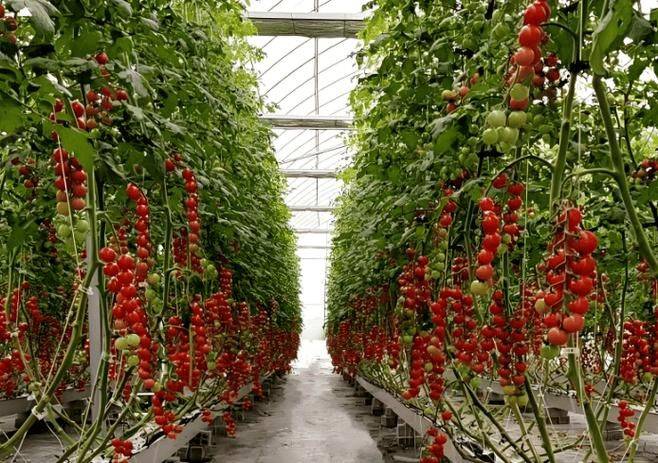
In order to ensure that tomatoes are grown in a good environment, reasonable scientific consideration is given to the choice of location, the selection of fields and the laying of plastic film. In general, the building of the sheds should be based on a north-south orientation, with the selected fields having better soil fertility and soil drainage. There is also a need to have a good ventilation capacity in the shed environment, so it should be constructed with a rational vent in conjunction with the southern season. The large sheds are built using a steel structure framework based on which plastic sheeting is laid, which uses materials of light quality, with higher perseverity and better insulation, thereby ensuring that tomatoes receive sufficient light to provide favourable conditions for the temperature during tomato growth. In the event of a high temperature difference between day and night, or in winter, a paddy pad may be laid on the top of the plastic sheeting for the purpose of temperature protection. Overall, tomato cultivation takes the form of a large shed, which first ensures the quality of construction and minimizes the decline in tomato production due to adverse weather conditions。
(ii) management of tomato breeding
(1) seed treatment
Seed disinfection and leaching seed sprouts are carried out prior to sowing, and the selected seeds are placed in warm water at 55 degrees for 15 minutes and then not immersed in water around 20°c 5-6h. Drumbs at 28-30°c。
(2) nutritional preparation
Tomato-breeding can be conducted live in the nursery or in a den-creeding system, with 50% mg. Or 70% or 5 g mettobuzin wettable agent, plus 1,000 mg of dry earth plastered into pharmacinous soil, with 2/3 of the earth before seeding and 1/3 of the soil covered with seed。
(3) shrimp management
Using 50-hole 72-crops, one-two seedlings are planted in each of the caves, covering the soil, watering the roots, and then being sent to the sheds or the arches. When the seedlings are released, the small arches are lifted in the middle of the day, so that they may be ventilated, and small arches and pastures are added at night. Shrimp periods can be served with 2-3 times thin fat, 0. 2 kg of imported compound fat, 50 kg of water in exchange for water, timely water management, around one leaf to prevent runoff, disease, etc., and the age of the seed is 5-6。
(4) standards of growth and abnormalities
They are 15-20 cm tall, they are free of pests and diseases and they are free of mechanical damage. High-temperature droughts cause accommodation, small leaves, yellow leaves, short nostrils, small plants and long roots。
(iii) tomato rotation management
The best for tomatoes are garlic, beans, cabbage, rice, etc., and other vegetables require more than three years of rotation。
(iv) placing and fertilization
Per 667 m2 of fertilized organic fertilizer 500-800 kg, calcium phosphorus 25kg, compound fat 50 kg, potassium 15 kg, wow 1 m wide, ditch 30-40 cm wide, ditch 20-25 cm deep, two rows, one pole or two poles in whole。
(v) plantation
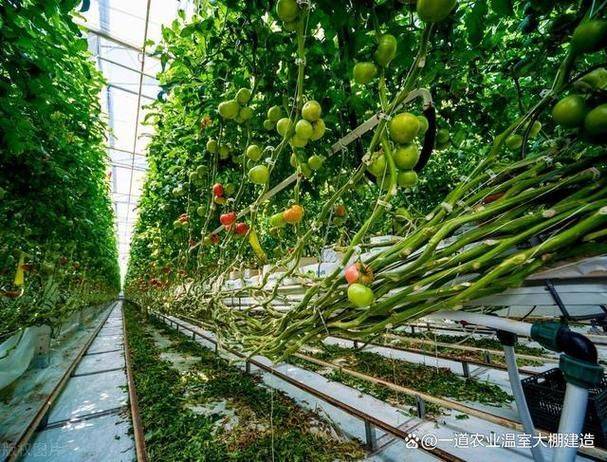
It's more sophisticated to plant a plant with a long line. The range of medium-later and infinite growth varieties is 70 x 80 cm, with 800 - 1100 plants per acre. They shall carry out the planting of land for the benefit of life。
(vi) field management
It is very difficult to plant in the south because of the annual rainfall output of around 2000mm, which is largely concentrated in spring, summer, early autumn. However, frequent rainfall in the southern spring and summer resulted in considerable humidity in the shed, making it difficult to plant tomatoes in the spring and summer sheds. Key one: ventilation is provided at 6-12 degrees, 1-2h, 13-15 degrees per d-ventilation, 4-5h per d-ventilation, more than 15 degrees per day; key two: prevention of disease, premature disease of tomatoes, night disease, grey disease, frosty disease, ailments, etc. Are common to tomatoes. Key three: strengthen water fertilizer management。
(1) fertilizer management
When tomatoes return to seedage, they are applied once, then twice every 7-9d, twice-3 times, 10 kg of urea per acre, 5 kg of imported urea, 5 kg of imported urea, and the plant enters the flower season, with p and k, 10 kg of imported fertilizer per acre, 3-4 times every 15d, in addition to 0. 2% of potassium phosphate, 0. 1% of beryllium, a total of 2-3 times, with no ditch irrigation and avoiding high humidity。
(2) accosted chicken
At 30-40 cm, the tomato must be tied to a chicken, under a shanty-laying method, with a 1. 6 m pole on both sides, and a 14 m bar on each side, with a 1. 6 m pole (skin bamboo) inserted at 10 cm from the tomato root, 10 cm deep, and then tied to the iron line, and eventually with the tomato plant on it, usually one chicken in each row。
(3) tightening
Tomatoes usually use two poles or a whole branch, each with six to eight nuts and five to six fruit per ear. The whole growth process requires the necessary removal of leaves, vegetables, etc。
(4) plumbing fruit
The first flower and the last flower are sprayed 1,000 times more each. When temperatures are lower than 15°c or higher than 30°c, use a compound anti-depressants dot flower with a general concentration of 20 pm and co-appliance anti-gruesome disease with anti-depressants and fun。
(vii) integrated pest management
Tomato production is also subject to a number of pests and diseases, in particular the prevention and treatment of infectious diseases。
(1) disease control
1 epidemic, pharmacist: 600 times more likely to kill 1,000 times or 64 per cent more than 500 times more。
2 greystery, pharmacist: 50 per cent cracking 1,000 times or 50 per cent plating 1,500 times
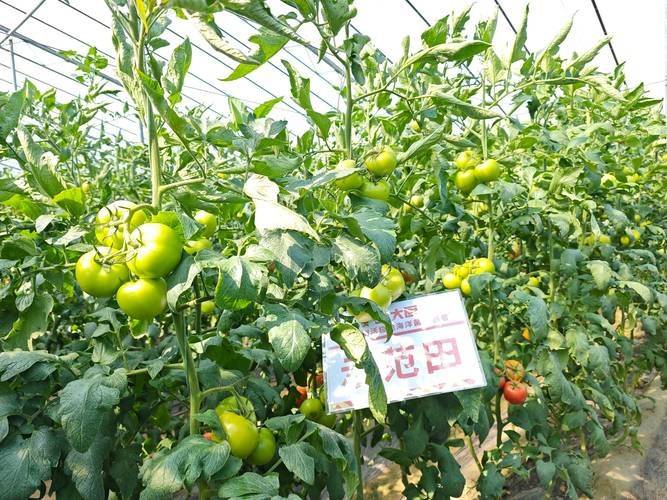
3-leaf, pharmacist: 2,000-fold (lower leaf spray)
4 umbilical, pharmaceutical: 1,200 times con park calcium。
5 decant, medicinal: 1,000 times the accelerin 10 times the copper 800 times the mixture of liquid root, at intervals of 7-10d and 2 consecutive times。
6 ulcer disease, drug: 1,500 times more than 1,000 times more than ethyl garlic。
7 decay, pharmacist: pygrin 600-800 times + glycol 1,000 times root。
8 viral disease, drug: 600 times more than kepk (hot) + k 600 times more than the leaf spray。
(2) pest control
1 plumbing lice, medicinal agent: aphids or acetone or aphids。
2 u. S. Zephyr: 18% of eftin emulsions 3,000 times + bacillus fungi, etc。
3 cyclops, cotton bellworms: polygonal viruses, or fungi, etc。
4 testimonial worms: 5 per cent of avimectin is 800 times root。
(viii) collection in due time
Tomato production should take place in the morning without dew. Normal tomatoes mature around 40d after flowering. Short-range transport close to sale is collected in red or half-red; long-range transport is collected in half-red。
Concluding remarks
In the light of the above, the southern stockhouse tomato cultivation should be based on the choice of highly disease-resistant and well-bred varieties; the implementation of tomato-water dry rotation, fertilization of formulations and scientific irrigation to reduce insect hazards; and the implementation of green pest control and the use of biological pesticides in integrated pest management. In addition, the cultivation of tomatoes for high-yield cultivation could be considered。



