The time of spring and the time of spring and the time of red pine rose。
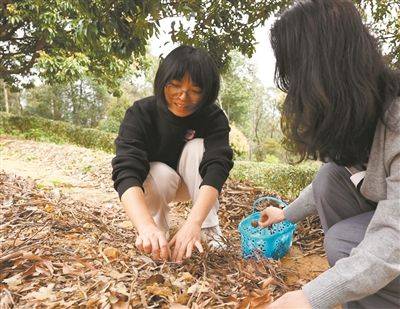
Wong suk-suk (left) is picking red pine。
When spring blooms, the red twirl continues to “embottle”, displaying their fat bodies and their discomfort. These lovely red thongs have become a new source of revenue for mr. And mrs. Wong. In recent years, with the emergence of the under-forest economy, a growing number of farmers have begun to grow their own resources, trying to grow a variety of special agricultural products, of which laxity has become the choice of many。
Try new industries under the forest
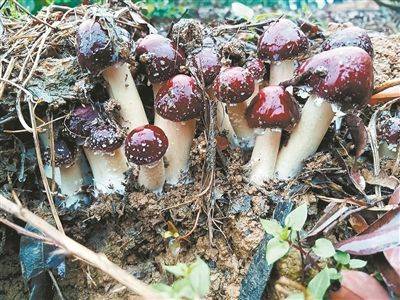
In the spring of march, journalists arrived at grand ridge forest park. The tea garden run by mr. And mrs. Wong is in the park, only under a tea tree with green oil, and a small mushroom with a white pole red umbrella emerges, cuddled, colourful and inclement. It's their new produce, red pine。
Red pine, also known as brown pine, commonly known as nephrinus mushrooms, colour mushrooms, etc., are of high nutritional value and contain a variety of ingredients, including active sugar, yellow ketone, vitamins and dietary fibres。
The tea garden of mr. And mrs. Huang is high in the mountains, clean in the environment, and the tea is produced in a thick, fragrance, which is greatly appreciated by tea lovers. In addition to the tea trees, they planted fruit trees such as twigs and oil crumbs in the garden。
“after october of each year, however, the tea park enters a winter break, and the income from agricultural products is slowly reduced to zero, and problems with the treatment of the trunks, leaves, tea leaves, etc., which have been trimmed by the tea tree and the scallop tree have caused us some headache.” in an agricultural training course, huang suk-suk stated that they had learned about the new strain of edible fungus - the red pine twig no. 1 - selected by the team of south china national botanical garden zhu fellows for climate conditions in guangdong province. The trimmed trunks, leaves and tea are added to the rice shells and maize straws and, when crushed, can become the base for red pine cultivation, not only to solve the problem of plant waste disposal but also to generate new sources of income for them。
As a result, mr. And mrs. Wong decided to test the tea garden with the red pine。
Filling the tea park's winter spring gap
According to huang, they are the only ones who have chosen to grow the red pine pine pine pine pine pine pine pine pine pine pine pine pine pine pine pine pine pine pine pine pine pine pine, which is ready to be marketed every october of each year, after spring tea is finished and the time of pick-up of the cinnamon branches is over, and when the twig is over, they can prepare to be marketed for autumn tea. The planting of red pine tumbles just enough to fill the gap in the winter spring of the tea park。
According to wong suk-hyun, the current harvest is about 1,500 to 2,000 pounds per acre, with significant returns。
“the fragrance of fragrance fills the garden, the taste of the heavens and the earth” and the fragrance has always been well known. The red pine and wild pine diets of middle school no. 1 are similar to those used in butter roast and chicken soup. The red fragrance after the roast, the cream and the red fragrance are co-opted, and they eat softly and their cheeks. And the chicken soup, the red fragrance, is thicker and better。
In addition to opening up the online and offline purchase channels, the red twilight grown by huang sook-sook is also open to family relatives to pick up, so that children can experience the fun of picking mushrooms。
In recent years, under the leadership of the agriculture and forestry and water authority of hedge street, a growing number of fruit-farmers in the thick streets have become “go-out” conscious, combining old farming techniques and experiences, absorbing new knowledge of agricultural science, continuing to learn deep tillage and increasing the production of gill branches. At the same time, more varieties of crops, such as mushrooms and stone thaws, are being exploited to develop the economy under the forest, making full use of available agricultural resources, linking with new crops, filling the gap in rural spare income and increasing farmers ' incomes. The development of agricultural varieties has also resulted in more abundant tables for local populations. (changzhou daily news)