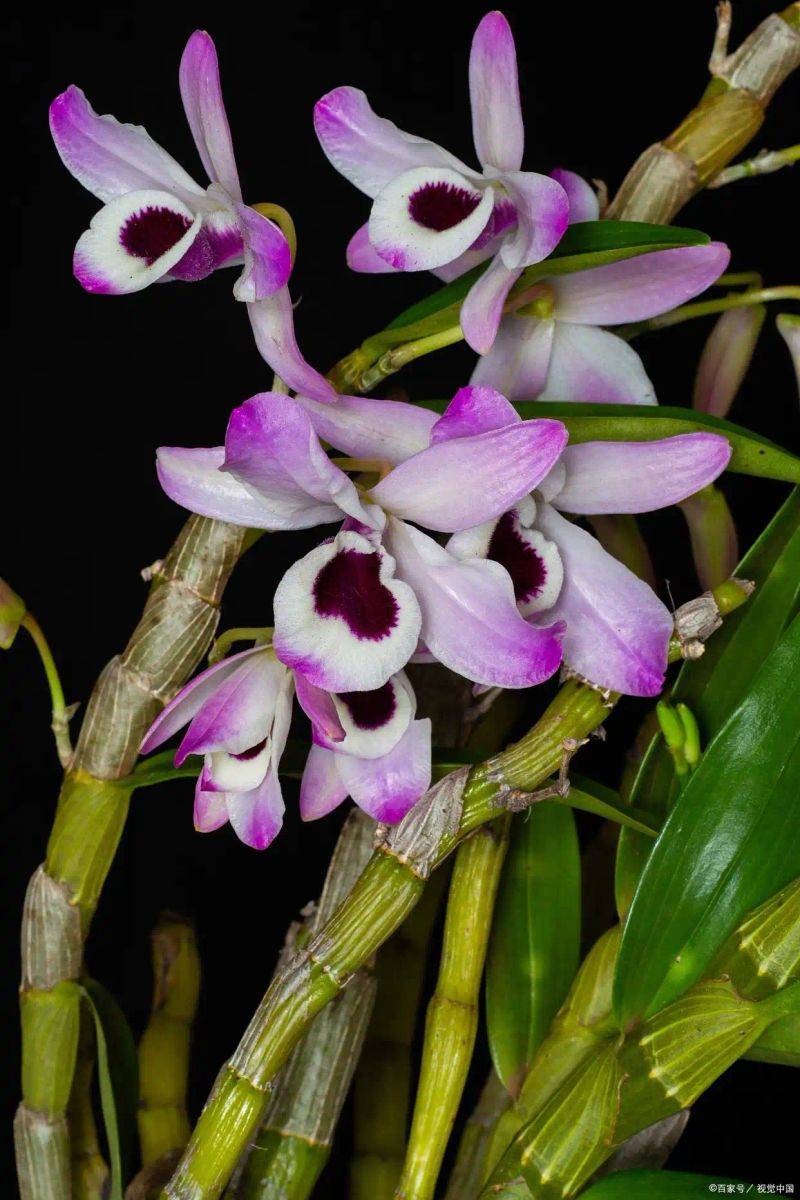
As a precious chinese medicine and ornamental plant, quartz has received attention from many growers in recent years. The mastery of scientific methods of cultivation is key to achieving high yield and quality of stone. The following is a detailed description of the cultivation of the quartz。
I. Growing environment choices
A warm, damp, half-tanned environment is not resistant to cold. Cultivation sites should be selected for high, dark and humid pine trees, succubus trees, or cool and humid rock areas, with winter temperatures above 0°c. An artificially controlled environment can also be constructed to regulate the light with a shade of around 60 per cent。
Ii. Building and appurtenance options
The shade
Under the thicker and wetter forest, blocks or stones are made up of 15 - 20 cm tall and the clay, sand and gravel are ploughed into the compartments with 100 - 120 cm high shades. Trees under the forest should be selected for pine trees, sprout trees, sorghum trees, etc., and the barks should be thicked with cleavages, abundant water, thick leaves and thick trunks。
Stoneland
In the cool, wet areas, plots with rough, suction, moss growing on the rocks and a small amount of decomposition on the surface are chosen。
Artisanally controlled sheds
The structure of the steel frame, concrete bends, wooden frame structure, etc. May be used as a framework. The roof of the shed is covered by a thick white membrane covering 80 per cent of a layer of sunnet, or by a black membrane covering 60 per cent - 70 per cent of a layer of sunnet when the light is strong. Bed frames are solid with planks or asbestos tiles, covered with asbestos nets, wooden panels to cover sunnets, and insecticide-resistant nets。
Base mass selection
The substrates used for planting are first pines, sprouts, followed by sawdusts, and can also select mosses, peats, root, bacterium, mussels, mountain rocks (in the form of granulates of soybean grains) etc. Whatever matrix is chosen, it will be pre-sterilized by polymice or methyl tobuzin。
Iv. Timing and methods of planting
Plantation time
It is desirable to do so during the spring and autumn seasons, which are characterized by high levels of humidity and rainfall, making cultivation viable。
Sterling
Select one- or two-year-old, green-coloured, hairy, well-developed, disease-free strains, cut the long stubbles and cut them open into a small series of 5 - 7 leaves and tubers each。
Plantation methods
Embrace: on selected stones, holes are dug at a distance of 30 - 40 cm, and a thin layer of cow dung is coated into a pebble or pebble sluice, fixed by small stones。
2. Planted trees: on the trees selected, a portion of the bark is cut by 30 - 40 cm and the seed is coated with a thin layer of cow dung and a mud mixture, which is then inserted into the skin, or into the cleavages of the trees, to tighten the bark of the tree, and a layer of straw is added to the crop, bound by bamboo or line。
V. Field management
Rational fertilization
The pebble-growing land is infertile, with the first before and after the light, dominated by nitrogen-composed pig and cow dung and river mud, and the second with peanut drums, vegetable cakes, perphosphate calcium, etc., being applied to the roots. In addition, 0. 05 per cent - 0. 1 per cent of potassium phosphate may be used for root fatting。
Water management
The pyrotechnics are soaking up at the end of the period that they are often wet and can be used as sprays. One or two days in spring and autumn, one or two times a day in summer and less water in winter。
Cut
In the spring of each year, sprouts or harvests should be accompanied by the cutting of parts of old or dead branches, as well as the growth of dense branches, to promote new growth。
Cleaning fields
Each year, between spring and dawn and before and after winter, weeds and dead branches are removed, and a few leaves from the garden should be cut off and the leaves from the winter period collected and burned。
Turn your pocket
After six to eight years of planting, the growth of the crumbs is re-ploughed, with the dead roots removed and the old roots divided and cultivated separately。
Vi. Pest management
The main diseases and pests are snails, filiards, black spots and anthrax. To the extent possible, prevention, physical and biological control should be the main focus of prevention, and low-toxic pesticides should not be used or used. Snails can be protected by manual killing, baiting or plastering; anthrax can be used 70 per cent of the 1,000-fold methyl tobuzin sprays 2 - 3 times; and guilders can be killed with 4,000-fold liquid sprays of the haemorrhagic pest, or by cutting out the old shires and burning them together。
Harvest processing
Every year, before the onset of spring, harvests take place, cutting out the branches that have been born for more than two to three years, leaving them to keep growing. There are two kinds of processing methods: first, to wash the harvested tubing out of the mud, remove the leaves and stubbles, separate the single tubing, burn 1 - 2min in the hot water at 85°c, pick it up, tan it on the bamboo mat or cement field, tan it up to 50% dry, rub it out with your hands, tan it up, and watch out for frequent flipping until dry. The water is soaked at 5min, dryed, tanned on the bamboo mats, flipped two or three times a day, tanned to soft, tanned, repeatedly went to clean leaves and left leaves, then dried up to dry。
# rock #
Carnation: this is for reference purposes only, and specific planting techniques and management measures should be adapted and optimized to local realities. If you have problems with farming, you can consult local agricultural technical departments or professionals。