


[summary] tianma was born in the sorbonne, formerly known as the red arrow. It has a long history of application and honour at home and abroad. It's got a flat liver and a strangulation. It's the tuber of the lancor plant, gastrodia elata bl. Originally wild, most are now artificially cultivated. Mainly yunnan, sichuan, guizhou, shuxi, hunan, hubei, etc。
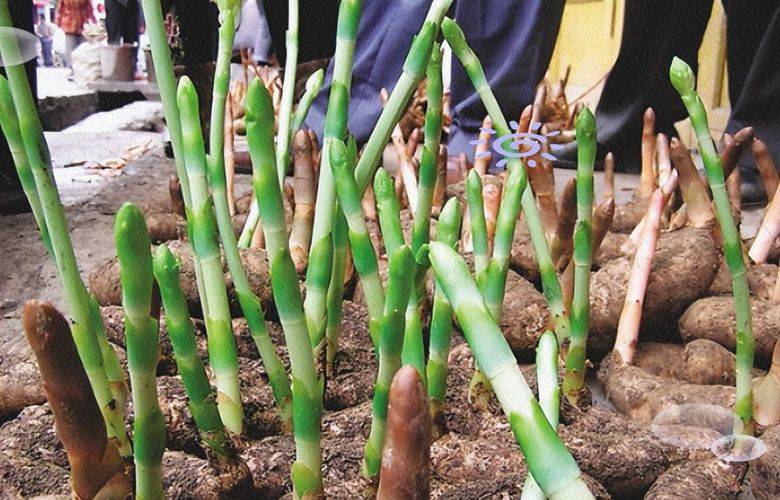
[the growing environment] is home to many years of parasitic grassland, born in wet, fertile, fertilized soil with honey circulus in mountain forests. Its reproductive period passes through stages of development such as seeds, mime, plaster and arrows. When the arrow moves, it pulls out the soil, i. E., the tub, on top of which there are few small flowers, and the result is flowering, forming large numbers of seeds, strewn and decaying on the ground, decomposition of the subterranean truncheon and leaving a few milles behind。
Plantation technology
1. Land selection: the field shall be grown in the open, and shall be chosen to contain organic, dysentery, well-drained, water-protected, wasteland or open forest areas at a gradient of less than 25. The soil is suitable for sandy and corrosive soil. For the entire area, the north was in early april to early june; the south was in early march to mid-may. The whole area is to be removed from the grass, roots and stones, and then digs 40 to 50 centimetres wide, 60 to 80 centimetres long (also known as compartments) and 15 to 60 centimetres deep. There are also those who do not excavate, and they do it with flat ground。
Methods of cultivation:
(1) cultivation of honey circulus: it is more widely distributed, adaptable and multi-breeding, and is often found in leaves falling from forest branches, decaying layers, or dead wood and roots. The bacteria that cultivate the meringue are collected in forest areas with wild omelet distribution. Where there are no wild bacteria, they can be addressed from the field。
1 bacillus materials: oak trees, euphoria trees, euphoria trees, chestnut trees, pyre trees and euphoria trees. Bacillus branches with a diameter of 2-3 cm or less in the fungus, and called rods with a diameter of more than 3 cm. The bacterial branches are more than 5 to 15 centimetres long, and the fungus are more than 20 to 30 centimetres or 45 to 60 centimetres long. After the cut, the skin should be cut down every 3 to 5 centimetres from three to four rows of fish, and then slightly tanned, so that it can be used for bacterial cultivation。
2 bacillus time: may be from june to august, when precipitation is sufficient and the humidity is high. ... It is conducive to the reproduction of honey circulus and ensures the use of acupuncture。
Cultivation of bacterial species: artificial development of bacterial rods and strains for bacterial use. Although decomposed, old bacteria that have been planted are well developed and can also be used as strains for the breeding of bacterial bacteria and strains. Microbacteria are produced with bacterial branches that are very young, are fast to breed, have a short time to grow, are easily controlled, and can be used as breeding materials and beds, especially in cases where the bacteria are inadequate, as a companion. In april-august of each year, general bacteria are cultivated by digging 30 centimetres of pits, with 1 to 2 layers of bacterium prepared at the bottom of the pit, with several bacteria-free and well-growing old strains for seeding, and with branches in the sticks, with 3 to 4 layers in turn. If well-bred bacterial branches are available, they can be added to the two-storey branches with each layer filled with corroded soil or sand. It is 10 centimetres thick and has bow shape. 40 to 60 days of mycelium can be cultivated, and it can be used as a fungus in june to july when a seedbed or fungi is cultivated. For the cultivation of bacteria, the sun slopes of the mountains should be selected for the sandy soil that is well drained. This is done by pit training, semi-pit training or pool training。
4 pit training: generally used in dryer areas in low mountain areas. The pit is 30 to 50 centimetres deep and 45 to 60 centimetres wide. It may also be determined by the size of the terrain and of the bacterial rod, but it is not appropriate to have more than 200 bacteria per pit to avoid infection. A fresh wooden rod will be laid at the bottom of the dug-up pit, the earth will fill the void, and the second layer will contain bacterial species (bacterium rods, swigs, wild bacterial species, etc.), such that if the bacteria are not enough, a bacterial material can be placed every two fresh rods, with a fresh wooden stick on them, with 10 centimetres of earth covered and flat on the ground。
Five-and-a-half pit cultivation: lower temperatures, more humid in the middle and mountainous regions, with pit depths of 20-30 cm, width of 45-60 cm, and bacteria can be pumped about 35 cm above the ground; the upper and lower two layers should intersect in order to avoid dispersion。
6 poppy-based: a pool made of stones or bricks deep in im, a sand field at the bottom, a new layer of material, a bacterial layer (or old) and a sandy layer. This method, when stacked, increases humidity, and under conditions of 20°c ~ 25°c, produces bacterial material for 40 to 60 days。
7 cultivation of bacterial beds: this is a new method of bacterium culture, with significant productivity gains. The choice of an open area of forests, with many plants, with good shades and honey rings. The common bacterial bed is 40 cm deep, 50 cm wide and 60 cm long, and the floor of the bed is to be razed with a layer of dry leaves, with five blubbers on it, ranging from 6 to 9 cm in length, with eight-word branches (squares) every 10 cm, emptied with fine earth, 5 to 6 cm in length and a dry leaf. When the bacterial bed is dug, the pit leaves an im distance between the pit in order to extract the upper bacterium rod from the plant and to place five new bacterium rods in order to make full use of the seedbed。
(2) sexual non-sexual reproduction: reproduction with small sembling. This method of cultivation is currently used in most parts of the country. Cultivation dates, usually winterized in november, spring in march-april, are good for winter. Speculation is best for white and rice, 5-10 grams per weight. The choice is to be non-plagued, non-traumatized, non-frozen, non-decomposed, in a hammer-shaped form and clearly germinous. Some of them are gibberish, but they're going to fall. Depending on the size of the seed and the amount of the fungus, it is common to plant 5 to 6 of the 9 to 10 fungus, weighing 50 to 60 grams, each of which is suitable for approximately 500 g per nest。
The following methods are currently used in large-scale production:
1 bacillus acupuncture: digs 40 cm deep pits, and puts well-bred rods at the bottom of the pit, 5 cm apart. Each of the rods is grown in parallel, and at both ends, the rods are planted in line with them. Mima sanctuaries on the buffalo. One layer, three to five centimetres of soil, suitable for the absence of the bottom bacteria. This method is used to plant the second layer, which lasts 10 to 15 cm, slightly above the ground。
2 bacillus with new rods: in general, 10 bacterium rods are used, 5 bacterium rods are placed on the ground floor and 5 new bacterium-free materials are placed at intervals. The seed is planted on both sides of the bacterium that has been bred and planted with the bacterium。
Cultivation of 3 bacterial beds: during cultivation, a well-bred bed is dug up, five bacterial strains are removed from the upper layer, the lower layer is not moved, and humans are planted with the fungus method, filling up with soil from 3 to 5 cm. The second layer is planted with five microbacteriums in the upper layer, and then the soil covers 10-15 cm. This method has high rates of infection, high rates of survival and high yields. It can also remove five bacteria from the breeding bed and replant five new ones. Five more germs, plus five new ones, were taken and planted。
Cultivation: 30 centimetres of workways between mountain forests or forest slopes. Dig the pine bottom soil so as to facilitate water infiltration. The bacteria are distributed at intervals of 5 to 6 centimetres, on the sides of which they are planted with a culture of fertilized soil, and can be planted on one or two floors。
Five-box planting: the use of a box planting method, free from site and soil limitations, makes full use of idle areas, courtyards and indoors. This method is easy to control both temperature and humidity and is less expensive and simple. The size of the incubator is not strictly required. It is usually 60 cm long, 45 cm wide and 30 cm high. It is usually cultivated in a combination of broad-leave sawdust, fine sand and corroded soil at a ratio of 1:1. However, the sawing is not too much, otherwise the fermentation increases the temperature and causes the injury to the fermentation and the honey circulus. Method: in general, four to six fungus per box is used to plant 250 grams of manic acid. Boxes can be moved indoors in the north during the winter and then outdoors after spring heat; in the south, they should be moved indoors and properly sprayed with appropriate temperature and humidity。
(3) seed reproduction: small seed from tianima. In general, after the planting, the sprouts start to bloom in the summer and around the morning, with the result that there are 20 to 30 fruits of green bean size. At this point, the peach will be wrapped in thin veils that will continue to grow and mature, absorb sunlight, moisture and avoid the wind blowing into the peaches. When the peach is light black, the rice is grown up, i. E., it's taken back (do not cause the seeds to come out) and dried up. It's a wild place (with honey rings) to dig and sow。
After [plant management] cultivation, no farming, fertilization and weeding are carried out during the reproductive period. In general winter, a layer of leaves is built to prevent freezing, and the leaves covered in spring are removed to increase the temperature of the earth. During the rainy season, a “human” font ditch is opened on the top of the nest to facilitate drainage and prevent the flow of rain into it. It must be properly watered, free from drought, and careful to prevent human and animal abuse and damage。
Prevention and control of diseases and pests:
(1) diseases:
1 fungal disease: fungal disease known to contain fungi, aromatics, palaete, etc. Most occur under high temperatures and high humidity, with poor air intake. Hazards to bacteria and toms occur (holy circulosis and fungi identification are shown in the table below). Method of prevention: the detection of fungi is carried out on a regular basis, and the detection of fungi in the fungi is followed by a period of one to two days, followed by a knife to remove traces of parasitic fungi, and the burning of severely hazardous fungi to prevent infection。
Honey circulus and fungi identification
Item
Meekles
A fungus
The color of the fungus
Pink
White or other colours
Distribution on the bicep
It is distributed in the form of a microfilm between wood and impurity and in the cortex; it is distributed in the bark of a tree rod
The young cactus is tan, with white growth points
It's old and black, and the circle is flexible。
Most of them are distributed in the form of microfilm
It's easy to see; it's white, it's sliced, it's growing fast; the old parts are sometimes brown, white or red
Chem-breathed, fan distribution。
Lighting
Shine
No light
Lifestyle
It's also a sexual parasite
Most of them rot
2 decomposition: commonly referred to as decomposition, a physical disease. The summer temperatures are high, the cynics are physiologically dry, the central tissue rots, mulch, and there is a unique smell. Method of prevention and treatment: the cause of the disease is currently unknown, mainly through the timely removal of the strain after detection。
3 water infestation: during the fertilisation period, water is the most afraid of immersion, and generally 12 to 24 hours of vasectomy is decomposition and stinks of eggs. Methods of prevention and control: selection of sandy soil planting with good drainage; timely inspection after rainfall, detection of water accumulation and immediate removal; and, in case of forest depression, branching and increased light。
4 rusty disease: infestation of the circulus, beginning with rusty spots, gradually spreading and, in serious cases, all of the whole tubing has died. Methods of prevention and control: the choice is generally one of well-breeded sandy soil planting to prevent the fall of leaves with bacterial tracts while the soil is covered; care is taken to select disease-free seedlings。
(2) pests:
One day for the larvae: the method of prevention: it is generally booby-trapped with bait and dirt。
2 aphids or worms are harmful: the method of combating them is to be used as bait for the use of frost and scorch, and to be booby-trapped at night on the surface of the tambourine。
3 shell worms: usually carried by a bacterium rod, for the purpose of pestilence. Method of prevention: when the rods are found to have midheavy, the rods can be burned; when the vermin, white or mercuric surfaces are found, they can be processed into commodities in a timely manner and not for seed use。
4 aphids: mainly plaster and flowers. Method of prevention: 1,000 times liquid ointment control。
5 termites: primarily fungus rods, which have a significant impact on the production of cynoma. Methods of response: more use of new shelters and drug control。
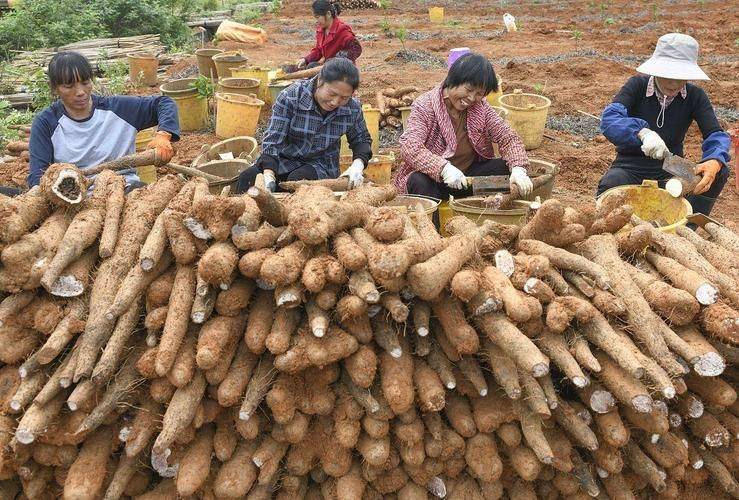
[harvesting and processing] the 2nd or 3rd spring poaching in winter and 2nd spring harvest in spring. The spring harvest is called “springs”. After the early winter of the mahjong has entered hibernation, or before the early spring spring, there is sufficient nutrient accumulation, at which point the best harvest is known as “wine mahjong”. Most of the harvests take place in october-november each year, with harvests, plantings, production and quality. Once recovered, they are processed in time to prevent decay. First, depending on the size of the tungsten, the average weight is above 90 g, 45-85 g is second, up to 45 g and the injuries are cut to third degree. It then washs the mud and wipes the skin so that it can be washed and processed to ensure that the medicine works. (c) distillation or boiling of the omelet in bulk until the end of the line, leaching it with cyanide, extracting it, drying it up to 80-90%, fumigating it with sulfur, then tan or drying it all。
[drug shape] this block is flat-long ellipse (field), or long stripe (home species), wrinkled, sometimes bent, 6-12 cm or longer, 2-6 cm wide, 0. 5-2 cm thick. On the surface, yellow or light yellow brown, slightly transparent, with wrinkles and ditch lines, can sometimes be seen in several rounds of cross-ring stripes made of point marks (mixed honey rings), with red brown to dark brown sprouts at the top of the wild, commonly referred to as “paragus mouth”. At the end, there are umbilical scars. Solid, non-facilable, more flat, horny, white to yellow. It's special, smelly。



