


The spring break is just over and the spring tillage is proper. On 25 february, in order to capture the spring period for industrial development, all efforts were made to promote the construction of a 1,000-acre oil tea base. On 25 february, the town of solbrook, chongqing su-turu, an autonomous hmong county, held an on-site promotion meeting for oil and tea cultivation in the 1,000-acre oil and tea-growing areas of sing village and plate village, where policy advice and technical training were moved to the fields to develop the capacities of the oil and tea industry。
At the field push meeting, the vice-governor mando, solbrook town, gave a mobilization speech in which he elaborated on the important values and development prospects of the oil and tea industry in terms of improving the ecological environment, boosting public revenue and boosting rural renewal. He called on the villages to raise their awareness of the need to work, to take the current agricultural situation firmly into account, to fine-tune their work initiatives, to adopt strict standards of cultivation, to steadily advance the realization of the 1,000 acres of oil and tea-growing tasks, and to effectively translate local resource advantages into industrial advantages and economic advantages and to make the oil and tea industry a feature of popular enrichment。
Chen an ming, deputy director-general of the hmong autonomous district forestry service of the suyama family, conducted a special course on the whole chain of development of the oil and tea industry, which not only provided a detailed reading of the support policies relating to the oil and tea industry, but also provided a systematic presentation on the selection of seedlings, standardized planting, primary processing, branding to online marketing platforms, and provided direction for the development of the industry. He noted that oil and tea could be grown in fields, complementary to local cash crops such as mountain silver flowers, yellow sperm and cucumbers, with the characteristics of “one-sided harvest”, which were simple, low planting costs and steady economic returns, and that at a later stage only fertilized, managed, easy to replicate, easy to access and well suited to the size of farming households。
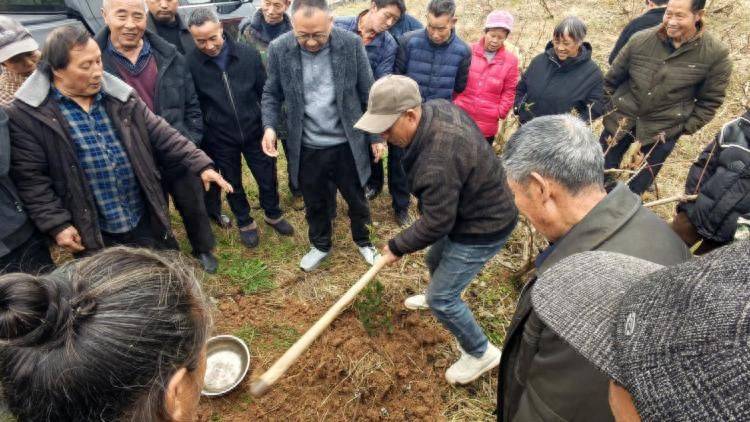
Following the theoretical presentation, forestry technicians conducted on-site hands-on training. The forestry technicians, in combination with the area of cultivation, identified the selection requirements for the plots of oil and tea cultivation, the 4-6 metre normative distance, and focused on the technique of cycling between the three oil and tea varieties of the long forest system, no. 40, no. 4, and no. 53, to effectively solve the problem of unequally pollinating oil and tea cultivation and the low rate of cavity. At the same time, emphasis was placed on the technical aspects of planting, requiring that the depth of the pits be no less than 40 centimetres, and that bottom fertilization be followed by tree planting, which would guarantee the survival of the trees from the source. Under the model guidance of forestry technicians, field-based cadres and farmers have worked together to develop the operational industries of digging pits, fertilizing, planting and replanting, to learn and to ask questions, to gain practical knowledge of the science of oil and tea cultivation and to lay a solid technological foundation for further cultivation。
The site promotion will be innovative in using the “theory + field teaching + practical exercises” model, bringing the oil and tea industry development policy and science-planting techniques to the field, effectively addressing the technical difficulties faced by farmers in oil and tea cultivation, and building a firm technical and human resource base for the return of thousands of acres of oil and tea sites in sing village and slate village。
As a next step, solbrook will take the opportunity of this field push to increase its policy advocacy for the oil and tea industry, to provide technical guidance services for regularization, to expand the scale of oil and tea cultivation, to increase the number of people involved in oil and tea cultivation, and to promote the regularization and long-lasting development of the oil and tea industry. Making an oil- and tea-tree a “sharp-money tree” for the population to grow wealth has made the green oil and tea industry an important support for the revitalization of the town and a strong green engine for local economic and social development。
The correspondent



