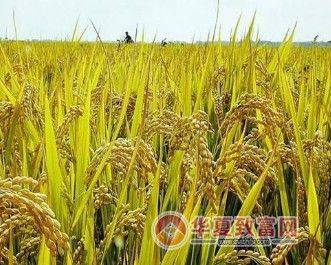
People usually eat rice that most people don't know how it's grown, and for many farmers growing organic rice, there's a lot of mistakes, but there's still a risk if technology is not in place. **, reduce *** and fertilizer pollution of the environment, protect the agricultural environment and increase producers ' incomes; if you want to grow high-yield organic rice, then you need to look at the next one, and you can share the technology for organic rice cultivation
Organic rice cultivation conditions
1. Soil management
Rendering techniques, increased application of organic fertilizers, biobacterizers and deep and shallow tillage in the field are used to regenerate the soil and create an enabling environment for organic rice。
2. Nutrient management
Fertilisation is arranged according to the pattern of nutrient demand for rice, using organic and biobacterium fertilizer as the basis, while paying attention to the application of fertilizing and foliage pursuits to supplement nutrition in the period of growing nutrient demand。
3. Plant protection
Before seeding, organic biological agents can be used to impregnate seeds to prevent and control disease during seeding. When chronic diseases occur, biological*** should be selected to combat them, while increasing leaf pasta fattening to increase rice resistance and prevent further spread of the disease。
The prevention and treatment of weeds in rice fields can be done in a way that eliminates the use of chemical agents。
Organic rice cultivation techniques
1. Land selection
The selection of plots during organic rice cultivation is crucial, and the soil environment of the selected plots must meet the national gbl5618-1995 level standards, air conditions meet national-level quality standards, and water quality meets the gb5084-92 level iii criteria for the surface water environment。
Crops of organic rice generally choose to grow in areas that are more fertile, accessible and naturally isolated from other plots where organic rice is prohibited。
2. Choice of varieties
During organic rice cultivation, the choice of varieties is important. Organic rice production should select well-established, resistant, adaptable and productive varieties. Seeds must be screened, full of seed grains, well-sized, weed-free seeds, disease-free pests and pests。
3. Feeding techniques
Rice must be soaked with sun, salt and water before seeding. The bed of a nursery bed is plowed over 10 cm to ensure that the bed is flat and thin, and that the bed is generally 1. 8-2. 2 m wide。
The base fertilizer for nursery beds is generally the application of high-quality organic fertilizer 7. 5-10kg/m2 fertilizing soil, mixed with seedbed soil. Cultivation begins at 5°c。
Seeding varies according to how it is planted, with conventional seedlings generally using 1,759/m2. The membrane perforation was 2509/m2. Nutritional seedlings were 709 per plate。
Iv. Putting work
It is important to prepare the field for pre-positioning before rice is plugged in. It would be preferable for daejeon to pre-empt water and promote the growth of weed seeds and then carry out mechanical dredges to clear the already growing weeds. Once daejeon has been sorted, it can be plugged in when temperature stabilizes at more than 12°c。
Rice cultivation in the field requires reasonable density to ensure the quality of seedlings, and penetration requires shallow, straight, flat, steady and sufficient。
5. Xinda management
The focus of rice field management is on temperature management. Slow and robust growth of seedlings, with a critical temperature of 12°c for root and 15°c for leaves to stop growing below this temperature。
The growth of seedlings is typically at 22-25°c and is highly assimilated. Within the temperature range, at lower temperatures, especially at the stem growth point, the seedlings grow robust, have a high dry weight and have a high abundance (dry weight/stamp ratio). The temperature is too high and is often around 30°c, and the seedlings grow up, are very thin, have a small dry weight, have low abundance and have poor growth of the root system. The temperature is too low and is often below 10°c, and is prone to albinism and death。
Rice seedlings are the fastest growing at 0:00-7:00, and the temperature of the bed (15-28°c) must be guaranteed to promote seedling growth. Beware that the temperature of day and night should not be too high during the day, and that the night should be reduced to the point where the seedlings may grow slowly and robustly. Dry seedlings must have good water control, low soil moisture, well-developed dry roots, slow growth of the upper part of the land, dry roots, long tubing, early overweight, high standards of stocking, and a suitable age for leafing。
Organic rice field management
1. Soil fertilization
Soils can be fertilized by the technique of sorbenting and retrieving, i. E., the straw is fully shredded during the mechanical harvest in the autumn, spread in the field, and then rolled deep, mixing the straw, the straw and the soil. It is also based on the application of fully fertilized farm fat。
2. Honda weeding
In the honda, a blistering field can be used in the form of a flood of water, allowing for the removal of weed seeds from the soil. In general, about 15d before the incision, honda was farmed and flooded with water to extinguish the old grass in the field, until 2-3d before the incisor was planted again to destroy the breech. During the growth of rice, new weeds are found to be readily artificially uprooted。
3. Water management
Precipice divides to the pecks with shallow-wet-dry intermittent irrigation techniques, followed by shallow-wet-dry irrigated irrigation to promote root growth. The well-filled areas use heating and irrigation techniques to avoid the direct entry of well-water into the fields. The cutting of weeds in the fields and the removal of weeds in the fields will both prevent pests and pests and ensure that the sun shines directly to the surface and improves water temperature。
At the same time, water should be cut early and in due course to promote maturity. The normal yellow season (after 30d) can stop water, with the lowlands draining early and leaking at appropriate late hours。
Disease prevention and treatment
Rice disease is common in saplings, rice plagues, tattoos and rice rotors. Plant resistance can be enhanced by nurturing strong, rational planting, scientific regulation of fatty water, landing in time, control of plumes, and fundamentally controlling the occurrence of disease。
5. Pest control
The most common pests used to harm rice are rice elephants, rice trams, rice lice, and insects。
1 agriculture prevention and control: the preferred pest control for organic rice is agriculture prevention and control, which enhances rice resistance by strengthening field management。
Physical control: refers to pest control methods that use frequency-fibrous pest-trigger lamps during rice cultivation to trap luminous pests。
3 biocontrol: control of field pests based on biological*** and phytogenic*** recognized by organic certification bodies. Control of pest populations using existing natural enemies。
This is the sharing of organic rice cultivation technology! If you're planning to start a rice business as well, you're sure it'll work better if you follow the above, and if you don't understand anything, leave me a message