


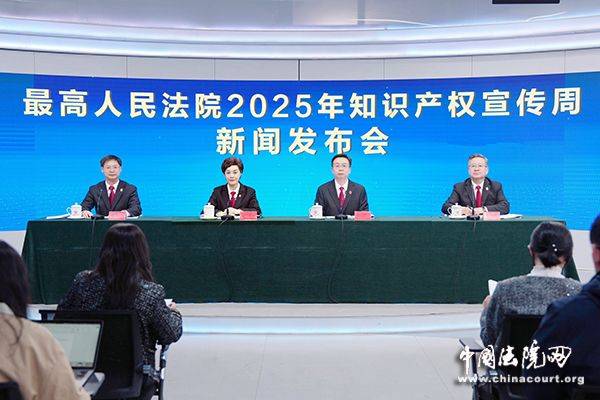
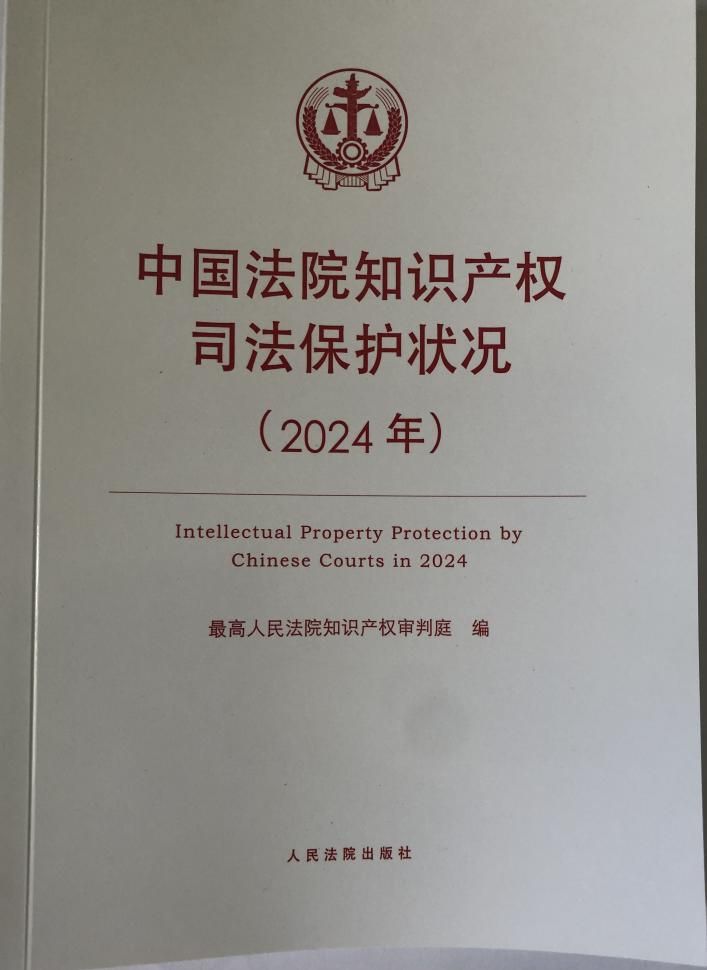
On the occasion of the twenty-fifth world intellectual property day, the supreme people's court launched yesterday (21), the national intellectual property awareness week of the supreme people's court, which published the status of judicial protection of intellectual property in chinese courts (2024) and issued eight typical cases of intellectual property in people's courts。
The cases covered the types of cases such as patents, trademarks, copyrights, anti-improper competition, trade secrets, etc., involving the fields of biomedicine, ai technology, online games, etc., and further clarifying the relevant rules of adjudication, highlighting the role of the judiciary in guiding, regulating and safeguarding the development of the industry。
Legal proceedings for disputes involving artificial intelligence
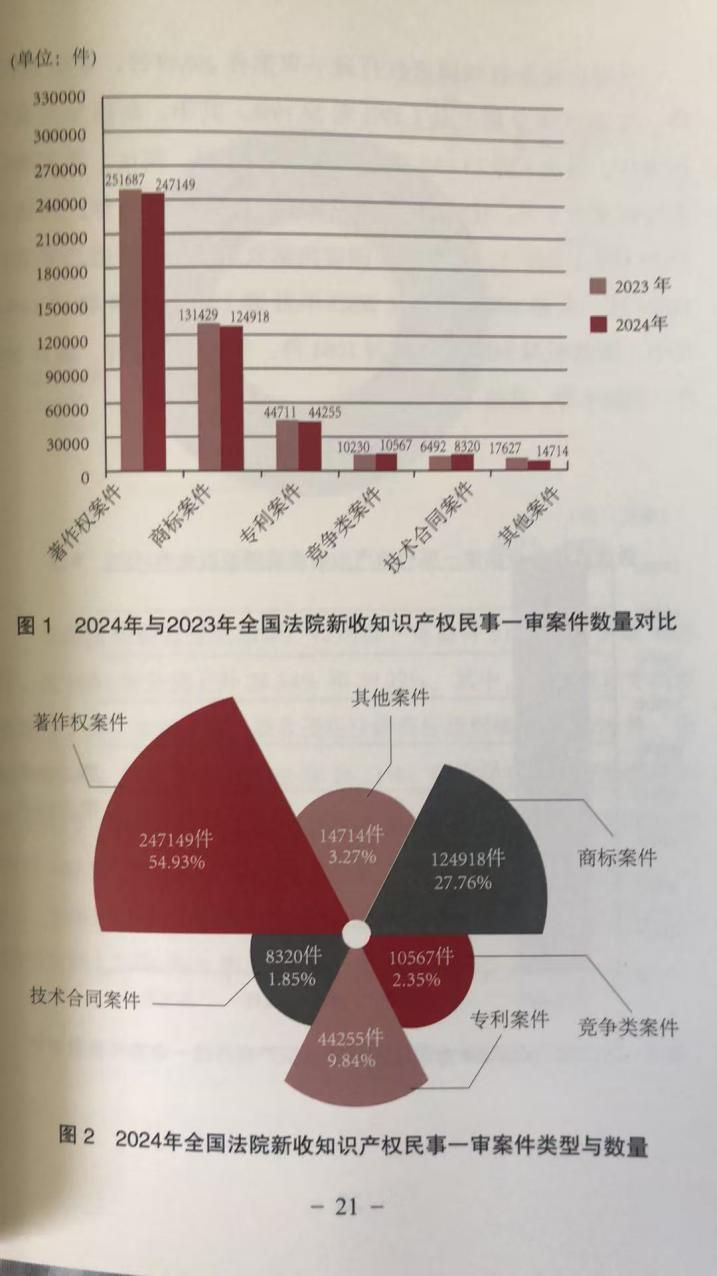
According to the vice-president of the supreme people's court, in 2024, nearly 530,000 new intellectual property cases were received by the national courts, resulting in the completion of more than 540,000 cases and a steady increase in the number of cases concluded and in the number of cases pending. She mentioned in particular that the courts optimized the protection of innovative interests and dealt with cases involving artificial intelligence disputes in accordance with the law。
Tokai: supporting the legal application of artificial intelligence to guide the development of health science in the artificial intelligence industry. The beijing internet court concluded the "aiwensheng case" and actively explored ways to protect the copyright of artificial intelligence-generated products, opting for the "ten nominations in 2024 for the promotion of the rule of law process in a new era"。
It is now mentioned that the “ai-vanctuary” “ai-share-a-a-e-a-e-a-e-s-e-s”, “a-a-a-a-e-s-e-s-e-s”, “a-a-a-a-s-e-s-s-e-s-s-s-s-s-s-s-s-s-s-s-s-s-s-s-s-s-s-s-s-s-s-s-s-s-s-s-s-s-s-s-s-s-s-s-s-s-s-s-s-s-s-s-s-s-s-s-s-s-s-s-s-s-s-s-s-s-s-s-s-s-s-s-s-s-s-s-s-s-s-s-s-s-s-e-s-s-s-s-s-s-s-s-s-s-s-s-s shanghai-live network technology ltd. Developed a small program, "photo", which uses the ai video synthesis algorithm to provide users with face replacement techniques. According to chen, 13 of the short videos displayed by women in antiques in this little program were published by themselves in the real name authentication account of the short video platform, with differences only in the profile of the person's five officials, while the “skin” users were able to change the faces of the people on the small program to their own faces and preserve them by watching advertisements or buying members. A complaint by chen against the “aggravated” operating company constituted a violation and was upheld by the court。

Ma yun peng, deputy senior judge assistant, head of the general office of the supreme french court: the court found that the video of the case presented in the “amour” procedure was partially synthesized by the al-ai algorithm for the partial replacement of the original video, which constituted a material similarity. Shanghai's network technology ltd., which sells “al for faces”, provides platforms, materials and technologies that enable users to use raw video in a “face-to-face” manner at any time and place of their choice for commercial gain and infringes chen's right to disseminate information about a work. His behaviour is neither original adaptation nor reasonable use, nor does it apply to a technical neutral defence。
It is noteworthy that during the trial the court issued a judicial recommendation to the defendant company, which made a commitment to regulate its business by actively cooperating with corrective actions such as deleting videos and fulfilling algorithm filing procedures. The defendant's company awarded a sum of $7,500 in compensation for a certain financial loss and reasonable expenses。
Senior judge bajari, chief justice of the supreme court of france iii: in this case, the judgement makes it clear that “ai's face change” does not constitute original adaptation and rational use of the original work; those who use artificial intelligence techniques to provide network services have a reasonable duty of care not to use algorithmic techniques to infringe on the copyright of others. In the course of the proceedings, the court struck a balance between technological innovation and protection of rights and clarified the legal boundaries of the application of artificial intelligence technology. This case also reflects the court's focus on the need for new and emerging technological innovation applications and algorithmic governance, which has led enterprises to strengthen legitimacy reviews and algorithm security assessments of source and content generation, strengthen intellectual property and personality protection and lead to a digital transformation of business regulation。
He's got half a million in damages for his part in the game
As you know, online games are updated at some point, with new roles, scenes, dramas, events, etc., to maintain game focus and product vitality. Chen, as a player, participated in an internal survey of a game operated by a shanghai-based technology company and entered into a confidentiality agreement during which, without permission, seven games players, such as “know what” and others involved in the game, were physically represented, i. E., they were able to steal and tape the content and images of the role, skill effects, skills data, etc., that the player was able to manipulate, and they were repeatedly disclosed to a third person and sued by the game operator。
Ma yung peng: the trial court held that chen, in violation of his duty of confidentiality, had committed the act of filming and disseminating these commercial secrets and was liable under the law. The essence of business secrecy protection is the competitive advantage that business secrets bring to the operator, and even though the role of the game has been disclosed as a result of an updated version, chen is not allowed to disclose the picture of the test game that he may have. A total of 500,000 yuan was awarded for cessation of the violation, elimination of the effects and compensation for economic loss and reasonable expenses。
It is noteworthy that the plaintiff company first filed a pre-suit action preservation application with the court after it discovered a leak during the player's internal testing period, and that the shanghai district court ruled in accordance with the law within 48 hours of receiving the application that it should not disclose, use or allow others to use the content of the game that they had taken without permission during their participation in the game testing。
Bayari: in this case, we can see that pre-action preservation decisions combine the characteristics of the online game industry to provide timely legal relief to applicants. The decision addressed the role of the game in the context of the breach of confidentiality, and the courts protected not only the content of the role of the game itself, but also the business model for raising the profile of the game by updating it, as well as the competitive advantages of such a model, so as to provide a strong regulatory framework for early “extraordinary” behaviour。
44. 2 per cent increase in the application of punitive damages
Data published by the supreme law show that last year the national courts applied punitive damages in 460 cases of infringement of intellectual property rights, an increase of 44. 2 per cent over the previous year. The court has effectively increased its protection of innovation in key technological areas, allowing “real innovation” to be “real protection” and “quality” to be “strictly protected”。
The president of the supreme french court of justice, lee sword, has concluded the case of the “new energy cars” technocratic breach and has awarded more than $640 million in punitive damages. The case was selected as the “tenth of the year 2024 to advance the rule of law process in a new era”. In the case of violations of the software and technology secrets of the centrifugal compressor, the application of punitive damages of 160 million yuan in respect of the establishment of companies under cover and the theft of the technology of the original establishment for more than 10 years, in order to establish strict and fair justice in favour of the protection of intellectual property rights。
Antimonopoly to maintain fair competition in the market
According to the data published by the supreme law, from its inception on 1 january 2019 until the end of december 2024, the supreme court of judicial intellectual property dealt with 282 cases of monopolization of civil and administrative second instance, concluding 243 cases, of which 97 were concluded in 2024, which constituted a monopoly of 17, a 4. 6-fold increase over the same period。
Vice-president of the supreme court of legal intellectual property and intellectual property, zhonglin: in the future, the supreme people's court will continue to strengthen its antimonopoly administration, apply the antimonopoly law and the judicial interpretation of antimonopoly civil proceedings in an accurate manner, maintain its focus on antimonopoly in areas such as internet platforms, scientific and technological innovation, intellectual property rights, livelihood, trade associations, natural monopolies, abuse of executive power, and firmly uphold fair competition in the market and contribute to a more equitable and dynamic market environment. At the same time, the judicial guidance and operational training of the courts throughout the country have been strengthened, and the capacity and level of the people's courts against monopolies have been improved。



