


1. Preparation for (i) selection of flat ground, high-quality fertility, easy drainage and irrigation, well-breeding, soil-rich and loose fields. The spring-spring pea parcels should be sown, weeded and tilled, after harvests of crops before the previous year, and crushed for 39 days. Winter irrigation should take place where conditions exist. Early spring and shallow tillage, with foot fattening, smoothing and smoothing. Per 0. 067hm2 peas field application of fertilizers 100-1500 kg, calcium per phosphate 20-30kg, potassium sulphate 10kg. Low-powered fields should grow long-term, short-lived early-fertilized pea varieties, and 0. 067hm2 additional urea per day should be applied to meet the needs of seedling growth. (ii) rotation, which leads to an increase in pests and diseases, a decrease in production and a decline in product quality, necessitates the introduction of three or four years of rotation. Precipice crops suitable for peas are cereal crops such as maize and grains. (iii) feeding before seed processing takes three to four days to increase the gerontization rate; leaching and cryogenic treatment. The temperature of seed cryogenic treatment is typically below 10°c and can be 10-20 days at 0°c ~ 5°c. Seeds need to be impregnated before they are treated by planting 15°c of warm water and 50% of the seed volume. After two hours of immersion, the seeds are rolled up and down once, fully wet, the skin swells up and extracts, sprouts in the mudslides, wash with well water every two hours, about 20 hours, the seeds begin to agglomerate, the embryos appear, and are then disposed of for 10 days at 0°c ~ 2°c。
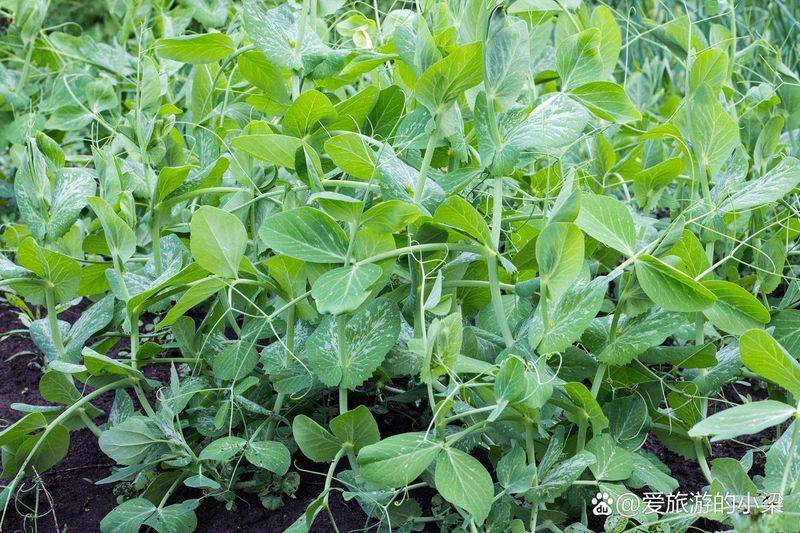
Ii. (i) the selection of varieties of peas, which are mostly grown in drought, should be based on highly productive varieties that are resistant to disease, resilient, adaptable and suitable for processing. Our city is currently promoting the best peas that are being grown, mainly in the area of peas and local farming. Ping pei 1 is a medium- and early-born species with a birth date of approximately 87 days. The varieties, which are drought-resistant, cold-resistant, stable, disease-resistant and resilient, are suitable for cultivation in the district areas of the city. (ii) the timely planting of early seeding is a key component of peas cultivation and can be used to avoid high temperatures during flowering seasons, as far as possible, in order to prolong the season, increase the number of shears and increase production. Peas are generally grown in mid-april and should be sowed in due course. (iii) the seeding of peas is done in a series of forms and in two manners. The best way to sow is to plant the seeds in the same depth and at the same distance. The distance of the radio is typically 25 cm to 30 cm and 4 to 6 cm; the distance of the cave is typically 15 to 30 cm. (iv) the sowing of peas varies according to region, method of cultivation, variety and soil fertility. Because of the impact of environmental conditions in the soil, pests and diseases, field seedling rates are generally between 80 and 90 per cent or lower, field seedling rates should be estimated prior to sowing, which should determine the actual field seeding amount, i. E., the seeding amount per 0. 067 hm2. Peas cultivation density in the same city ranges from 50,000 to 60,000 per 0. 067 hm2, with a general sowing of 7 to 13 kg/0. 067hm2. In the case of pre-cooked short poles, an appropriate increase in planting density should be achieved; the planting of late-cooked and multi-tailored varieties should be reduced and, in any case, the seeding principle should be “lower, thinr”. (v) the sowing depth of deep peas is determined by soil quality, soil moisture and precipitation. The sandy soil should be sown in an appropriate depth, and the sticky soil should be sown shallowly. In general, five to seven centimetres in depth。
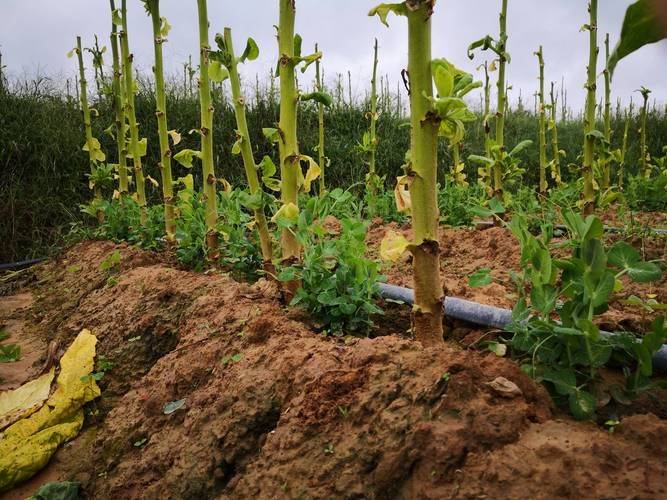
Iii. The management of the field shall be followed by the timely planting of grass and pine earth, the timely identification of seedlings, and shall be carried out in such a way as to decorate them, in such a way as to fill them with seedlings, seedlings and weeds, with the required distance. Peas have to be cultivated at least three times to ensure normal growth of seedlings. Peasfields are protected from water or are too dry, and in the rainy season, attention must be paid to draining and decontaminating the water so that it can dry; drought must be watered in time to keep the land wet. Particularly in the middle and late harvests, greater attention should be paid to controlling field moisture in order to prevent its premature decay and avoid pea root decay. (i) the planting of peas does not normally require water and, in the case of normal seedlings, a minor drying of the field is appropriate for the first watering at the beginning of the flowering and the second watering during the condensation period. It should not be too much water each time. (ii) fertilizing the peas in the middle of may, in the current period of the peas, to be followed up by 15 kg/0. 067hm2 in the rain. Due to the long time taken to pick peas, 0. 067 hm2 per flowering season. Peasant fields can use 250 g urea plus molybdenum fertilizer (ammonium molybrate) 20g (or 150g potassium phosphate) to spray 50 kg of water to increase the number and particle mass of falcons, with a significant increase in production。
Iv. Pest and pest management (i) pest control and leaffly prevention major hazard peaks bean leaf, with severe full-leaf atrophy, loss of commercial value when peas seedlings are injured. Insects tend to lay eggs on pores, resulting in large amounts of plasters, significantly reducing pea yields and eligibility rates. Method of prevention: elimination of vermin-rich plant blades; use of 40% of the fruit milk 1000 times more liquid on the leaf, once every one week and 2-3 times per worm. Peas, like larvae, eats all of their centres into empty holes, affects their growth and quality, reduces their pollinating rates and affects their consumption. Prevention and control methods: pre-cooked varieties are selected to allow peas to bloom earlier, avoiding insect spawning periods in order to mitigate harm; 2. 5 per cent of them are sprayed with emulsions that kill 5,000 times more. (ii) platinum control is one of the most important diseases in peas, with the front and back side of their leaves covered by a white powder layer, the severed leaves quickly yellowened, the bean premature or malformation, the drying of seeds and reduced yields. Prevention and control measures: avoid heavy and low-lying peas; rationally plant and strengthen field management. Peas rust is mainly a threat to the leaves, and in severe times the bean bean and leaf handles are also affected, with brown circular spots on the leaves of the disease, early leaves fall and the food value of the beans is significantly reduced. The peas in the low-lying wetlands are seriously ill, as are the late-run peas. Prevention and control measures: three to four years of rotation; elimination of disease strains, deep cultivation and reduction of the source。
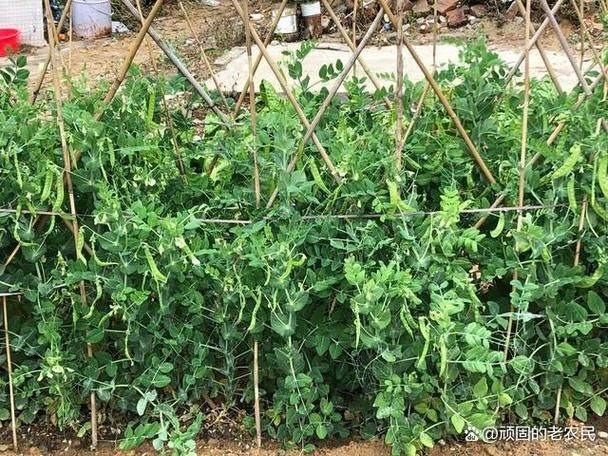
The harvest usually begins in early july and should be harvested in a timely manner when the leaves and nuts of peas are largely brown and dry. It is desirable that the morning dew is not dried or collected at night in order to reduce the damage caused by bursting particles. Artisanal harvesting is widely used in the metropolitan area; when artificial harvesting takes place, the plant is uprooted or cut from the base and should be tanned and removed in a timely manner. Editor: li min audit expert: researcher, crops institute, shanxi province fan



