


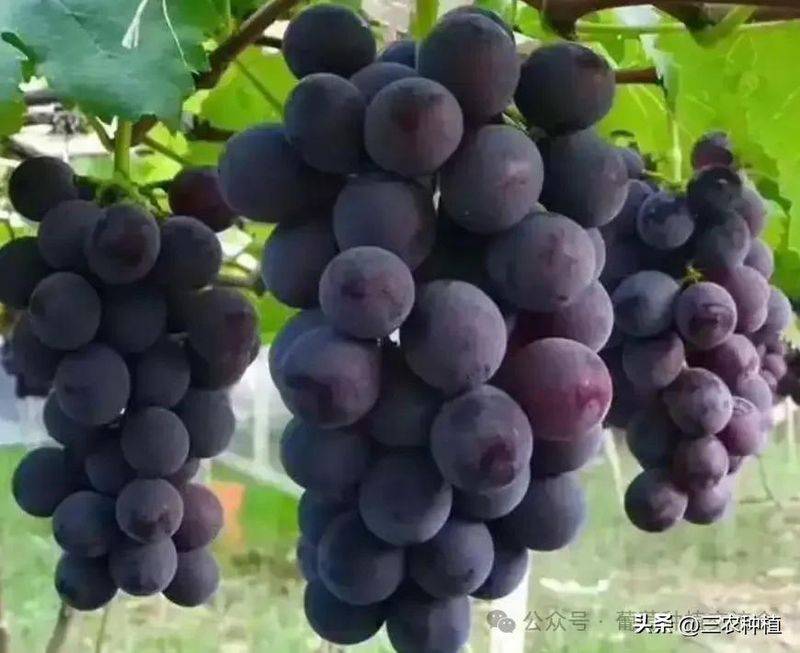
In the history of chinese grape seedlings, giant plume grapes have rapidly become the main plant species since their introduction in 1959 and now account for approximately 35 per cent of the country's grape cultivation. The summer black grapes were introduced at the beginning of the twenty-first century, rapidly occupying high-end markets with non-nuclear characteristics. According to data from the ministry of agriculture and rural development, in 2024, the country's summer and black cultivation had exceeded 800,000 acres, with an annual growth rate of over 15 per cent, showing a clear trend towards alternative traditional varieties. Today we will share with you the technology of natural fruit and early fruit, which will hopefully help the farmers。
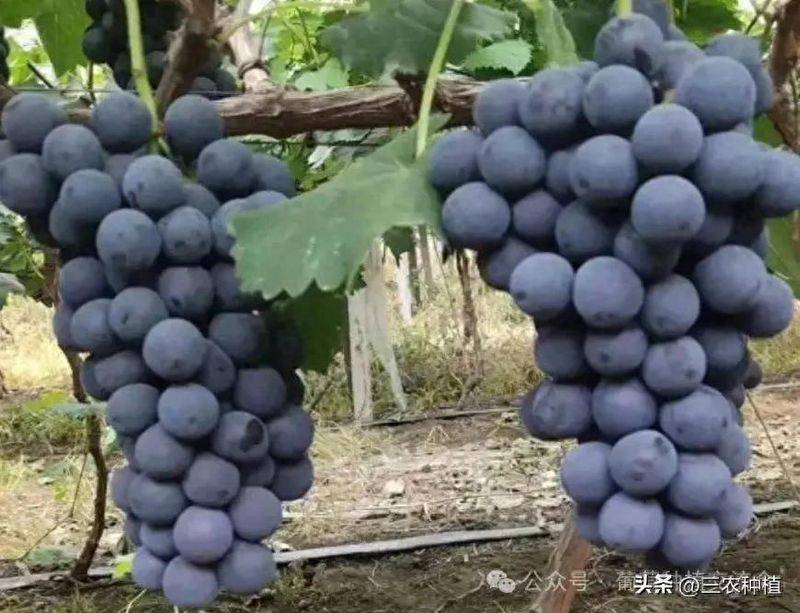
The pre-maturity and quality upgrading of mega-pore natural fruit production technologies through integrated measures such as seed selection, environmental regulation, tree management, nutrition regulation and pest and disease control are as follows:
I. Typology selection and pre-preparation
1. Varieties suitability
The choice of large peak variants or modified varieties that are resistant to weak light, require short cooling (25-60 days), have a high precipitous growth rate is more conducive to early growth. For example, some of the mega-capture varieties reduce the hibernation period by selection, leading to early and long-term growth。
2. Hibernation management
Temperature pre-cold: water is poured through leaves and covered with grasshoppers, the temperature within the facility is maintained at 0-9°c and the temperature increases gradually when cooling requirements are met。
Chemical breakout: emerald eye with 50% melamine 20 - 30 times liquid or 50% lime nitrogen 5 - 10 times liquid, 10 - 15 days early. Attention needs to be drawn to the high toxicity of melamine, which is operated with protective equipment and is prohibited from drinking for 24 hours before and after spraying。
Ii. Equipment environment
1. Time and order of shacks
Time: the time of the shack is determined according to the planting pattern. One membrane prompts 45 days before the local open-air grape sprouts; two membranes contributes 10 days before the sprouts; and three membranes contributes 80-90 days before the sprouts。
Order: following the principle of "innate, rear and middle" , decoupling the outer film, 3-7 days before decorating the membrane, and finally the membrane, avoiding one-time coverage leading to slow warming of the ground。
2. Temperature management
In the embryonic period: 15-20°c during the day and 5°c during the night, the temperature is slow; humidity is maintained at 85-90%, increasing humidity through the ground cover or spray。
New births are long: 25-28°c during the day and around 15°c at night; humidity is reduced to 60% to avoid long branches。
Period: 28-30°c during the day and about 18°c at night; moisture control at 50% to prevent pollen transmission from being obstructed and diseased。
Precipitation periods: 25-28°c during the day, 18-20°c during the night; 50-60% humidity, reduced by ventilation。
Maturities of berries: 28-30°c during the day, 15-20°c during the night; increase of temperature differentials between day and night (10°c) to promote accumulation of sugar; and maintenance of humidity of 50-60%。
Iii. Tree management and nutrition regulation
1 integrative cut
Winter shearing: in early january, a short cut was carried out, with 8 to 10 female branches per branch, 3 to 4 sprouts per branch, and a mediocre branch was retained。
Summer trim:
Eraser: when it grows up to 2-4 cm, remove the twin sprouts, the sides of the three sprouts and the weak sprouts。
Cardiocre: 6-8 leaf grafts at the top of the graft, and 1-2 grafts at the top; 10 grafts at the top and 2-3 at the top。
(b) zorie: 40-60 grains per ear and single layer to avoid congestion of fruit。
2. Fertilizer water management
Base manure: 40-100 kg of curing organic fertilizer per acre in the autumn to improve the soil in combination with organic bacterial fertilizer at root。
Demolition fat: 3-5 kg of high nitrogen water solution per acre prior to germation to promote root system activity。
Numeric fertilizers: the first application was 5 kg of balanced water solution per acre after the physiological fallout; the second application of 3-5 kg of potassium solution per acre after the hard core period。
Leaf fat:
Premature: administration of 0. 4 per cent potassium sulphate or 0. 3 per cent potassium dihydrohydrophosphate for new strength。
Turnover period: 3% potassium dihydrohydrophosphate or high-phosphate potassium fertilizer (e. G. 800-1,000 times red-dilution), 5-7 days apart, 2-3 times used to promote colored sugar。
Specific technologies for early maturity
1. Cultivated land
The berries have been ploughed two to three times during the softening period, defusing the soil, increasing temperature differentials during the day and night, reducing the humidity of the fields and promoting early ripening。
2. Elimination of old leaves
Remove the leaves from the ears of the fruit, increase the light time and increase the maturity of the berries。
3. Reconciliation applications
Nucleotide: the application of 0. 05% nucleotide solution is about 30 days after the flower and 20 days before maturity。
H2o2: the application of 300 mm/l h2o2 solution approximately 30 days after the flower has a similar effect to nuclide。
Achromin: 15-20 ppm + 200 times urea solution plastered to promote chromosophyte。
V. Pest management
1. Control during critical periods
Fluid period: 3-perimetre thiophthalate sprayed to eliminate residual fungus。
• flowering period: focussing on the prevention of ashilosis, cormorant disease and the spraying of 800 times the algae acid + 1,000 times the phosphorus fat。
Post-leaffall: erasing of sick leaves in gardens and reducing the incidence of winter diseases。
2. Safe medicine
The use of high residual pesticides during flowering and fruit expansion periods is avoided by choosing low-toxic and efficient agents such as americamine, cactyl。



