Wen yang nam
At the beginning of the summer of 2026, four plain-looking “boxes” were placed in the squares of shanghai agricultural science. Opens the box door, but inside it is another place: on a pile of plantations, green strawberry blades spread in artificial light and white, pink and red fruit spots. On the screen side, smart systems are tracking strawberry growth in real time and adjusting light, temperature, ventilation and nutrient matching to algorithmic demand dynamics。
This is the final stage of the fifth multi-agricultural science and technology competition. The team for the finals of the four promotions will have to design and build a 50-square-metre plant from scratch, where a six-month national strawberries farming match will take place。
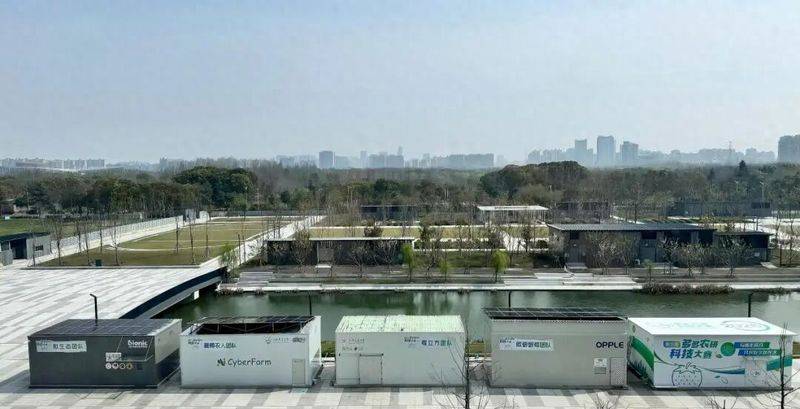
Each of the four final teams designed and constructed 50 square metres of strawberry plants. Land cloud waves
As one of the oldest industries in humankind, agriculture is experiencing an experiment that has been reshaped by industrial logic and artificial intelligence. The challenge for the players is not only to address the technical challenge of how to grow strawberries in a completely closed environment, but also to try to bridge the gap between high-energy consumption and high-cost commercialization. And behind this experiment, a group of “new farmers” with cross-cutting backgrounds, such as industrial, artificial intelligence and business thinking, are redefining the future of chinese agriculture。
The finalists are all very good
Plant factories are an attempt by humans to take full control of crop conditions. In traditional outdoor fields, farmers are required to “eat food” by heaven for four hours. In facilities such as greenhouse sheds, people are able to partially control temperature, humidity, air currents, etc., so that crops grow counter-seasonally. And in the botanical plants of this competition, even sunlight and breezes are artificial。
“this is a completely controlled and closed environment, where all light, temperature, water, gas and fat are controlled by you.” one of the contestants said, "you're the god of 3,000 strawberries in a plant."
However, god is not so good. The examination was selected for strawberry cultivation, not only because of its high economic value added, but also because, as a result, strawberries are very “priced”. At different stages, i. E. Long leaves, budding, outcome period, expansion period, and so forth, its rationing requirements for light, temperature and nutrients are very different, testing the technical integration and dynamic regulation capabilities of the teams involved。
On the surface, the plant plants of the four teams are somewhat similar, planting strawberries on a row of portable plantations with wind machines, lights, etc. However, the details of equipment functionality and drainage, control systems, planting methods, etc., give a differentiated approach to each unit。
As an enterprise-led team, the opp jiberries team brought the experience and technology of opp lighting for industrial manufacturing into the field. In traditional plants, lighting and air-conditioning energy consumption accounts for 70 per cent of total operating costs. As a result, they abandoned traditional distributed power sources and introduced a system of “high-pressure direct flow power + water cooling lamps”。
They combine the power of more than 400 led lamps into a large outdoor power source, cooling through a cooling tower outside the water-cooled connection, and draining heat directly outside, significantly reducing the load of internal air conditioning. In addition, they customize dynamic “light formulations” for strawberry, which can reduce energy waste by regulating red, white and blue-light ratios that match the demand for strawberry growth cycles。
The berries cube team, led by shanghai transport university, focuses on the combination of environmental precision control and artificial intelligence. Inside the plant, they are filled with a reflection film that makes every beam of light as useful as possible and as evenly as possible fills the space. On each planting shelf, they are also equipped with an independent wind machine, which enables the flow to blow evenly towards each strawberries through piping holes and control algorithms。
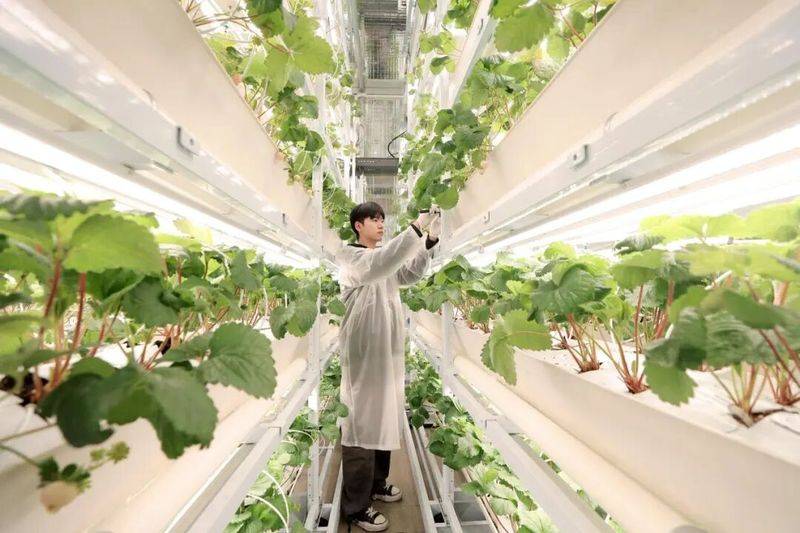
At the end of the trials, the team leader of the berry cube team, he shihi, records the strawberry fruit trail in order to optimize the formal planting phase of the finals. Land cloud waves
The berry cube team has also developed an image recognition smart diagnostic system that captures strawberry blades via cameras or mobile phones, enabling ai to automatically calculate the nitrogen, potassium, etc. Content of the plant and quickly generate adjustment programmes to translate the traditional farmer's experience of viewing leaves into quantitative decisions of over 90 per cent accuracy。
As the only team in this competition that uses the low-water flow (nft) cultivation model, the proposed ecological team suggested in the road show that traditional ideas often label water production as “chemical agriculture”, while their “de-ecological” systems are highly imitating natural ecology: aerobic fermentation of the non-eating portion of strawberries (root leaves) using microbacterizers, which degrade and revert to the system with liquid nutrients in the hope of achieving a true zero emission closure. In a pure cultivation environment, they do not need to spray chemical pesticides that affect the taste of the wind and use technology to clean and secure strawberry。
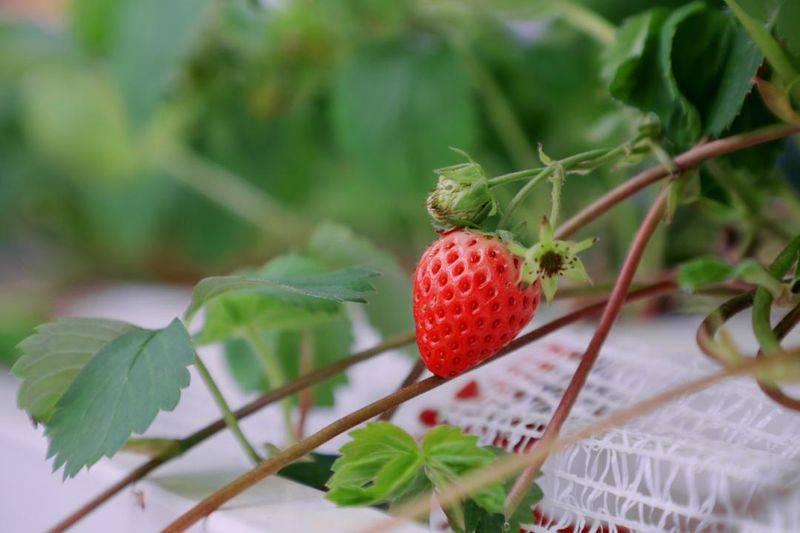
The proposed ecological team chooses the method of seed-flow strawberries cultivation, with an excellent ring control in exchange for a strong taste. Land cloud waves
The cybernomist team from the agricultural university of china is now the fifth to participate in the competition, a “student army” of 90 and 00 years later. Through the agricultural knowledge mapping and ai decision-making models accumulated from school research, they monitor data on a daily basis in real time and provide remote guidance to field workers in their operations. In terms of cooling, they skilfully introduced cold air outside the winter as a natural source of cooling into the heat exchange system, combined with cooling condensed water recovery and secondary wind return patterns, maximizing energy utilization and reducing operating costs。
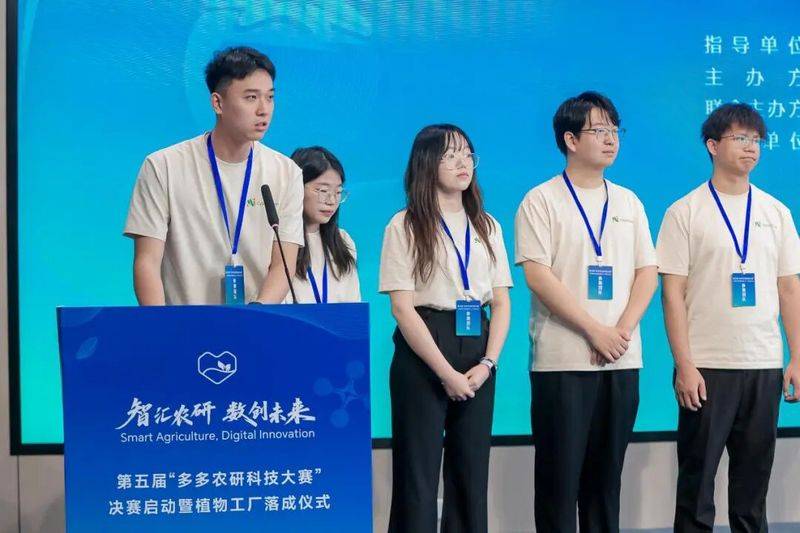
The team of sabo farmers, who have participated in five consecutive rounds, this year hopes to transcend the past. Land cloud waves
We're trying to solve the commercial problem
Although the technology in plant plants is obfuscating, whether it is a contestant or an assessor, it is always an extremely realistic topic: is it technically feasible and representative of commercial availability
Objectively, plants are not currently a “fast-paying” business. According to a report published by the intelligence advisory, the market for chinese plant plants is expected to be 2,248 million yuan in 2025, over 500 of which are the fastest industrializing countries in the world. However, it has also been reported that less than 10 per cent of the domestic plant plant industry is currently profitable。
The high cost of construction and operation is the first mountain on the road to commercialization of plant plants. In the operating cost structure of plant plants, energy consumption accounts for 50 to 60 per cent of the absolute head, followed by manual management costs of 30 to 40 per cent. It was mentioned that, in order to avoid high costs, most enterprises had to go back to the second place by planting green leaves with high rates of erosion and high growth, resulting in the current extremely monolithic structure of plant plants in the country, and that ordinary green leaves were hard to sustain high premiums and ended up in a profit trap。
Moreover, the supply of plant plants appears to be negligible in terms of macro-industrial volumes. Qin, a member of the straw cube team in charge of commercial marketing, settled a debt: “china has nearly 3 million acres of strawberries, producing 4 million tons, the highest in the world. An artificial light plant may not, for a considerable period of time, be the best solution to the large-scale, replicable chinese strawberry industry.”
Why is it that technology and industry continue to grow in size, since the prospect of commercialization is cloudy? In the view of the judges of the competition, professor of the faculty of hydrology and civil engineering of the chinese university of agriculture and ph. D.-student he dong xian, plant factories are not meant to replace large-scale daejeon agriculture, but to fill gaps in specific scenarios and areas of high value added。
In terms of physical geography and environmental conditions, plant plants free crops from geographical and climatic constraints. In areas where land resources are extremely strained, it can demand space from the sky; in extreme environments such as border posts, ocean studies, and so forth, it is a source of fresh fruit and vegetables。
For food such as strawberries, which is short-lived, plant plants can guarantee supplies in areas that do not have traditional planting and transport conditions. The proposed ecological team indicated that their container plant programme had been exported to doha, qatar, where the climate was hot。
In terms of high-value-added applications, he dong xian points out that plant plants have great potential in three areas in the future. The first is the availability of fresh food for quality consumption groups in metropolitan areas. She described the 15 per cent market share of raw vegetables grown in japanese plant factories, which was dedicated to providing consumers in cities with green health requirements。
The second is the non-polluting cultivation of high value added medicines, such as quartz, melon, etc. Detoxification seeds are grown in plant plants and can be effectively grown quickly from pests and weather constraints. Finally, plant plants are also promising in the field of synthetic biology and biomedicine, where closed, controlled environments can plant pure crops for biomedical needs, from which components such as recombinant protein can be extracted。
In the view of many judges and contestants, in addition to exploring commercial possibilities through technical grinding, the more important thing in this competition is to bring together people with the same ideals. It is also the value of a multi-billion-dollar “support” programme, which continues to add value in the field of agricultural research and research, exploring new models and technologies through high-level competitions, and providing technical and human support to farmers。
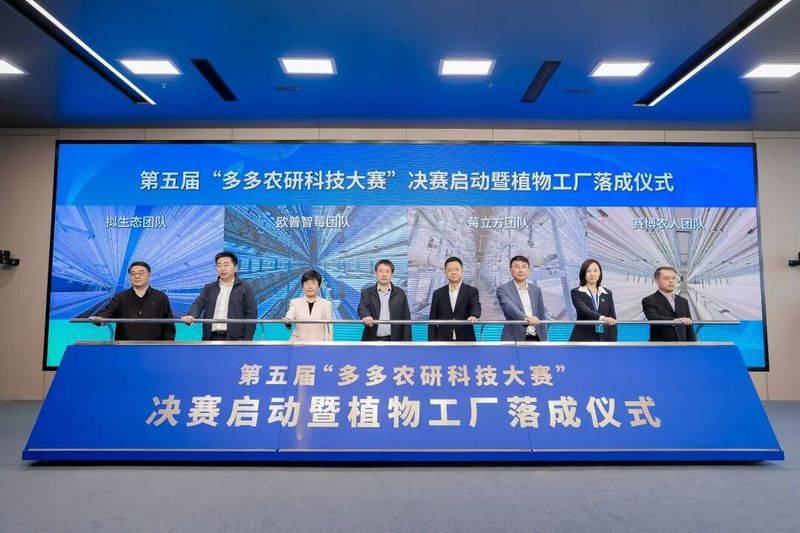
Li gwandeh (shanghai), vice-president and secretary-general of the shanghai federation for modern services (shanghai); du jinkun (song ii), director of social services and permanent vice-president of the new institute for rural development, chinese university of agriculture; li hui (shanghai), vice-president of the people's government of bong-hyun, shanghai; machigan (song iv), deputy director of the centre for foreign economic cooperation, ministry of agriculture and rural affairs; liu gang, second inspector, general economist, shanghai rural commission (king iv); zhao zhihui (king iii), vice-president of the shanghai academy of agricultural sciences; wang yi moon (king ii), project officer, fao representative office in china
“i rarely saw young people in the fields before.” qing qing said, “but this competition brings together so many good young people here. I am sure that more people will see and believe that growing from experience may, on a given day, really turn into planting through precision environmental regulation, so that technology and industry can be truly integrated.”
“new farmers” and future agriculture
Outside plant factories, the collision of old and new agricultural concepts is also occurring。
The operchberry team's summer yoga is an expert grower with nearly three decades of traditional strawberry farming experience. When it comes to strawberries, his tone is full of emotion and love: "we farmers have a habit of going around in the morning to see what the strawberries look like and what they need." he stressed the need for light to be “sweet” in the first days of planting and for plants to be “healthy and happy to grow up” according to their different cycles。
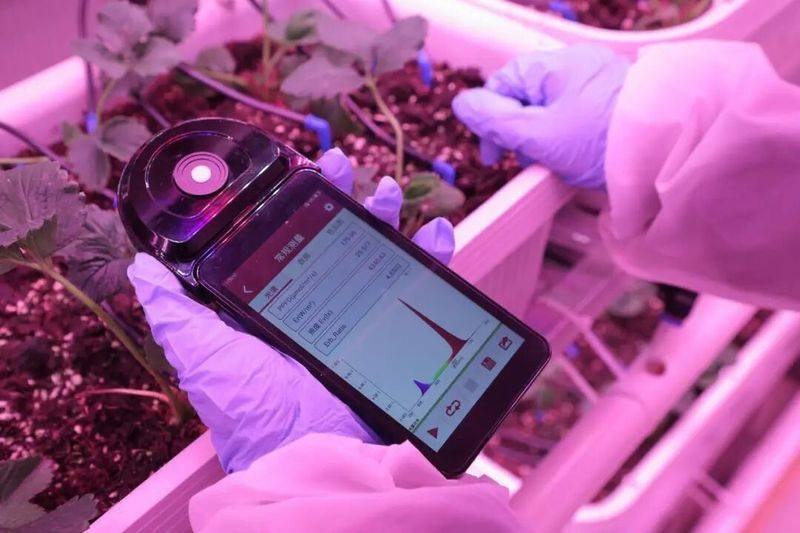
The members of the oprah team collect key data from plant plants using plant photoanalysis. Land cloud waves
Students and ai engineers from higher education are trying to decipher this “love” code. They don't go down very much, but they look at the plant's state through the curve on the phone screen. The challenge is to translate the experience in summer yoga accurately into quantifiable data such as the percentage of air moisture and the number of water chromosomes。
From this perspective, plant factories may be the most radical metaphor for agricultural transformation: through automation and environmental control techniques, people are not only untied to land, but also to nature, and even sunlight is no longer needed. Traditional experience has been transformed into quantifiable data and technology has replaced farmers ' intuition. There may be some who will read about the “fearfulness” of the land and traditions, but it is also fostering the future of chinese agriculture。
As a large country with a population, china faces many real challenges in agriculture, such as limited agricultural land, increased ageing and increased intensification. Professor he dongxiang pointed out that the ultimate goal of modern agricultural development was to improve three “rates”: production efficiency, resource-energy efficiency and labour efficiency。
The technical indicators of this competition are the direct reference to these three efficiency improvements. In previous competitions, a team of students who were able to rely on algorithms produced twice as much as the top traditional farmers. The involvement of ai technology is not only addressing labour shortages, but is also an attempt to create a self-repeating planting model that will allow agriculture to truly move from an “internet+” to an “ai+” era。
But technology is not everything. Engineers in charge of ai algorithms in several contesting teams have stated openly that there are currently very few surface data on plant growth, with a data gap of 99 per cent. Plants are not a standardized machine, and their growth is more complex than can be imagined。
“all the variables involved need to be clarified, and full automation from seeding to harvest by an ai model is virtually impossible in five years. Only those who truly know about agriculture, who have grown plants, will remain awe of this complexity.” he toni said。
This combination of technological self-confidence and awe of nature is the portrait of this generation of “new farmers”. They are breaking up the stereotypical image of agriculture as being “down to the ground”, low-tech and low-income。
The definition of the new farmer is very clear and pragmatic in the eyes of guo shen-bou of the sebo farmers' team: “first, the love of the industry; secondly, the ability to earn money; and thirdly, the ability to integrate advanced technologies into agriculture.” in his view, those young people who could manipulate a thousand acres of drones and share planting experience in social media were “new farmers”。
The old farmers are gradually leaving their fields. Where will agriculture go tomorrow? The answer may be hidden in these plants. This science and technology competition is growing not only thousands of strawberries, but also the new understanding of agriculture by the “new farmers” — when agriculture fades away from the bitter label of heavy manual labour, wearing artificial intelligence, data algorithms and modern industrial armour, it is becoming imaginative and calling for the future in unprecedented gestures。