


Double mushrooms, also known as white mushrooms, are the world's highest production and consumption of one of the most edible bacteria, and our country grows mainly for export, while market prospects are good as domestic consumption increases. The other mushrooms are of high nutritional value and health care, are in high demand in the market and have little or no investment and are quick to produce, so let's find out how the mushrooms are grown。
1. Shroom management
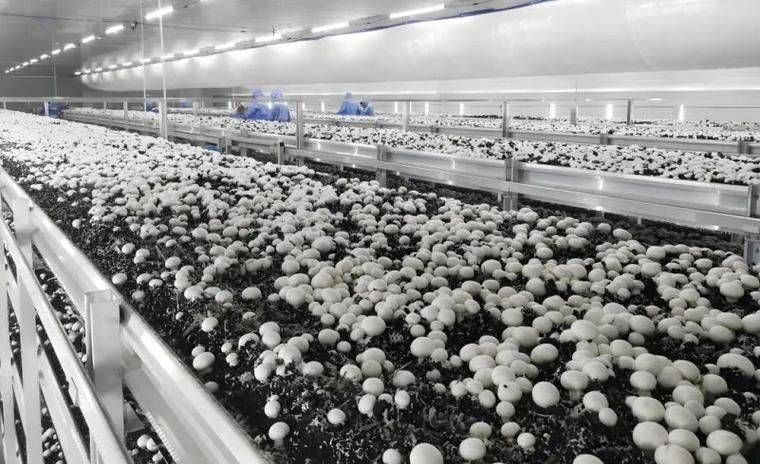
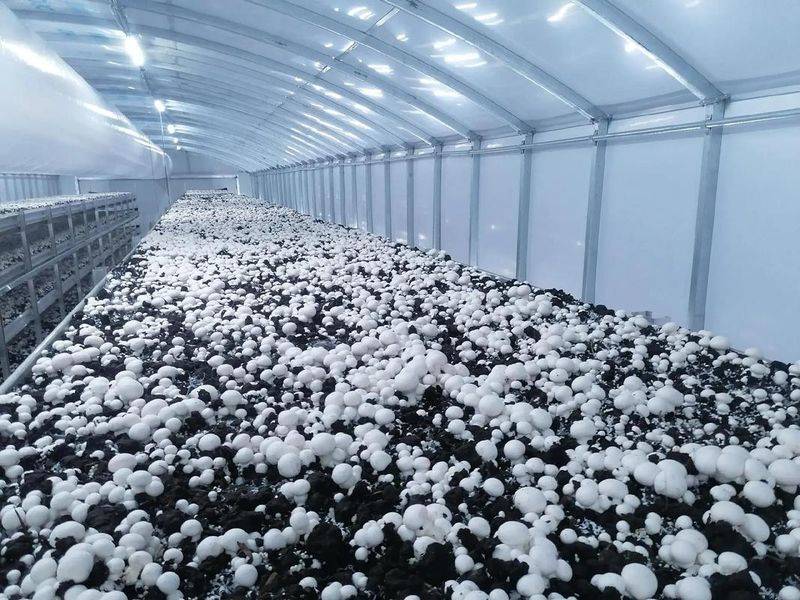
The mushroom sheds are best built in flat, well-watered places, far from warehouses, chemical plants, etc., and north-southwards, contributing to winter warming. The mushroom sheds are too hot or too low, contain too much water, seepages, etc., and the gathering results in no mushrooms, so the mushroom shed pressure must be properly vented and all doors and holes must have a door fan so that they can be ventilated and closed in order to control temperature and humidity, while the doors and holes should be placed in a veil so that the flies do not enter. It covers a layer of black film, 30 centimetres of straw and covers a layer of film, which helps to keep warm。
2. Raw material formulations
The raw materials for double mushroom cultivation are mainly straw and cow dung, and cow dung is best served by dry cow dung, for example, per square metre, which is typically used as a formulation for 1300 kg of dry straw, 500 kg of dry cow dung, 350 kg of dry chicken dung dung, 17. 5 kg of urea, 75 kg of cake, 25 kg of phosphorus fat, 17. 5 kg of lime and 17. 5 kg of plaster, at which time the ph value of the culture is around 7. 5-8. Or a formulation of 500 kg of dry straw, 1250 kg of dry cow dung, 40 kg of phosphorus fat, 40 kg of calcium carbonate and 50 kg of lime, with ph of about 7. 5-8。
3 piled fermentation
The first was to impregnate the straw in batches of water, mix it with the bubble so that it is fully pumped, then piled together, and the pre-heap will be aborted, the third day after the pre-wetting will be followed by a layer of pre-wetted straw, with a plaster powder spread over the surface, a spray of water, urea and lime powder, and a layer of straw laid, and so on, until the pre-heap is completed. Before stacking, cattle dung, chicken dung and manure are mixed evenly, followed by low concentrations of lime pre-wetted into groups, and phosphorous fertilizer, plaster and lime are mixed evenly, and then spread over the face of cattle and chicken dung, and then covered with plastic film. The fermentation takes place on the fifth day of the paddy prep and lays straw on the ground, with a mix of cow and chicken dung on the surface, and so on, until the build-up is completed. Finally, the spray piles, measuring acid alkalinity, are made of suitable nutrients, which last contain around 64 per cent water, with a ph of 7. 5-8, without the acid odour and with a special scent。
Seeding
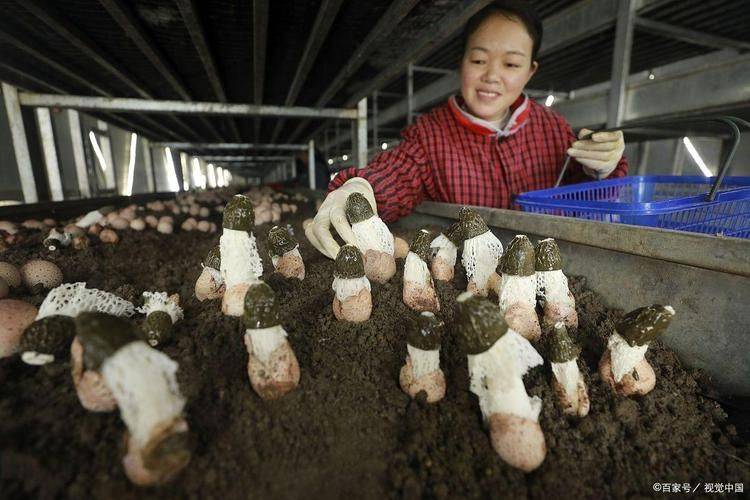
During seeding, the bacterial containers, the inoculation basis, and the hands of the operator are sterilised with alcohol, with half of the bacterial species being spread evenly on the fabric first, and a little suppressed by the insertion of a finger into the material, so that the bacterial species fall evenly into the fabric of the three-to-fives, and the remaining half of the bacteria are spread evenly on the fabric. When seeding occurs, the temperature is 22-25 degrees and the air is 75 per cent wet, the vents are closed within a week, and the fungus grow as quickly as possible, and after a week, the fungus grow normally, so that the air can be replaced。



