


On 18 march, the integrated agricultural and livestock service centre of sagar county invited a team of experts from the city centre for agricultural research to carry out a training course on the techniques of “party leadership for the scientific planting of vegetables” in the greenhouses in the village of gap in the town of gagara. The training focused on teaching and on-site practical training of cold-resistant vegetables in the highlands, such as emma potatoes and four-season cabbage, with the participation of staff from the town of gagara, members of the village two committees in five administrative villages, technical specialists and specialists in science and technology。
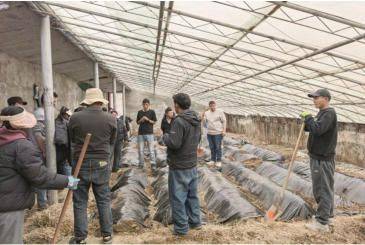
This is illustrated by the training site。
The training is based on high-altitude realities such as cold local climates, soil infertiles, low-temperature droughts and is conducted in a combination of “doctrines + field exercises + questions and answers”. The experts have conducted detailed lectures in easy to understand language around key technologies such as potato selection, cutting-block sprouts, deep tillage, membrane protection, fertilization of formulations, green disease prevention and control, as well as four seasons of cabbage ready to plant, dense seedlings, hydrofertilizer management, integrated pest management and so forth, and hand-held demonstrations of operational points to bring good breeding practices directly to the people's homes。
In response to the difficulties of growing vegetables in high altitudes, the experts focused on promoting practical techniques such as temperature protection, cold resistance and light and simple cultivation, to guide participants in the scientific use of fattening and standard medicine, and to improve the efficiency of cultivation. The participants listened carefully, asked questions and spoke proactively, and the atmosphere for learning was strong。
The training, which brought scientific and technological services to the production level, and practical skills to the general public, effectively upgraded the skills of the population to grow vegetables and regulate them, thereby laying a solid foundation for the development of the highland specialty farming industry and the solid promotion of rural industries。



