Traditional rice cultivation is based on water breeding, high-density planting as a core model, and there are salient problems of weak seedlings, underdeveloped root systems, long slow seeding periods, group depression, poor ventilation, high disease and infestation, and low fertilizer utilization, which are difficult to match with high-yielding, high-quality, efficient, ecologically safe production targets for modern rice. As agricultural resource constraints tighten, labour costs rise, and eco-environmental requirements increase, the limitations of traditional cultivation models become more pronounced, and there is an urgent need to develop and promote new technologies for simple, efficient, green, high-yielding rice cultivation。
I. Technical content and technical characteristics of drought breeding techniques
(i) content
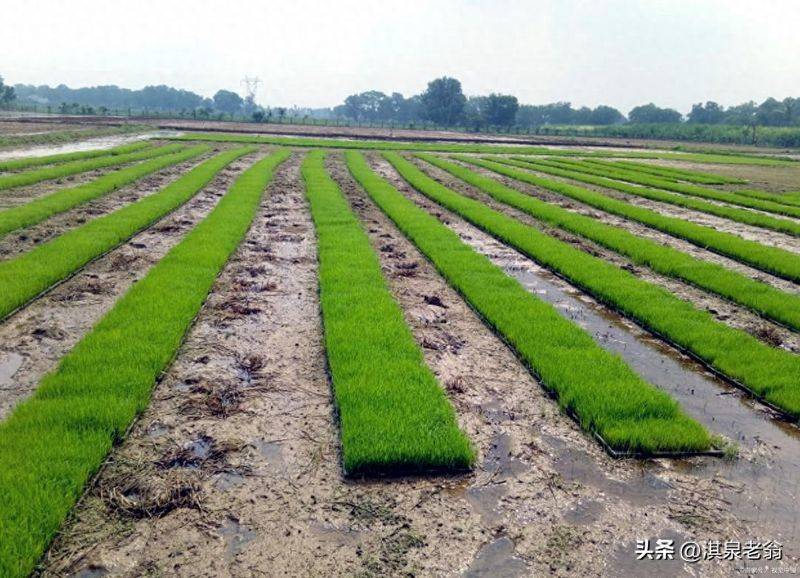
Dry rice breeding techniques, which are organically composed of two core components of dry and rare cultivation, are integrated planting techniques for seedling innovation, optimization of planting and integrated field management. Dry breeding abandons traditional water field breeding patterns, breeds seedlings under dry land, dryland nursery beds or dry conditions, fosters well-developed roots, thick and resistant growth through water control, acid control, fattening, fattening and temperature control, and rare cultivation alters the practice of high-density plantings by increasing distance, rationalizing the distance, reducing the basic number of seedlings per den, optimizing the structure of rice groups, improving ventilation conditions in the field, promoting healthy individual growth and efficient partitioning, and ultimately achieving high productivity。
(ii) core technical characteristics
1. The quality of seedlings is excellent: the soil of dry seedling beds is defusing and balanced in nutrients, the roots of seedlings are numerous, dense and deep, the staggered and foliage is thick, the resistance to cold temperatures, drought and disease is significantly increased, and there is no apparent delay in planting and early growth occurs。
2. Optimization of the group structure: rare plantings reduce the number of basic seedlings in the field, avoid over-compression of the group, increase photo-energy utilization and ventilation, reduce inefficiency and increase the number of effective ears, yield and weight of thousands of grains。
3. Efficient use of resources: more than 50 per cent of the water can be conserved by drought, around 30 per cent by province and more than 50 per cent by province, compared with traditional water production, while reducing fertilizer and pesticide inputs and the risk of water consumption and surface pollution。
4. Befitability is wide: after home-grown improvements, various planting patterns, such as single-season rice, double-season early rice, double-season late rice, cold rice, hill rice, plain rice, etc., can be adapted to a variety of planting methods, such as hand-plugging and machine-plugging。
Increased production yields are significant: multiple production practices have shown that dry breeding techniques increase production by 10-20 per cent per acre compared to traditional cultivation, while reducing production costs, improving rice quality, economic efficiency and ecological efficiency。
Ii. Analysis of the mechanisms for increasing production of drought-fed rare-plant technologies
(i) dry and strong: building a sound foundation
Drought breeding improves the quality of seedlings at the biological level through three core measures: bed fertilisation, water control for rooting and acid control. The seedbeds increase the application of corroded organic fertilizers and special strong agents, improve soil physicochemicals and provide balanced nutrients; maintain wet rather than saturated beds throughout the journey, avoid oxygen-deficit decaying roots, promote deep root growth and stratification of the root system, form “deep, root-sized, strong” root systems and increase nutrient and water absorption capacity; and make the bed acids a micro-acid environment suitable for seedling growth, inhibiting the occurrence of morbidity, stasis, etc., and reducing the incidence of medicine and weakness. A strong, fast-growing, early and effective spread has laid the foundation for increasing the number of effective ears。
(ii) rare-planting optimization: construction of high-yield group structures
Precipitation follows the high-yielding principle of “small groups, strong individuals, high accumulations”** and reconciles the growth of rice groups with that of individuals through a reasonable reduction in planting density. Increased range to increase ventilation in the field, lower moisture in the field and reduce the growth of diseases and pests, such as dysentery and paddy lice; reduction of the number of seedlings per cave to avoid competition between individuals for nutrients, light and moisture; promotion of single-stamp capacity and improvement of the effective partitioning and oscillation rates; optimization of group photolytic structures, extension of the functional leaf life, increase of the accumulation of photocolumn products and transfer of more nutrients to the ear, thus increasing the yield and weight of thousands of grains. At the same time, there has been a significant increase in the resilience of rare groups and a reduction in production losses due to natural disasters。
(iii) water fertilization: improving resource efficiency
Pre-, mid- and back-to-back fertilization models combined with dry- and wet-dry irrigation models are used to achieve efficient use of water fertilization. It is based on organic fertilizers and is supported by fertilizers, which reduce the input of nitrogen in the front period and avoid the growth of seedlings; it promotes the effective division of lumbers during spectrometers and the reductive application of seedlings; and it is based on the principles of “dry breeding control of water, shifting of shallow water, wetting of lumbers, shallow water in the lumber, drying of the post-spills”, reducing the waste of water resources, while promoting the laying down of roots and preventing early decay. Co-management of hydrofertilizers increases the utilization of rice nutrients, reduces fertilizer loss and water pollution and achieves high green yields。
(iv) resilient growth: reducing production risk losses
Dry seedlings are compact, cell walls are thicker and amino acid levels are higher, resistant to low temperatures, drought and salin resistance are significantly better than water. They can sow early and prolong fertility periods, avoiding the risk of low temperature colds; rare-planted groups are well ventilated, with low field humidity and a lower incidence of disease and pests by more than 30 per cent; pesticide use is reduced to improve rice safety; strong individuals and optimized group synergies are strengthened, rice is more inverted, resistant and productive and stable。
Iii. Standardized operating procedures for dry and rare cultivation of rice
(i) technical protocols for drought breeding
1. Sledding site and landscape
(b) the selection of areas of land on the land or in the sand that are low-lying, vulnerable to flooding, salinization and heavy scavengers, with a backwind to the sun, flat to the ground, deep to the ground, fertile soil, abating gas, easy to drain and drain, moderate to the acidity (ph4. 5-6. 0). 15 to 20 days in advance, with a depth of 20 to 25 centimetres, weeds, rocks, fine dredges, so that the earth is fine, flat and fat。
2. Fertilization and acid decomposition of seedbeds
Fertilisation of nursery beds is based on the principle of “organizing and supplementing” and each acre bed is flatized into the soil by the application of fertilizing farmers with 2000-3000 kg, compound fat 20-25 kg and potassium sulfate 5-8 kg. The use of strong agent to decorate acid or sulfur is used to increase the ph of the seedbed soil to 4. 5-6. 0, to contain the disease during the seeding period and to promote seedling growth。
Seed treatment
High-yielding, high-quality, resistant and well-required rice varieties are selected to sow for 1-2 days to improve seed vitality; impregnated with pharmaceutical agents such as meshamine and cyanide esters to combat transmissions such as seedlings and rice plagues; seeding occurs after leaching until the breast is exposed, and seeding can occur at a length of 0. 2 to 0. 5 cm。
4. Quantified seeding
According to local climate, birth and planting times, single-season rice tends to sow 30 to 35 days, two-season early rice 25 to 30 days and two-season late rice 20 to 25 days. The sowing is controlled by 20-30 kg of seedbeds per acre, spread evenly, then covered by 0. 5-1 cm thick soil, watered through the bottom, covering the membrane or sunnet to keep the temperature wet。
5. Taneda management
Temperature management: sowing 25-30°c within the membrane temperature of seedlings and ventilating seedlings after seeding, temperature control at 20-25°c to avoid high temperature burning of seedlings; moisture management: insistence on “drying and death, watering and watering” and watering of seedbeds when the soil is white, seedlings are watered during midday atrophy, before frequent water is poured; nutrient management: fertilization of milk during 2 leaves, fertilization during 4 leaves and fertilization to grow strong; pest control: focus on the prevention and control of adhesive diseases, smosis, rice tremors, biological pesticides or low-toxic chemicals。
(ii) technical protocols for seedling in daejeon
1. Field-wide and fertilization
7-10 days before the planting, the field was grounded in such a way that it was levelled, muddled, fertilized, shallow and not more than 3 cm tall. Fertilisation is based on the “basic + decile + sepsis” model, which accounts for 60-70 per cent of total fertilization and is dominated by organic and compound fertilization; 20-25 per cent of obituary fertilization, which is applied 5-7 days after planting; 10-15 per cent of estuarine fertilisation, which is applied during pregnancy, and avoids late sterility。
2. Replantation and rational replanting
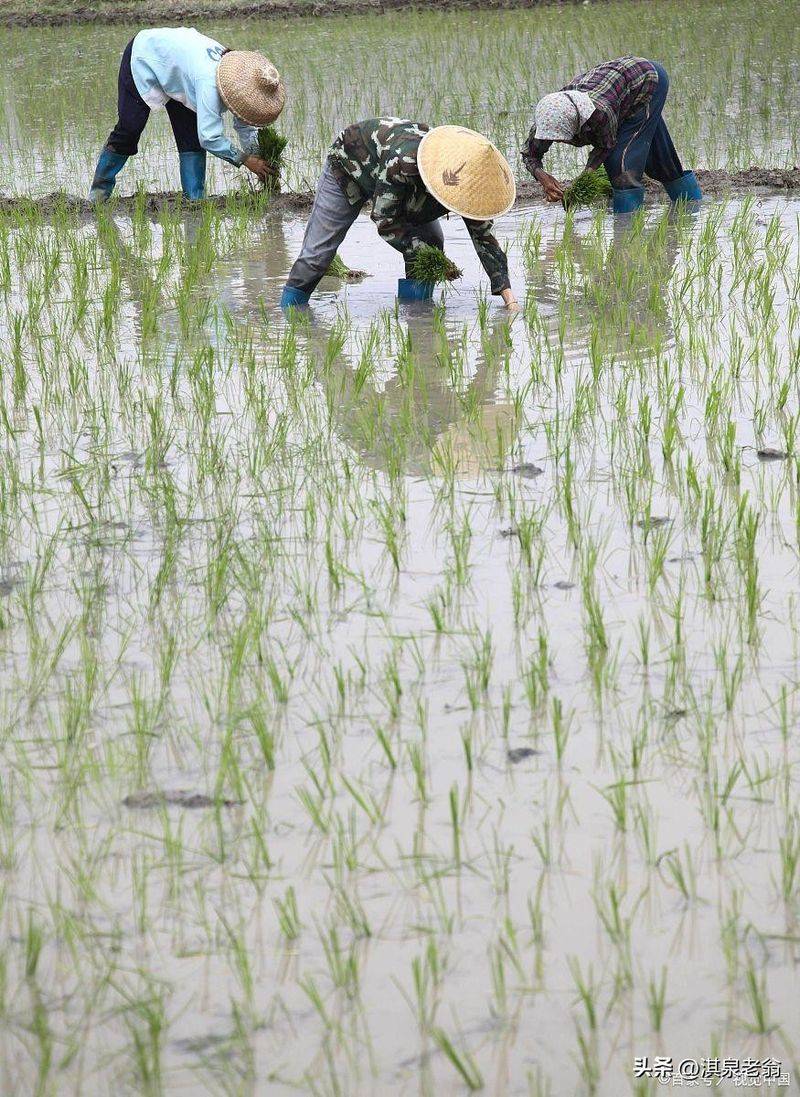
The seedlings range from 1 in 3 to 1 in 4 centimetres, 15 to 20 centimetres tall, with well-developed roots, and no pests and pests, and are selected to take place in the middle of the day or in the evening to avoid high temperatures. Plantation density is adjusted to the type of species, soil fertility, climatic conditions, with high-yielding fields using a range of 30 to 40 centimetres and 15 to 18 centimetres with a range of 2 to 3 seedlings per latency; medium-fertilized fields with a range of 28 to 33 centimetres and a range of 14 to 16 centimetres, with a range of 3 to 4 per latency; and mechanical plugs with an appropriate reduction of the range to ensure rational base seeding. The core principles are stretching, scaling, reducing the number of seedlings, increasing individuals and optimizing the group structure。
3. Water management in daejeon
The planting period is maintained in shallow waters (1-2 cm) to promote return to green; the periods of shallow water recharge and wetting of the field to promote partitioning; the time-sensitive preparation of the fields for sunburning and control of the non-effective fractions and increase the permeability of the soil; the periods of gestation and estrangement are maintained in shallow waters to ensure the water supply; the dry and wet rotation of the slurry period, wet and strong seeds are cut off for the first 7 to 10 days of harvesting, avoiding the premature disruption of the weight of the effects of the water。
4. Green control of pest grass
Priority is given to agricultural, physical and biological control, together with low-toxic chemical pesticides, in accordance with the principle of “preventive and integrated treatment”. Agricultural control reduces the incidence of pests and diseases through rational thinning, scientific fertilization, sunfield control; physical control uses insecticidal lamps, sexual baits to lure rice to lice, paddy foliage; biological control releases red-eye bees and uses biopesticides; chemical control selects highly effective low-toxic pesticides with strict control of usage and safety intervals to ensure the safety of rice quality。
5. Timely harvests
Rice matures to 90 per cent - 95 per cent yellow in the ear, hard seed grains, 20 per cent water-bearing rate - and is harvested using mechanical or artificial harvesting, drying in time, preventing molds, buds and securing rice production and quality。
Iv. Effectiveness of technology applications and validation of production practices
(i) production benefits: significant increase in monolithic production
Model data from the national multi-provincial experiment show that drought breeding techniques are more intensive than traditional water planting, with an increase of 70 - 120 kg per acre and an increase of 10 - 20 per cent. The technology has brought rice acre production to over 600 kg, more than 15 per cent higher than traditional cultivation, in cold rice areas such as the heilong river and jilin; in rice areas such as anhui and jiangsu, double-season rice acre production increased by 12-18 per cent; and in southern rice areas such as guangdong and guangxi, the number of effective ears increased by 10-15 per cent after late rice application and the yield increased by 5-8 percentage points. The scalding application area achieves a series of high yields that effectively raise regional monolithic levels。
(ii) economic benefits: significant savings
This technology has been increased by one in four provinces: more than 50 per cent of the water supply and reduced irrigation pressure in water-deficit areas; around 30 per cent of the water supply; reduced seed costs; more than 50 per cent of the field; increased land use; and 2-3 acres of labour inputs. At the same time, the quality of rice has increased by 5-10 per cent, with a net gain of $150-300 per acre. In guangdong province, for example, the full-scale extension of the technology could increase food production by more than 300 million kilograms per year and farmers by 1. 2 billion yuan。
(iii) eco-efficiency: green production efficiency gains
It reduces the consumption of water during breeding, reduces the incidence of soil moisture and pests, reduces fertilizer and pesticide use by 20-30 per cent and reduces the risk of contamination from agricultural surface sources; optimizes soil physicochemicality, improves soil organic content and promotes a virtuous cycle of rice field ecosystems; increases in resilience to voltage and reversibility, reduces natural disaster losses and promotes a green, ecological and sustainable transition to rice production。
(iv) social benefits: food security
Dry-breeding techniques are scaled up, mechanized and standardized for production, increasing the efficiency and risk-resistant capacity of rice production, stabilizing the area under rice cultivation and total production; easing the pressure of labour shortages and helping small farmers to connect to modern agriculture; promoting technological innovations in rice to increase the core competitiveness of rice production in the country and providing technical support to guarantee national food security。
Technology diffusion constraints and development responses
(i) main constraints
(a) poor awareness of farmers: some are constrained by traditional cultivation practices, lack of awareness of the technical principles, operational points and productivity gains of dry breeding, and low acceptance of “reduced production”。
2. Irregularity in the operation of technology: the poor operation of key elements, such as seed bed acidation, seeding, planting density and management of hydrofertilizers, which leads to failures in breeding, irrational group structures and impacts on productivity。
3. Inadequate facilities: poor irrigation facilities in some rice areas, low mechanization levels, difficulties in meeting standardization requirements for drought-fed rare-planting techniques; inadequate supply of strong agents, specialized agricultural machinery。
4. Lack of delivery of technical services: weak grass-roots extension of agricultural technology, delays in technical training, in-field guidance, and difficulties encountered by farmers in effectively addressing their problems。
5. Inadequate suitability of varieties: some rice varieties are poorly divided, compact, unsuited to rare cultivation, limiting the potential for technological growth。
(ii) development response
Increased awareness-raising and training to change cultivation
Through a variety of forms, such as on-site observation, technical lectures, short videos and field guides, drought breeding and rare technology principles, operational points and productivity gains are disseminated to break down traditional cognitive misperceptions; and new business owners, such as growers, family farms, cooperatives, and so forth, serve as role models and enable small farmers to apply technologies。
2. Regulate technical processes and promote standardized production
Establish technical standards and protocols for dry breeding rares in different rice zones and varieties, simplify the operation process, promote light and simplified technologies such as stupor, precision seeding, mechanical planting, etc., and lower the technology threshold; establish a standardized demonstration base to demonstrate the effectiveness of normative operations and high production and increase the rate of technological landing。
3. Improved support and enhanced material security
Increased investment in irrigation and mechanization of agricultural land, promotion of specialized equipment such as rice sowing machines, plugs and drones; and development and promotion of high-yielding, high-quality varieties of rice with low-yielding and high-yielding varieties and special-purpose stuporants, acid fixants, fertilizers and supplies。
4. Sound service systems to enhance technical service capacity
Strengthening of the agricultural extension teams at the grass-roots level, professional training of technical staff and technical guidance throughout the process; establishment of a model of technical services for “experts + agricultural technicians + demonstration households” to address the production challenges of farmers; promotion of socialization services to provide one-stop breeding, planting, management and harvesting services。
5. Strengthening integrated innovation and optimizing technology systems
Integrated and innovative systems of high-yielding technologies for dry and rare planting, combining green control, soil fertilizers, water-saving irrigation, mechanized production, etc., have been developed, and indigenous improvements have been made to the climate, soil and cropping systems in different rice areas to enhance technological suitability and productivity potential。