Self-confident intellectuals
The intellectuals and society of zhang ya moon and thomas sawyer, translated by liang xing, added a unique contribution to our western think-tank on intellectuals。
To say that it is unique is to say that the author sowell's attitude towards intellectuals is introspective and even critical, noting the unique nature of the influence of intellectuals on society:
Intellectuals of productive ideas can have a significant impact on society even if they do not have to face it directly, and the important problem is that they are often not responsible for the enormous negative impact of their ideas on society。
Their ideas thus appear to be produced and disseminated in complete freedom and free from any constraints. The academic code of “no publication or death” also threatens to exacerbate the new and even the alarming ideology of irresponsible thinking。
Of course, this is mainly about intellectuals from developed countries. Looking back at the history of western intellectuals, particularly in the united states, since the twentieth century, he analysed two distinct features that many of them had had:
One is the idea of sanctification, a perfect vision that is opposed to an emphasis on experience and a cautious “pessimism”, which often sets out a picture of a perfect society to judge the real world by believing that it can offer a way out and a solution, even if it considers itself or a system, or even a leader to be a sanctified individual, to lead society away from ignorance and towards pure light。
Another distinctive feature is “speeching”, which is indeed their superior, who speak too much or write too much, who are easy to glorify their visions, who are too critical of others, or who avoid real arguments, such as accusations of “too simple”
They are also quite good at filtering the facts, choosing materials or narratives to hit their opponents, or attacking their experience and common sense; and, after their apparent failure in their ideas, they are too good at rhetoric, covering up their mistakes and finding excuses for rationalization。
Who suffered most
From the point of view of the readers of the non-western world, the most serious consequences of the misconceptions of some modern western intellectuals are not in their own country, but in the non-western world, which has accepted the influence of their ideas。
A clear example is that of the book:
Cambodia's appalling crime, which began in may 1975, caused between one fifth and one third of the country's population at that time. “this appalling human tragedy was created by a group called the `supreme organization', made up of a group of french-speaking, middle-class cambodian intellectuals。
Of its eight leaders, five are teachers, one is a university professor, one is a civil servant and one is an economic expert”. Most of these leaders, who went to france in the 1950s and 1960s, were strongly influenced by the left-wing ideology that dominated france at that time, and then returned to their country for a violent revolution in the jungle。
It is difficult to say that they are born villains or executioners, and that they are even pursuing in good faith the ideals of a perfect society。
But they sacrificed everything at the extreme, and the result was a social and national catastrophe。
Most of these cambodian khmer leaders are now sick or dead in the middle of a war, and those who live are brought to justice. As direct leaders and organizers of that tragic killing, they are responsible for it。
But no one would ask whether there should also be some responsibility on the part of french and even broader western intellectuals who have had a strong influence on their minds. While not speaking of legal responsibility, should they have some moral responsibility
What is the responsibility of intellectuals
The moral responsibility of intellectuals should include the “ethics of responsibility”. This “ethic of responsibility”, unlike the “ethic of belief”, which takes into account its own ideal convictions, must take into account and take into account the social consequences of its political decisions, which affect many others。
It is true, however, that there is a difference with the ethical responsibility of politicians, who are productive ideas rather than policies, and who do not have a direct impact on society, but primarily provide options for systems or policies, and who must strive to achieve a clear and logical period of thought that requires a free and independent spirit and thorough thinking。
And his ideas or theories may or may not be accepted, and they themselves allow for a variety of interpretations or possibilities to develop in different directions. Thus, the ethical responsibility of intellectuals would not be as high or strict as that of politicians whose decisions directly and decisively affect the fate of millions of people。
But intellectuals still have some moral responsibility for their words and ideas。
In addition to considering their beliefs and ideas, they should consider the social implications and consequences of their ideas。
Thus, while they can and must think freely and independently and try to develop their own unique theories, it is appropriate to be cautious before they publish or propagate their own theories. They should respect and take into account common sense and experience in matters concerning society, rather than simply construct theoretical solutions to social problems based on their own “sanctification ideas”。
Secondly, the social consequences of the concept that it espouses should also be seen after it has spread or even become a social practice。
If such social practices have had serious negative social consequences and have had disastrous public consequences, they should reflect and acknowledge their mistakes rather than employing “speech techniques” to disguise and avoid them, and should, possibly, try to remedy such consequences, including by adjusting their own views or simply “surrender to the truth”。
What we see now is that there is indeed an intellectual moral responsibility that is often mentioned, emphasized and praised。
That is, intellectuals should rise up and protest and resist social injustice. Or, in a broader and moderate sense, intellectuals should speak in public affairs and care for society. This is undoubtedly also a moral responsibility of intellectuals。
The problem, however, is that the moral responsibility that we have described earlier to take into account social consequences, or to subject our ideas to the test of social practice, is often overlooked。
We can say at least that there are clear rules: intellectuals should not, for example, preach “whatever means are available to achieve their goals”, “violence” at the expense of the lives of large numbers of innocent people, and should not glorify dictators with absolute power, etc。
Difference between west and non-western
From the point of view of the relationship between intellectuals and society, the west is different from the non-western world。
For example, in the aftermath of a country's massive violent bloodshed or radicalization, one would ask:
What is the responsibility of the country's intellectuals, in addition to the politicians who directly caused these tragedies? Such accountability often extends to submissive, submissive, disobedient intellectuals。
However, there should be some limit to such accountability if one considers that the intellectuals of these countries are in a situation of extreme deprivation, even a choice between survival and destruction. It seems more appropriate to pursue or reflect:
Why should intellectuals who live in a free world, who are not threatened by any existential threat, help
Sowell wrote: “the record of the twentieth century intellectuals is particularly alarming in this regard. In the twentieth century, almost none of the indiscriminate dictators lacked the support of intellectuals; they had not only intellectual supporters within their own countries, but also in democracies outside their own countries, where people could freely express their ideas。
Among the intellectuals of western democracies, stalin and hitler all have their own admirers, defenders and advocates, despite the fact that each of these dictators has, in the end, massacred its own people on an unprecedented scale, more than the previous authoritarian regimes.”
Indeed, why should some western intellectuals, who seem to be the most independent and not subject to the persecution and repression of power, praise and obey the political powers of the states, even the dictators of totalitarian societies
Is it because they criticize and resist the relatively moderate rulers they face, or because they criticize the power of a soft global capital
This is not to say that such criticism and criticism are wrong, but it is not necessarily done through praise of the far-off dictators or of the different states. Where would that place those who truly live under such political dictatorship
It is also a moral duty for western intellectuals to consider and accommodate these issues. Moreover, because these intellectuals in the western world are in fact in a strong position, they are more intellectuals who influence the non-western world than are influenced by the other. They should also give greater consideration to this responsibility。
For intellectuals in the non-western world, there is probably a need for careful choice. Because of the different circumstances in which they live, western intellectuals focus their criticisms and attempts to solve problems that are many different from those of the non-western world, many of which are also necessary and even essential to their societies。
For example, according to the annual journal of higher education, cited by sower, “conservatives are very low in the humanities (3. 6%) and social sciences (4. 9%), but they are higher in commerce (24. 5%) and in health sciences (20. 5%).” “conservativeism” is in fact more classical right-wing liberalism, while “liberalism” is the left side of sovere
Among the elites in the social sciences and humanities, that is, among the teachers of higher education who have the authority to grant doctoral degrees, “not a single teacher was reported to have voted for president bush in 2004, when bush obtained an advantage among the country's popular electorate。
In the field of health science, a study shows that the proportion of teachers who call themselves conservative is comparable to the proportion who call themselves liberal (20. 5 per cent), while the rest call themselves moderate. In the business sector, the number of people claiming to be conservative (24. 5 per cent) is slightly higher than the number claiming to be liberal (21. 3 per cent)。
But in the social and human sciences, self-defined liberals predominate; among others in these disciplines, moderates are many times more conservative。
If that is the case, then young students who go to the west to study will have to be vigilant; and chinese scholars who try to keep up with the international community, and who try to keep up with it, will probably wake up. They must think as independently and carefully as possible. Because they live in societies quite different from western scholars。
In any case, intellectuals and society provides us with a mirror that points to an important aspect of the moral responsibility of intellectuals not only to speak out, but also to act with due diligence and to consider and take into account the impact and consequences of their words and ideas on society。
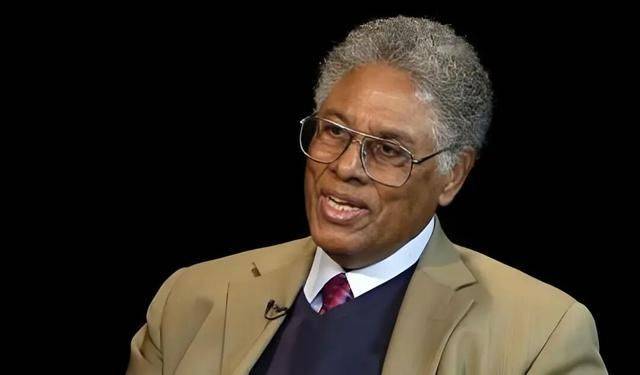
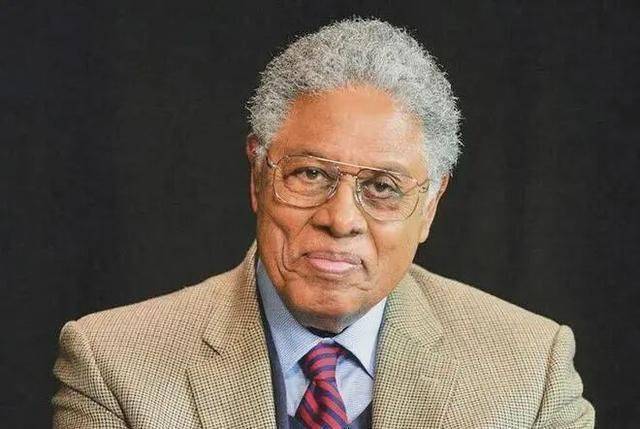
Sawyer is a famous black thinker in the united states and the most famous social critic in the modern united states. In this book, sawyer points out that many well-known intellectuals have developed “pharmaceutical formulas” for social ills, which are often proven not to have been drugged but to have enormous and disastrous consequences. Worse still, they persist in their views because they are not responsible。
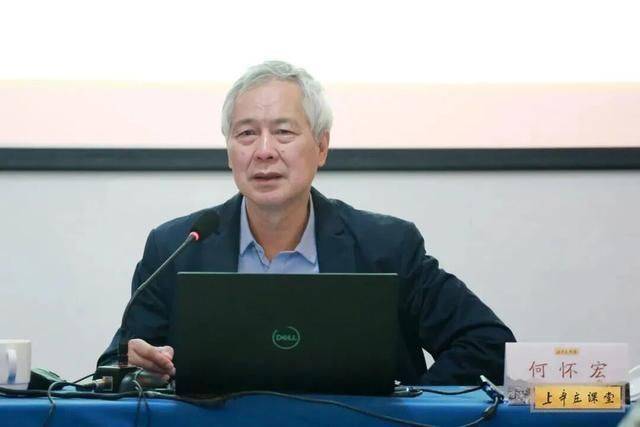
This is the preface written by professor ho huai hong, professor, faculty of philosophy and doctoral professor, university of beijing, to the intellectuals and society in sowell。