Technology for spinach cultivation
4 visits to chi harbour food co. Ltd., 2011-02-11
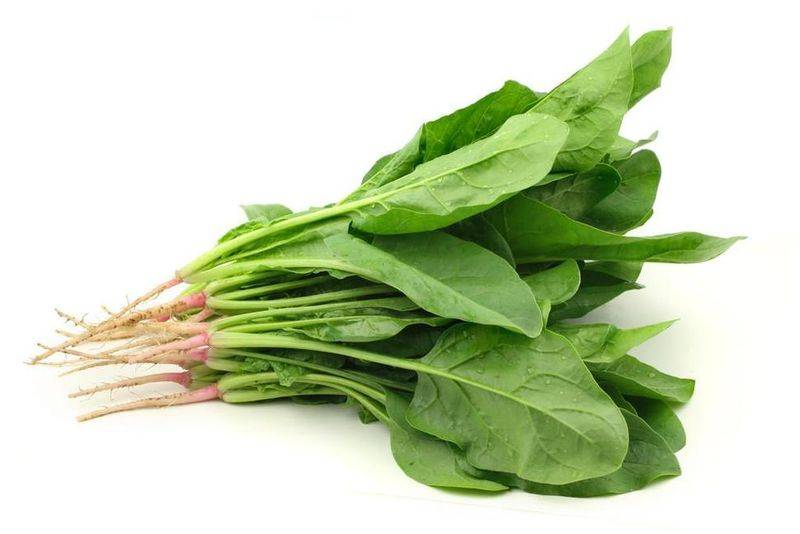
The techniques of planting spinach during the planting season and the variety of autumn spinach. The seeds were planted in august-september and collected in batches for 30-40 days. The selection of pre-cooked varieties, such as ploughing ploughing, pine1, guangdong round leaves and spring and autumn leaves, is desirable. Winter spinach. In mid-october-early november, seeds were planted and collected on and after spring seasons in batches. The seeding begins when the temperature rises back to more than 5oc after spring, with 30 to 50 days of seeding in march. The varieties are selected for late smoking, fat leaves, spring and autumn leaves, shenyang and liaoning leaves. Summer spinach. The may-july planting season continued in late june-mid-september, allowing for the selection of hot-resistant, fast-growing, non-smoking, balconies, etc. The choice is estranged and fertilized, water-protected, well-drained and well-drained, micro-acid border soil, with a value of 5. 5-7. The whole area is covered with 4000 kg of decomposed organic fattening, 40 kg of calcium per phosphate, finely fined and fined in winter and spring, smoothing in summer and autumn, and a width of 1. 2 to 1. 5 metres. Sowing seedlings is generally used to sow. The summer and autumn seeding takes place 12 hours before the planting, in a well or 24 hours in a refrigerator or freezer around 4oc, and then bulges under conditions of 20-25oc and sows after three to five days. Dry or wet seeds may be sowed in winter or spring. 3-3. 5 kg of acre seed. The face is sowed with bottom water, and the earth is dredged with teeth, so that seeds are sowed into the soil, and a layer of grass and ashes is added to the face. The summer and autumn broadcasts are followed by straw or small arch sheds covering the sunnet to prevent high temperatures and heavy rains. The soil is always warm, with 6-7 days of ready seedlings and low temperatures during the winter season, and is warmed up by covered plastic membranes or sunnets, which are removed. Autumn spinach once pours out a septic water; after two saplings, combine the saplings, weeding, fattening and thicking, with more manure in the preceding period; during the boom, two to three fats, 5 to 10 kilograms of urea per acre. The soil remains wet after winter spinach. When 3-4 leafs are left, water is properly controlled to keep the winter warm. At the time of the 2-3 leaf, it was 3-4 cm. Water fertilization is pursued according to sapling and weather, mainly on the basis of manure of deperated individuals. Frost and snow weather should cover plastic membranes and sunnets to keep warm and be covered by small arch sheds. After the spring, the sun is chosen to catch up with decompressed faeces and to guard against early smoking. Spring spinach is pre-covered with plastic membrane temperature protection, which can be covered directly on the surface, removed from the film or replaced by a small archer when seedlings are produced, and the small archer is exposed to day and night, the rain covers are barbed, and the seedlings are luminous, polycrete and timed out. Follow-up of fertilizing water, with defecation and hard work in front of decomposed humans and animals, and fast-activated nitrogen fertilizer at a later stage, especially 15 days before harvest. When the summer spinach comes out, the sunnet will still be covered, so that it will be exposed, so that the temperature will cool. Water should be watered in the morning or evening. After two to three real leaves, two fast-acting nitrogen fertilizers were pursued. Each application is followed by aqueous water to promote growth the aphids use 40 per cent of aluminum 1,000 times the fluid, or 50 per cent of anthropogenic 2000-3,000 times the fluid spray; 50 per cent of animated fenthion emulsion is 1,000 times the milk, or 80 per cent of trichlorfon powder is 1,000 times the fluid spray; 58 per cent of frosty disease uses redomir 500 times the fluid, or 75 per cent of anthrax clean 600 times the fluid spray; and 50 per cent of anthrax is treated with methyl tobzin 500 times the fluid or 50 per cent more than 700 the fungus spray. Timely harvests are generally more than 10 cm high and can be collected in batches. Some 15 days before the one-time harvest, leaf surfaces could be sprayed with 15-20 mg/kg of urea or ammonium, which could be harvested early and yield increased. It's a little later than winter spinach. Line, line 20-23 cm. Upon return from the spring season, the male strains were gradually removed and the male strains were drawn early, leaving some of the male strains, with a distance of 20 cm. It is not advisable to pour more water during the pumping period in order to avoid a thin fall and lower seed production. Following the flowering, fattening, watering, spraying 1 to 2 per cent of calcium phosphate clarification on the leaves, the seeds are full. Male seeds are collected and the male is removed in order to improve the ventilation. The tubers and large leaves are yellow, and the seeds are harvested when they mature, and they are removed several days later。