


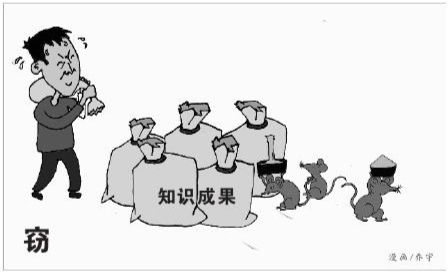
On 22 april, on the occasion of world intellectual property day 4, a press conference was held in a central court of the city to streamline 518 intellectual property cases before the court last year and to issue a series of typical cases of intellectual property violations。
Case 1
The counter can't be clearly distinguished
Tort liability at the mall
[case] the “red and twin-hide” trademark owned by the plaintiff red-happy is a well-known chinese trademark. The plaintiff purchased a pair of badminton slaps marked with red thongs and dhs at a supermarket in my city, which were identified as counterfeit goods registered by the plaintiff. The plaintiff requested the court to suspend the defendant's infringement, to compensate the economic loss of 150,000 yuan and to eliminate the effects. The defendant argued that the seller of the goods in question was the outsider of the case and that he had leased a counter outside the free-shopping area of his supermarket, which operated independently of the defendant, and that the sale had nothing to do with the defendant。
The [judgement] court of first instance held that the evidence provided by the defendant was not sufficient to show that the general consumer could identify the owner of the business as an independent subject distinct from the defendant (the supermarket) and that the defendant should therefore be held tortuously liable for the sale of the goods in question, ordering the defendant to cease the infringement and to compensate for the financial loss of $20,000. After the first instance judgement, the defendant appealed and, in the second instance, the defendant withdrew the appeal。
[present] if the name of the store's cabinet, by reason of its name, shopping tickets, purchase invoices, etc., does not allow consumers to make a clear distinction between business subjects that are different from the mall, the mall, as a space lessor, may be directly liable for tort in trademark infringement as a seller。
Case 2
Property brand protection
You need to be careful with the names
[case] a chengdu real estate developer, the plaintiff, registered in 2004 the trademarks of "shangshan" and "luxehills" in the real estate field. The defendant, zhongqing, whose real estate project was developed in chongqing, had been named “favorite mount blanche” and had used the logos “shinshan” and “luxehills” in the sale of the building。
[the decision] was mediated by the court and the parties reached an agreement to conciliate: the defendant immediately ceased to use the “luxehills” logo, the plaintiff agreed to continue the defendant's use of the “enjoy mountain pilgrimage” logo on the project in question and the defendant paid the plaintiff some compensation。
[performance] real estate development enterprises should be cautious in identifying project names and avoid confusion, and it would be extremely costly to change the name of a project in the event of infringement, not only in the face of compensation. It involves not only the management of houses, land, planning, public security, etc., which are complex procedures, but may also give rise to disputes with buyers。
Case 3
The employee switched the wine
Employers ' marketing responsibilities
[the circumstances of the case] the plaintiff, ibein grape v liquor, ltd., was legally authorized to use the “five grain liquor” trademark and the “w” graphic trademark. The defendant, who operated a five-star hotel in my city, whose employee, sun, converted the five-food liquids purchased by the hotel into fake wine for sale to the consumer, was found and the hotel claimed that the switch was a personal act of the employee and should not be held liable. The plaintiff argued that, for whatever reason, the defendant had violated the plaintiff's trademark rights by selling faked five grains of liquid and white wine, causing substantial damage to the reputation of the plaintiff's company and its products and was liable accordingly。
The court of first and second instance held that the defendant had committed an act of sale of counterfeit vase white wine, which constituted a trademark violation, and that the defendant was liable for damage caused to the plaintiff as a result of improper selection, supervision of the employee and mismanagement of the property, which led to the exchange of the genuines by his employees for counterfeit wine. The court therefore awarded the plaintiff $8,000 in damages for economic loss and reasonable expenses。
The general doctrine based on a trademark tort determination is that the defendant's subjective existence of a tort in the sale of counterfeit alcohol has no effect on the characterization of a tort in the trademark, and that its conduct constitutes a tort in the trademark only requires a review of whether or not it sells counterfeit trademark goods。
Case 4
Dutch boat-building, alligator transnational rights
Chongqing shipbuilding company is being prosecuted
[case] the plaintiff, a dutch shipbuilding company, has a patent in china for inventions called “an anchor with anchors”. The defendant was told that chongqing, a shipping industry company, had produced and sold two tons of mk6 anchor between may and august 2011, and that the product fell under the protection of the plaintiff's patent, thereby violating the plaintiff's patent rights. The two defendants were ordered to stop immediately the production, sale, promise of sale of tort products that violated the plaintiff's patent, compensation for the plaintiff's economic loss and reasonable expenses incurred in defence of rights。
[the decision] was mediated by the court and the defendant entered into a voluntary conciliation agreement whereby the defendant undertook to immediately cease production, sale of tort products that violated the plaintiff's patent and jointly compensate the plaintiff for damages and reasonable expenses。
The shipbuilding industry in chongqing has always been a leader in china’s interior region, but chongqing’s relative lack of protection of intellectual property rights in the home-grown shipbuilding industry has been reported in cases of alleged violations of intellectual property rights of foreign firms. This phenomenon is not conducive to the further development of the shipbuilding industry in chongqing, which should be of great concern. (yo yang)



