As the core subject of the civil service examinations, which is characterized by a high number of subjects, time constraints and a multiplicity of points of view, it is important to have a precise understanding of the strategies for the targeted scoring of the modules in order to achieve the most efficient achievement of the 130-135 questions (national examinations) or 100-125 questions (provincial examinations) within 120 minutes。
Common sense judgement: accumulation of fragmentation + scientific trade-offs, easy access to foundation min
According to the national examination, the common-sense diagnosis is stable on 20 subjects, with the highest percentage of current-political, life-scientific examinations, followed by historical humanities and laws, and in some provinces, such as liaoning, the number of common-scientific questions rose to 30 in 2017, indicating a gradual increase in their importance in the provincial examinations. At the heart of the score is the “efficient accumulation + scientific trade-offs”: the current political segment needs to focus on two documents for almost a year, party reports and national social hotspots. The monthly compilation of current political hotspots, compiled by authoritative bodies, can help candidates to efficiently capture core points of entry and avoid blind reading; knowledge of life sciences can be accumulated on a daily basis, focusing on major national scientific and technological achievements, such as space engineering, new energy technologies, etc.; and, in the case of frivolous questions, make decisive trade-offs and strictly control responses within 5-8 minutes to avoid wasting time affecting other modules. The second-guessing technique can be based on a “key-word matching” approach, which can be excluded as a matter of priority if there is an absolute expression such as “single” “full” in the option; the point of refuge is not to overwhelm remote knowledge points, and the core of common sense judgement is to look at the breadth of knowledge rather than depth, and the problem of death can only be avoided。
Ii. Interpretation and expression of words: situational analysis + accumulation of high frequency (hf), breaking the right rate bottlenecks
The vice-professional state examination has 40 issues of interpretation and expression, including a chapter-reading type, while at the municipal level it is mainly logical to fill in blanks and to read segments. There are some differences in the provincial approach, such as the stabilization of the number of public statements in the second half of sichuan to 30 to 35. The key to the score is to jump out of the “misperative zone” and to establish a system's solution logic: the logical fill-off needs to focus on situational analysis, to judge the context by connecting words, symbols, and the accumulation of high frequency words and actual words is essential, with many candidates effectively improving their accuracy through specialized training in 10 semantics per day; clip reading needs to learn to capture the key words and avoid a word-by-word approach to the core content of the narrative; chapter reading uses the strategy of “prior-to-the-title” to look at the subject before finding answers and save significant reading time. The second-guess technique allows for the use of "subject exclusion" to rapidly exclude options that are not relevant to the subject of the material in the subject matter; the hole is located in a logical entry that is subject to a "speech priority" error, which is strictly linked to the context, is not overly quoted in the section reading, and the answer must be based strictly on the material content。
Quantitative relationships: high-frequency test points + second kill techniques to achieve efficient scores

There are 15 questions on the number of candidates for the state examinations and 10 questions on the municipal level, and there are significant differences between the provinces, with 15 questions in the provinces of jiangsu and hubei and 10 questions in shandong in 2017. While most candidates are afraid of quantitative relationships, in practice 70 per cent of the topics of the module are based on the theme, the core of which is the “high frequency test + second kill technique”: high frequency test points focusing on engineering issues, profit issues, itinerary issues, computational problems, and so on. Low-base candidates are given priority over engineering, profit, easy to understand, easy to score, and better-based candidates can try to break the grouping, probability issues. In the case of skeletal techniques, surrogate exclusion applies to age, profit, etc., and fast-track answers are available through the option; digital characterization (whole-of-the-art, ecstasy) can help candidates to rule out wrong options without having to calculate. The point of refuge is to avoid the difficulty of dying, with 70 per cent of the basic questions being given priority in the 10-15 issues, and the remaining topics may be reasonably selected on the basis of options to avoid overloading the overall rhythm。
Iv. Judicial adjustment: logical thinking + thematic breakthroughs, steady up min
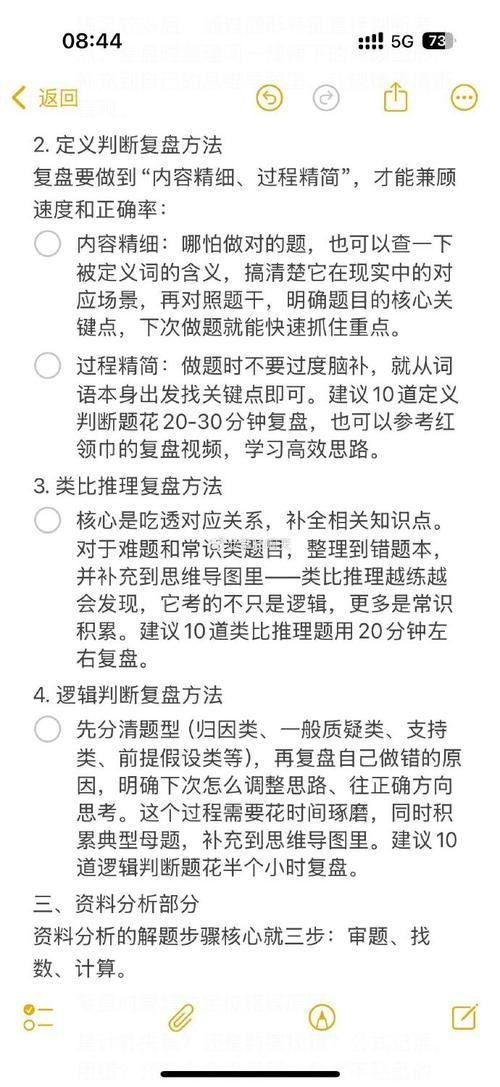
The reasoning is the core points module of the test, which is slightly different from the provincial examination. The number of questions in the state examination was stable, with a total of 40 questions, 10 questions in graphic reasoning, definitional judgement, analogyal reasoning, logic, etc.; the number of questions in the province of sichuan in the second half of the year was reduced to 30 to 35 questions, and the overall system of examination was generally consistent。
The pre-screening needs to be divided into a question-and-issue framework that is exclusive to the solution of the problem and that is accurate enough to reach the point of difficulty. Graphical reasoning focuses on the two core points of consideration for quantitative relationships, graphic characteristics, and the hexadecahedron is a cross-referenced examination, which can be quickly identified by means of a feature mapping manual, such as pentagrams. The definition of the core of judgement is the capture of key points such as the main object, conditions, outcomes, etc., and the quick comparison is wrong. Similar reasoning requires a systematic recognizance of logical relationships such as inclusion, causality, speech relations such as close counterwords and common sense relationships, relying on daily accumulation of solid foundations. The weakening of the strengthening ratio by over 60 per cent in the logical judgement is the point of preparation, and simple logic requires simple subject matter, and difficult issues can be moderately abandoned。
At the same time, they can kill alive and avoid common error zones. Defines the irrelevant option of fast-screening using the main object exclusion, and the graphic reasoning is based on the feature map matching method. It is critical to prepare for the pits: to define the question-and-answer method of judging “be/be/be/be/be/be/be/be/be/be/be/be/be/be/be/be/be/be/be/be/be/be/be/be/be/be/be/be/be/be/be/be/be/be/be/be/be/be/be/be/be/be/be/be/be/be/be/be/be/be/be/be/be/be/be/be/be/be/be/be/be/be/be/be/be/be/be/be/be/be/be/be/be/be/be/be/be/be/be/be/be/be/be/be/be/be/be/be/be/be/be/be/be/be/be/be/be/be/be/be/be/be/be/be/be/be/be/be/be/be/be/be/be/be/be/be/be/。
Data analysis: formula + sped techniques, full sprint
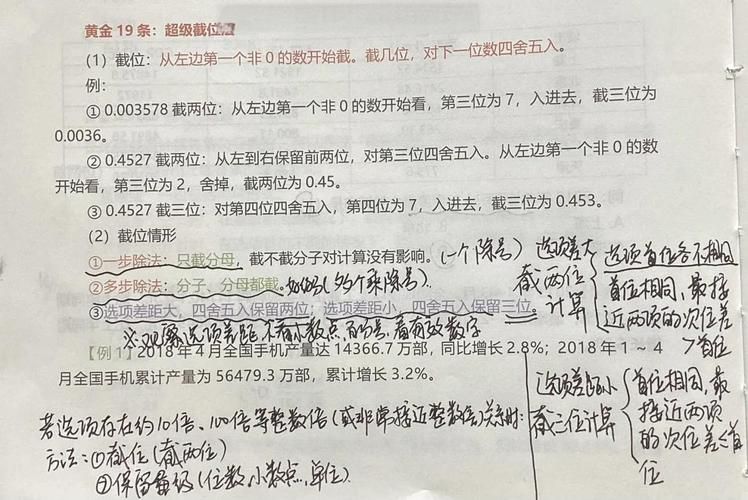
The analysis of the information in the state examination has stabilized at 20 questions in provinces such as jiangsu and hubei, and 15 questions in sichuan and liaoning, with growth rates, averages and weights at hf points, with some provinces such as jiangsu showing an upward trend in terms of volume and average number of subjects. At the heart of the points is the “precision search + quick calculation”: first, the core formula of growth, weight, and averages is well documented, and many candidates are trained to write the formula on a daily basis, effectively reducing errors caused by the confusion of the formula; fast-calculation techniques require a straight cut-off, fractional comparison, and the selection of the appropriate fast-calculation method for different types of topics, such as growth, which is more likely to use the “greater and larger” medium, with the change in weight rapidly judged by the “part-growth > overall increase in weight”. Catapults are a common trap for data analysis, including time pits (materials for 2024 data, questions for 2023 base period), unit pits (materials in tons, questions in hundreds of tons), conceptual pits (dissemination of the same comparison with ring) and the need to mark key information during the examination of the subject to avoid loss of attention。