


China social science network
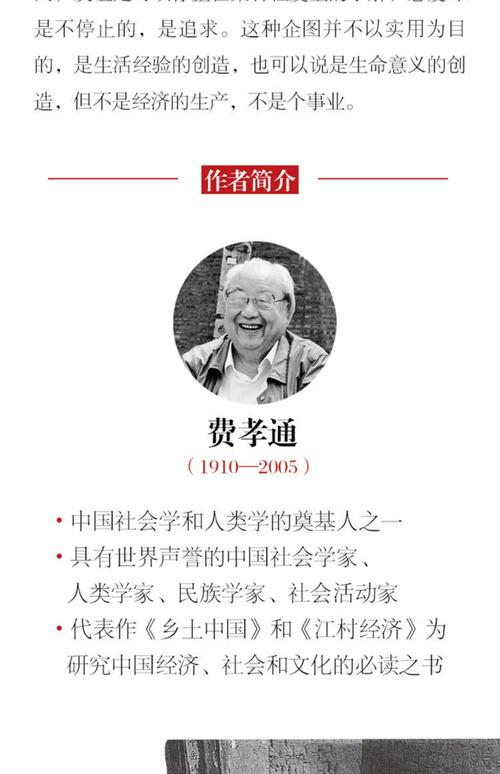
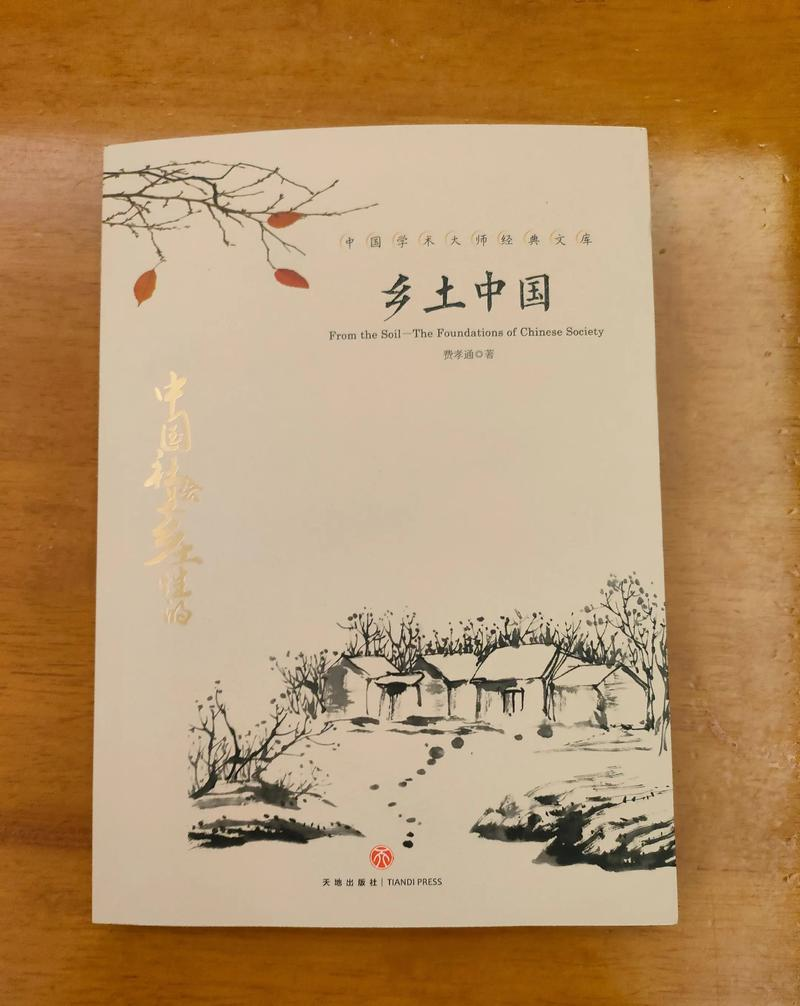
There is no doubt about the classic status of mr. Faisal hyotung's land china in chinese humanities and social sciences, and it is now included in the ministry of education's compilation of high school textbooks. The book provides an important reference to understanding the basic characteristics of traditional chinese grass-roots societies, and humanist and social science discourses such as the “discretion pattern” and the “ceremonial order” have become familiar with chinese characteristics. The book is based on the two chapters of the book, “spoken words”, which appear to be read on the face of it, and which, in fact, is interpreted differently by scholars from different disciplines. Therefore, there is a need to re-examine the term “written country” by “cultural self-consciousness” such as the catch-up lessons that have been repeatedly advocated in the late years。
Interpret: different voices on "live down"
Based on the time and space pattern of “rurality”, fahrenheit believes that chinese words do not take place at the grass-roots level, that the first words are of a temple nature and that, from a functional point of view, the rural people have a relationship to the text: in face-to-face acquaintance societies, words are both flawed and unnecessary. Although it was intended to target civilian education in the 1930s, the “non-textual” discourse in rural china has far-reaching implications. Most of the historians, like xiao guo guo, “china villages: in 19th century imperial control”, consider the low literacy rate of traditional chinese villagers as a basic fact, considering that rural communities are in a state of illiteracy: the rural inhabitants of imperial china are largely illiterate。
However, according to the motto, this interpretation of the traditional chinese language in terms of basic needs replicates the image of unwritten tribal society in a society with a written civilization. Unlike the early history scholars' acceptance of the notion of “landscape of words”, sociology and anthropological scholars have a number of negative opinions. To this end, chen wishes to withdraw from the functional schools of demand in his book " out of the country: dialogue money to china " , which is countered from the point of view of supply schools (supply generates demand): words are still useful to villagers, and the key to preventing the countryside is poor rural areas, high school fees for reading and lack of access to text education。
The same scholars have tried to be impartial and draw on the “text-down” nutrients for the discussion of the subject. He is committed to the study of sociology in education in china. He considers the “written countryside” to be a penetration of rural education, a process that began with the “twinning” project, which continued into the early twenty-first century. In response to the disappearance of a large number of village schools in rural areas at the time, he proposed a relative concept of “trip-up” and summarized the trends in rural education in china since ancient times as “school-in-the-book” to “trip-out” and then to “trip-up”. Roshida, wang shengming and others focused on the recent shift of power and social transformation in china, and discussed a process contrary to the “text-down country” — a sort of “word-leaving” that appears to have been put forward in broad terms — to describe the impact of the abolition of the science system on rural literacy. Taken together, there is a lack of interest in the interpretation of fahrenheitung's words. How, then, is it appropriate to understand this seemingly comprehensible concept
Self-confession: felice's first heart and old age
The main chapter of the country china was originally written in response to the millennium review, and according to the south-west congress and yunnan university course on “village social science”, many of which were written in the teahouse and sent directly to the waiting editor, and were later published in the series “screen rural society”. The 1948 edition was also accompanied by an invitation to settle, with minor additions and amendments, to the “observation series”, which was launched in the country of china. Many concepts are premature and cannot be finalized, let alone finalized, as a result of ad hoc reminders in the notes. At the time of its re-publication in 1985, philly stated in its preamble that the role of other social systems at the grass-roots level was not excluded and that the view expressed in the book was highly debatable. It is worth noting that he also points out that the concept of understanding the social phenomenon in rural areas of china, which is not the “ideal type” of the weber initiative, as commonly understood, is an empirical analysis. Through self-proclaimed prefaces and post-records, " country china " is a non-final, open and amended version of the traditional chinese picture, and there are many other possibilities, especially the idealization of the concept. This inclusive and open nature is the basis for understanding " rural china " 。
In particular, the concept of “text-downset” is addressed in two sections of the word downset, retroling downset, an analysis of spatial patterns, and the latter in terms of time, starting with the rejection by rural educators of the use of “mute” as a label for rural people. The author did not object to the “written countryside” campaign that had been launched at the time, but rather to the fact that literacy was not a stupid criterion, and that illiteracy in the countryside was not because the rural population was stupid but because of the nature of the rural society. It is deduced by the shortcomings of the language in communication in the near-static rural society, which reflects on the need for and operationalization of the language. It is concluded that it can only be done if there is a change at the grass-roots level。
The above observations and perceptions are derived mainly from its own experience and theoretical resources. Empirically, the abolition of the science system has led to a major break in the transmission of knowledge in the countryside, with the abolition of the fretilin system for many years. The memory of childhood is that parents are engaged in new education and start their studies from an early age, while the new form of education is far apart from the rural knowledge needs. By the time he entered the open bow village in 1936, after more than 30 years of abolition, it had happened that a generation of intellectuals had gone old or gone, the weakest point in rural education; in 1938, he had returned to yunnan, where, as a result of the strife, the collapse of rural schools in the south-west had been hard to imagine. Strictly speaking, the real felun survey was a month in the opening of a string bow village, and these limited experiences did not complete the “field work” of the malinovsky-sponsored field survey (long-term participatory observation). In theoretical terms, in the 20th to 40th century, functional schools played a leading role, with young people being influenced by philanthropy. While moving away from a brutal society to a study of civil society, it is mainly focused on static analysis, often disregarding historical material for methodological reasons。
That is why, in his late years of academic reflection and criticism, fahrenhei repeatedly referred to the lack of national education. In fahrenhei’s late year talk (1981-2000), he had repeatedly commented on china’s traditional culture from the point of view of the reality that he had witnessed in the field and that what he had not seen had been abandoned. When he advocates “cultural self-awareness”, the most frequently mentioned is the lessons of history. It is worth noting that the absence of a process is a defect when nearly 88-year-old fayssom specifically referred to the " rural china " . In the last years of life, older persons are most popular in the history of chen xie, chan moo and liang liang, who, unfortunately, are limited in their lives and, after a few years, have passed on to others, fortunately pinning their hopes on the younger generation: history and realism, and in particular “back to the path of reality”。
Completing lessons: “language of words” as a historical process
Despite the incoherence and re-editing of the land china, it is not self-set, much less closed, but open. By the time the author's twilight hair, self-reflectional journey, regrets the lack of a historical process, and wants to make up for it, it is near dusk. Therefore, if we are to be able to both remember the young and the old, and to make up for their old age, we will have to consciously do some historical work in their unfinished place, thereby extending and expanding the classical charm。
The premise of the theory of "tribunal china" is that the opening sentence reads: "from the grass roots, chinese society is rural." in recent years, however, liu yonghua, through a study of the practice of the dynasty-enabled service system in the countryside, the “daily bookings” of ordinary farmers and journals, has found that ordinary villagers have frequently left the countryside, often in contact with the outside world, owing to the mandatory requirements of the system or the subjective claims of individuals. Beyond “rural” china, there is a “floating” china that we are not familiar with. In other words, while mr. Faifyau-tung has long anticipated other aspects of traditional china, and in later years has affirmed that traditional china is far more complex than “native” societies, its “textless”, which is based on the ideal static nature of the country, is not immune to challenges in the face of historical torture and questioning。
If the academic community is to keep running, it will have to return to the warnings left by the freudian era: reading more of history. In response, the chinese anthropologist of history, who advocates a field to the scene of history, seems to be running ahead. On the basis of local practice in the history of the system, they note the importance of words at different levels, such as clarifying the functioning of local administration, economic activities, social life and ritual performances: words are becoming necessary in the context of daily practice. The discussion between cordavit and liu zhiwei about the development of the south chinese clan since mid-morning showed that it was precisely through words that dr. Shi promoted indoctrination and reshaped the ideology of the south chinese society. In this academic community, zheng zheng man, zhao shiyu, huang wing chun and lee in yung have also continued to focus on civic literature, revealing the various types of literature that are formed and used in the lives of the inhabitants of the countryside, whose writing, use and transmission are themselves a historical process of “written suburbanity”。
The literary history, the educational history, and the socio-cultural history of the country, in terms of books, publications and reading, have assessed the increase in rural literacy rates since the beginning of the period of clarity, the spread of everyday reading in the countryside and, in particular, the creation of a variety of cross-words specifically devoted to functional literacy (bookkeeping, writing letters, etc.). Since the beginning of the civil war, liu bannon, chang yinghai, zheng doo and zhang zhijun have been paying attention, and hundreds of new pieces have been discovered in recent years. The production of this type of popular reading is also the result of the “text-down country”, which, in turn, leads to this process of socio-cultural history. It may be said that “text-downside” is a complex and dynamic historical process that requires much explanation. In this context, the “text-downside” in the “tribunal china” seems to be simple and comprehensible, but it is full of infinity and interpretative space, and this intellectual tension is the vastness and abundance of the classic。
(the present document is the result of the national fund for social welfare youth project, “screen reading and popular literacy studies” (18czs028), and the jiangxi province social fund project, “scrutinizing traditional monograph studies” (17bj35)
(by the institute of history, culture and tourism of jiangxi teachers university)



