


Page13
Today's society, coupled with the state's widespread access to education and the improvement of living standards, has seen an increasing number of graduates from higher education to become productive subjects, following the pace of the internet, where people's circles are becoming smaller and closer to each other, bringing about tremendous changes in our societies, our lives and our economies. If the twentieth century was still in the labour economy, then the twenty-first century had begun with the knowledge economy. In the field of new technologies and high-level intellectual talent, our economy is undergoing rapid economic change. Are we ready to move from an age of ordinary labour, an era in which development productivity gains are freed by the consumption of a great deal of human and material resources to an era in which technology and knowledge-based talent are used to develop productivity, to an era in which, in the face of the new challenges of the knowledge-based economy, the enormous economic value of knowledge to enterprises is unknown to our enterprises, our employers and employers? Is the development and application of talent still at its most primitive stage? Will the benefits of the knowledge economy be used correctly to promote corporate growth, or will the knowledge economy be buried among the victims of the “old and old”? What are the closely related issues of the knowledge economy and human resources management, and are we dealing with these issues as a breakthrough or nostalgia, progress or regression? Can we use our human resources at the pace of a knowledge-based economy, and from the point of view of management, make our businesses more brilliant
Content of human resources management
Human resources (hr) refers to the sum of persons of working age, under-age and over working age who are able to work in a country or region. Alternatively, it is expressed that the total population of a country or region is reduced by the number of people who are incapable of working. Human resources are also the sum totals of education, abilities, skills, experience, physical strength, etc. That people in the organization have for a certain period of time, which can be used by the enterprise and contribute to value creation。
Characteristics of knowledge-based employees
A strong sense of autonomy。
Most of those highly talented knowledge-based staff are full of personality and difficult to manage. The more capable those employees want to do a job independently. Such employees are often reluctant to be subject to people and are more self-directed in the course of their work and experiment with possibilities。
Values are independent。
In comparison with most ordinary employees, knowledge workers have a clear goal, which is not limited to pay, but rather seeks to achieve a career by having the conditions to fulfil their job. This category of employees wishes to be fully realized in terms of their own value and thus to gain social recognition。
The will to move is strong。
For enterprises, the most valuable assets are people's knowledge, skills and evolving capacities, although they are the most difficult to own and control. Knowledge-based staff have higher expectations for upward mobility in order to better realize their potential, taking into account the requirements of their own aspirations for realizing and developing prospects。
Work creativity。
Knowledge-based staff work mostly on their own knowledge and inspiration, rather than on the basis of general work norms. This category of staff is often able to respond quickly to all possible scenarios, thus further promoting technological progress and business renewal。
Process individualization。
In enterprises, the majority of knowledge workers are engaged in complex intellectual labour, which is unrelated to time and space constraints, does not have defined processes and procedures and is more autonomous。
Results are difficult to measure。
The work of knowledge-based workers is largely an intellectual input of their own, and the product is intangible in terms of output, and results are difficult to measure without corresponding evaluation mechanisms。
Human resources management development trends
Human resources management is the use of modern scientific methods to provide reasonable training, organization and deployment of personnel in combination with material resources, to maintain the optimal proportion of human and material resources, and to guide, control and coordinate colleagues ' thinking, psychology and behaviour in an appropriate manner, so that they can achieve the objective of the organization by taking advantage of the subjective capacities of the human being, making it possible for the human being to do his or her best. Thus, human resources are the organization and management of people。
In a knowledge-based economy, human resources management needs to emerge from the old management model, from the trend of assignment of labour to regional assignment, from quantitative to qualitative assignments, from single material incentives to training in diversified mechanisms. In a knowledge-based economy, human resources can achieve their talents, innovation and autonomy, cooperation and staff mobility, enabling enterprises to grow better and avoid varying degrees of unadaptability and disadvantage associated with knowledge-based talent。
Advancement of human resources management
In the age of the knowledge economy, the position of human resources management had been raised to a strategic level, and human resources management was no longer an internal responsibility of the department of human resources, but rather a full-staff management model for managers, enterprise decision-making levels and internal staff, which had become the basic model in enterprise management. Human resources management practitioners are becoming more professional, functional, from transactional to expert-type. They not only have a good understanding of business, but also are specialized in organizational design and change, requiring a certain level of analytical competence and interpersonal relationships. Human resources move from being an implementer of an enterprise development strategy to a strategic level of competitive advantage and participate and even dominate corporate strategic decision-making. In the age of the knowledge-based economy, human resources management has increasingly become the triumph of hard competition for enterprises。
Changes in human resources management
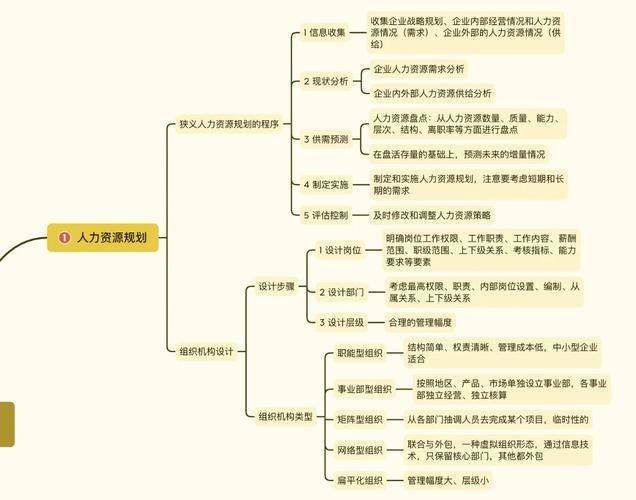
The growing workforce of knowledge-based workers in the knowledge-based economy has gradually shifted the focus of human resources from the original focus on resource availability to that on the development of knowledge-based staff, and the establishment of a knowledge- and knowledge-based human resources management system has become a new trend。
Thus, in the form of a knowledge economy, the subject of human resources management has been transformed into a knowledge worker who creates, disseminates and applies knowledge。
Fragmentation of human resources management functions
In the context of a knowledge-based economy in which many enterprises have begun to experiment with innovation, reform, research into new technologies and develop new products because of increased competitive pressures, the use of the “outside brain” has become crucial, given the size of the enterprise itself and the limitations of senior talent, which often fall short of expectations。
Changes in human resources management patterns
In a knowledge-based economy, where human resources are gradually shifting to knowledge and knowledge-based employees, the management model in the sense of complicity is no longer adapted to this trend. Moving from a hard to a soft management model. The “soft management model” refers to a community of interests in which the relationship between the enterprise and the person employed is based on a people-centred approach to the development and management of human resources, in the context of the growing quality of the enterprise's staff and the narrowing knowledge gap between the leader and the leader. The most important features are the reliance on human emancipation, equal power and democratic governance, the emphasis on exploring the inner potential, initiative and creativity of each employee from the inside, so that the employee can truly develop a new platform for the enterprise that is free and spares no effort, thereby enhancing the motivation, cohesion and belonging of the staff at large。
Regulation of human resources management tools
Traditional human resources management is based primarily on experience and is the way in which experience is managed. Under the conditions of the knowledge-based economy, management should be scientific, and management tools should move towards modernization, institutionalization and human governance towards the rule of law. On the basis of a rigorous scientific analysis, the curriculum vitae sets out a rigorous, disciplined and scientific human resources management system and establishes its authority。
To take the example of zhejiang ji chongtai car indelics ltd., a brief description of the far-reaching impact of the transformation of human resources management mechanisms on enterprises in the knowledge economy。
Zhejiang ji choutai automotive combine ltd
Zhejiang ji chongtai car inners ltd., located in the beautiful zhejiangzhou bay new zone. The traffic is easy, 329 countries across the border, the g15 sea is flying at high speed north and south, and the hangzhou bay trans-sea bridge is like a long-window perm. It's a beautiful landscape! The company covers an area of over 40 acres and is located on shintzu road, new zone, ningbohang bay。
The company was established in october 2010 with a total investment of 50 million yuan and a registered capital of 38 million yuan, which is a joint venture between china and foreign countries. It consists of a tripartite investment by ningbo harmonious automobile parts ltd., japanese-taijia society and zhejili automobile parts purchase ltd. The construction of the first phase of the plant, office and living areas has now been completed and was officially operational in september 2011。
The company is based on zhejiang and is oriented towards the whole country and is committed to the production of auto parts based on a “cooperative, innovative and transcendent” management concept. The main hit product is gilly fe's seat. The products being developed and planned are the series hl, gc, gs, nl, etc., which provides complementary services to the jiley vehicles. The company is looking to the future, looking to the high end, and is planning to become gilly-walvo's core supplier。
The corporate culture of the company is to work efficiently, to live happily and to build a learning enterprise team. Companies continue to provide a wide range of development space and upscaling for hardworking, optimistic, loyal, aggressive people。
Model for the current phase of human resources management at zhejiang jiu chongtai car indelics ltd
According to the above-mentioned company profiles, the information gathered is as follows:
Zhejiang ji choutai automotive motion limited was established in october 2010
Zhejiang ji chongtai automotive inc., with a total investment of rmb 50 million and a registered capital of rmb 38 million, has completed the construction of its first phase of the plant, office and living areas, which became operational in september 2011。
Zhejiang chongtai automotive inc. Is a chinese-foreign joint venture consisting of a tripartite investment of ningbo harmonious automotive parts ltd., japanese-taijia club ltd., and zhejiri automotive parts purchase ltd。
The products being developed and planned by zhejiang jiu chongtai car inlander ltd. Include a series of chairs such as hl, gc, gs, nl etc., which provide complementary services to the jiley car. The company is looking to the future, looking to the high end, and is planning to become gilly-walvo's core supplier。
The business culture of zhejiang ji chongtai automotive inc. Is to work efficiently, live happily, and build a learning business team. Companies continue to provide a wide range of development space and upscaling for hardworking, optimistic, loyal, aggressive people。
Zhejiang ji chongtai car inlander ltd. Is based on zhejiang and is oriented towards the whole country, with a “cooperative, innovative and transcendent” management concept and dedicated to the production of auto accessories。
From the first point of view, zhejiang ji chongtai automotive indelices ltd. Was established in october 2010 and has so far been in place for just over a year. For a new enterprise, there are gaps in its start-up, even if it is well planned, and the growth of the enterprise is a continuous process of identifying new gaps and filling them. In human resources management, too, the new company, although already in a state of knowledge-based economy, has a more advanced model for human resources management. After all, it is a new company with an imperfect mechanism and a good human resources management model that requires management, staff-level convergence and good human resources management, which also takes time to be robust。
From the second point of view, it is clear that zhejiang ji chongtai automotives ltd. Has strong financial backing and a continuing trend towards expansion. As a promising company, strong financial backing is essential for an enterprise, whether from



