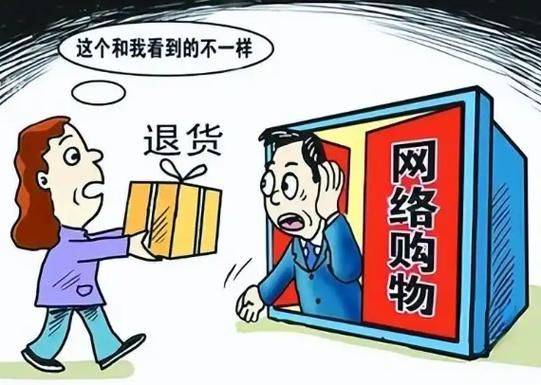
The electric shock drills that were received were “fun” fakes, malicious claims for short-term purchases of the same goods, and sudden run-aways by traders after prepaid cards were charged ... Have you ever experienced any of these consumption problems
On 24 december, the jiangsu provincial high people's court, the provincial market supervisory authority and the provincial judicial department jointly issued a model case of reporting complaints in the area of market regulation across the province, covering multiple high-frequency scenes such as trademark infringement, professional claims, food additive compliance, prepaid card disputes, beauty consumption defence, which provided consumers with guidelines for their rights and also provided compliance “warning lights”。
Trademark “punches” misconstrue consumption, sar + double guarantee for refunds
In july 2024, the consumer, through a single payment under an electric power platform for a “easter” brand, received a product bearing the “easter” logo — the “east” and the “easter” font — which were deliberately amplified, were so small that it was almost hard to recognize, and the appearance was very similar to that of the well-known brand “easter”. When a product is found to be less effective than publicity, drills are not strong enough to heat up, and when the return of the goods from the contacts is refused, the market regulator is required to file a complaint for reimbursement and to investigate the violations committed by the business。
The supervisory authority quickly went to the electric tools plant to inspect the site, where 56 boxes of lithium hammers, wrenches, etc. Bearing the logo “something east” were seized, as well as 592 matching tort tags. The manufacturer was found to have acted without the authorization of the “easter” brand to use a proximate trademark for the production and sale of which it was suspected of violating the relevant provisions of the trademark act, which constituted misleading false propaganda. Ultimately, after mediation by the supervisory authority, the manufacturer is ordered by law to immediately stop the violation, confiscate the products and labels and impose fines。
Typical meaning: trademarks are intangible assets of an enterprise, represent brand reputations and market values and are strictly protected by law. In this case, the trader's trademark violation of the “nominal brand” violated both the fair market order and the consumer's right to know and choose. A combination of “conciliation of refunds + administrative penalties” by market regulators has helped consumers to recover economic losses and severely combat trademark infringement, demonstrating a dual determination to protect intellectual property rights and protect consumer rights and interests, and establishing a clear red line for business owners that “no unauthorized use of proximate trademarks to mislead consumption”。
Over 100 complaints a year. "professional claims" rejected beyond reasonable limits
In march 2025, wu xiao complained to the market regulator that the contact lenses liquid sold in a pharmacy had not been registered with three types of medical equipment, requesting a refund and compensation of $1,000. Inspections by the regulatory authorities revealed that the liquid was used only for disinfection, that a health permit issued by the health sector had been obtained, that it complied with the relevant safety standards, that it did not fall within the three categories of medical equipment management and that commercial sales were legally in compliance。

Further research shows that wu xiaocheng is known as a “complaint-reporting professional”: as of march 2025, he had filed 51 complaints, 49 complaints through the 12315 platform nationwide, 30 complaints in january-march 2025 alone, and a number of complaints against the same-sex care solution. More notably, on 10 january 2025, he purchased the same product from three pharmacies in consecutive minutes, which clearly did not correspond to the normal consumption habits of ordinary consumers. In addition, wu chi's complaint material is highly modelled, with detailed legal grounds and administrative penalties, with a clear intent to profit. In accordance with the definition of “consumer needs to purchase, use goods or receive services for consumption” in the consumer rights protection act, the supervisory authority has determined that his complaint is not for consumption and has taken an inadmissibility decision。
Typical meaning: the legislation on consumer protection is intended to safeguard the consumer rights and interests of ordinary consumers, not to provide a profit-making space for “occupational claims”. In the present case, wu xiao's malicious complaints for profit not only crowd out limited administrative resources, but also constricted the channels of redress for consumers with genuine rights-based needs. By verifying key information, such as consumption behaviour, frequency of complaints and so forth, market regulators are able to identify profit-making complaints with precision and reject them in accordance with the law. They both adhere to the core thrust of the law and lead to the legitimate and reasonable exercise of the right to report complaints, thus providing practical reference for the clean-up of the consumer environment and the optimization of the allocation of administrative resources。
The food additive “tamper” is not registered? It's a fine
In june 2024, liu cai reported the addition of sulphur dioxide to the formulations sold by a company, which did not meet the gb2760-2014 criteria and required penalties and incentives for vendors. It was found that the company had purchased 12 bottles of the products involved and that the test report indicated that the sulphur dioxide content was 89 mg/l, which did not meet the old criteria in force at that time. At the same time, however, law enforcement officials found that the product met the criteria for the use of new food additives issued in february 2024 and implemented in february 2025, and that on the day of the inspection, the company had taken the initiative to lay down the products in question, actively contacting the supplier to verify the situation and submit the relevant documentation, with minor and no harmful consequences。
On the basis of the principle of “comparability” of administrative penalties, the district market supervisory authority makes a decision not to open a case. Following an application for administrative review, the review body found that the supervisory authority was handling the facts clearly and in a legal manner, in keeping with the concept of prudential oversight, and ultimately upheld the decision。
Paradoxically, excessive punishment is the core principle of administrative punishment, requiring that the severity of the punishment be commensurate with the nature, circumstances and consequences of the offence. In this case, rather than adopting a “one-size-fits-all” approach to punishment, the market regulator took a comprehensive view of the minor nature of the offence, the positive attitude of the firm to be proactive and the new orientation, and decided not to open the case, reflecting both the rigidity of the law and the temperature and flexibility of regulation. This approach, which preserves the bottom line of the market order and leaves room for business compliance development, is a dynamic practice that embraces the concept of prudential regulation in the area of food consumption and contributes to a well-regulated and dynamic business environment。
Buying 13 pharmacies in 4 days. Repeated complaints are regulated for "inappropriate purpose"
In april 2025, wang went to 13 pharmacies in four days to focus on 29 items, such as gold and silver bouquets, and then submitted 13 complaints to the market regulator on the grounds that they were paperless, demanding penalties and incentives. Following an investigation by the supervisory authority, a decision was taken to terminate the conciliation in part because of the firm's express refusal to conciliate; in the case of the reporting part, the firm was ordered by law to correct the irregularities for which no paper statement was provided and to impose a warning sanction. However, wang has submitted a further 13 applications for administrative review to the government. It has been found that wang has reported more than 400 complaints through platform 12315, and 23 administrative reviews have been filed since october 2024 alone, for essentially identical reasons. The review body found that the repeated purchase of the same goods by wang for a short period of time, the centralization of complaints on the same grounds, the improper purpose of which was contrary to the principle of good faith and beyond the limits of the reasonable exercise of rights, made it clear that the same or similar disputes, which had no justification in the future, would not be repeated. Typical: administrative review is an important remedy for citizens, legal persons or other organizations in defence of legitimate interests, provided that the exercise of rights is governed by the principle of good faith and reasonable limits. In the present case, wang has repeatedly filed complaints and administrative reviews in a short period of time, acting outside the normal scope of the defence and in an abusive manner, increasing the cost of enforcement and review by the executive and disrupting the normal course of business. The review body regulates the abuse of the right to remedy through an explicit principle of non-repetition, which preserves the core value of the administrative review system of “substantive resolution of administrative disputes” and directs the public to exercise its rights in a reasonable manner in accordance with the law, providing a strong basis for regulating the order of administrative relief and optimizing the business environment。
The beauty shop was allergic to consumption, and the regulatory investigation “missing” was revoked by the court
In january 2024, after receiving facial care at a beauty shop, yang yai suffered from allergies such as haemorrhaging and itching, which were diagnosed as exposure to skin disease at a cost of over $1,200. She complained to the supervisory authorities that the shop was subject to numerous violations, including fraud, uncoded price and the use of “three-nil” cosmetics, and requested punishment of the seller and compensation for damages。
Following inspection by the supervisory authorities, the decision was taken to impose penalties only for the uncoded price, as a result of the fact that the beauty shop had not identified the illegal fact of the price, and without investigation and verification of other reporting matters, such as the “use of `three no' cosmetics”. If he does not agree, he will bring administrative proceedings before the courts. The court found that the failure of the supervisory authority to investigate all reported violations was a failure to fully discharge its statutory duty, and ordered the supervisory authority to reopen the penalty。
Typical: a comprehensive investigation to verify leads to violations of the law and the full exercise of regulatory responsibilities in accordance with the law is a statutory obligation of the executive to deal with complaints and a fundamental requirement of the principle of due process. In the present case, the decision of the market regulator to impose penalties without verifying all the violations to which the reported material relates is incomplete and the procedure illegal. The people's court, by judicial decision, revokes administrative misconduct, thereby safeguarding the legitimate rights and interests of whistle-blowers and forcing the administrative authorities to regulate law enforcement procedures and enhance its effectiveness. The case identifies the enforcement standards that “the executive authorities must respond fully to reporting claims and thoroughly verify leads on violations”, which are important guidance for promoting the legal administration and regulating market regulation of enforcement。
Business runs after prepaid cards, justice intervenes to recover the balance
In october 2024, ms. Chen opened an annual card in a yoga complex at a value of $3,000, and the parties did not enter into a written contract and only issued receipts. After only five times ms. Chen spent, the yoga complex suddenly closed down and the person in charge was unable to reach the telephone and the place of operation was empty. After consultation with other members, ms. Chen filed a complaint with the court to have the balance refunded。
The court found that the failure of the yoga complex to perform its contractual obligations for services constituted a fundamental breach of contract. By extracting evidence such as business registration information, financial flows, lease agreements, the yoga museum was legally ordered to refund ms. Chen's residual value of $275 and interest during the same period. This case has also led the supervisory authorities to carry out specific checks in the area of prepaid card consumption in the bailiwick, and to encourage a number of operators to regulate the management of prepaid funds and to sign written contracts。
Typical significance: the prepaid card consumption dispute is a prominent issue in the current consumer field, and the merchant “run” not only infringes the consumer's property rights but also undermines market consumer confidence. In the present case, the people's court's judicial recourse to help consumers recover the remaining advance payments demonstrates the strong judicial guarantees of consumer rights. At the same time, the case has prompted the supervisory authorities to carry out specific screenings, forcing the subject to regulate the management of prepaid cards and to guard against the risk of “runaway” from the source. The case provides both a judicial model for the resolution of consumer disputes over prepaid cards and reinforces the synergy of “judicial relief + administrative regulation”, which is of great relevance in regulating the consumer market for prepaid cards and boosting consumer confidence。
Isp claims ten times more than reasonable consumption
In september 2024, zhang purchased a single purchase of 10 boxes of branded white wine at a shop on a certain internet purchase platform, paying $15,000. Upon receipt of the goods, he claimed a refund from the merchant on the grounds that the white wine was a counterfeit product and sought compensation of $150,000 for 10 times the price under the food safety act. When the merchant refused, zhang went to court。
In court proceedings, the brand identified six of the cases as counterfeit products. Zhang has been found to have been involved in a number of disputes over similar sales contracts in several provinces throughout the country, claiming high compensation on the grounds of “psychiatry” and the professional nature of his purchases. On the basis of the interpretation of the supreme people's court of the law applicable to cases involving punitive compensation for food products, the court found that zhang's purchase of 10 boxes of white wine exceeded the requirements of reasonable living consumption. The court eventually ordered the merchant to refund the sum of 9,000 dollars for 6 boxes of false alcohol and supported a ten-fold punitive compensation of 2,000 dollars for 2 boxes of white wine, without supporting the portion beyond reasonable limits。
Typical: the punitive compensation system in the field of food and medicine is designed to safeguard the public's right to life and health, rather than to condone “occupational leave” for profit. In the present case, the court clearly stated that “sham buying” claims that punitive damages must be limited to reasonable consumption, both in keeping with the original intent of the punitive compensation system and in deterring its abuse for undue gain. The decision protected both the legitimate rights and interests of consumers and the integrity of market transactions. It established clear boundaries for the handling of disputes in the area of consumption of food and medicine and led to the rational defence of society。
False propaganda misleading consumption, double punishment with a three-to-three fine
In august 2024, the consumer, mr. Zhao, saw a shop promoting a type of air conditioner, “lower than 1 degree a night and more energy-efficient than the first level”, which was then purchased at a cost of $5999. After use, it was found that the actual amount of electricity consumed by the air conditioner was much higher than the amount of propaganda, that it was tested by authoritative bodies with a level of real energy efficiency of three levels, which was inconsistent with the level of energy efficiency of the campaign, and that the commercial content constituted misleading false propaganda。
Mr. Zhao filed a complaint with the market regulator following the refusal to contact the vendor to claim restitution. The superintendence has verified the existence of false propaganda by ordering the merchant to refund mr. Zhao's fee of $599 and pay a sum of $17,797 for the purchase of the machine, in accordance with article 55 of the consumers' protection act, which provides for a one-to-one refund。
Typical meaning: false propaganda is a common violation of consumers ' right to know and to mislead consumer decisions, seriously undermining market confidence systems. In the present case, the double penalty imposed by the market regulator on a pseudo-propagandist is a “one-to-one-to-three” administrative penalty, both for full compensation to consumers and for a strong deterrent to illicit traders. The case clarified the legal obligation of traders “not to mislead consumption through false propaganda”, highlighted the zero tolerance of consumer fraud, served to safeguard the legitimate interests of consumers and cleanse the market environment of competition, and provided strong guarantees for the creation of a market ecology that operated in good faith and was comfortable with consumption。
Xinhua daily news