


In recent years, tomato-based gardening has emerged in beijing as one of the most dynamic scientific and technical spots in peri-urban tourist farming, not only for sightseeing, enjoyment and enjoyment, but also for taste and enjoyment, especially through harvesting, which has created significant economic benefits。
The so-called tree-based plant is known as the “trigger tree”, which is grown into a tree by whole branches of trim and nutrient and environmental regulation techniques. This is a single tomato-level stretch of 8-10 metres, a high of 2. 3-2. 6 metres by artificial adjustments, with more than 20,000 single-year results from planting to the pulling of small fruit varieties and more than 10,000 medium-sized fruit varieties. Specific planting techniques are as follows:
Infrastructure requirements. Environmental conditions are more stringent and must be carried out in large company greenhouses or solar-temperature rooms at higher heights and with greater spans. The desirable temperature range is 12-32°c, which is below 8°c and above 32°c. Therefore, warmer facilities are required in the north during the winter, and in the summer sun, wind and curtain cooling facilities are required to keep the temperature below 8°c in the winter and above 32°c in the summer。
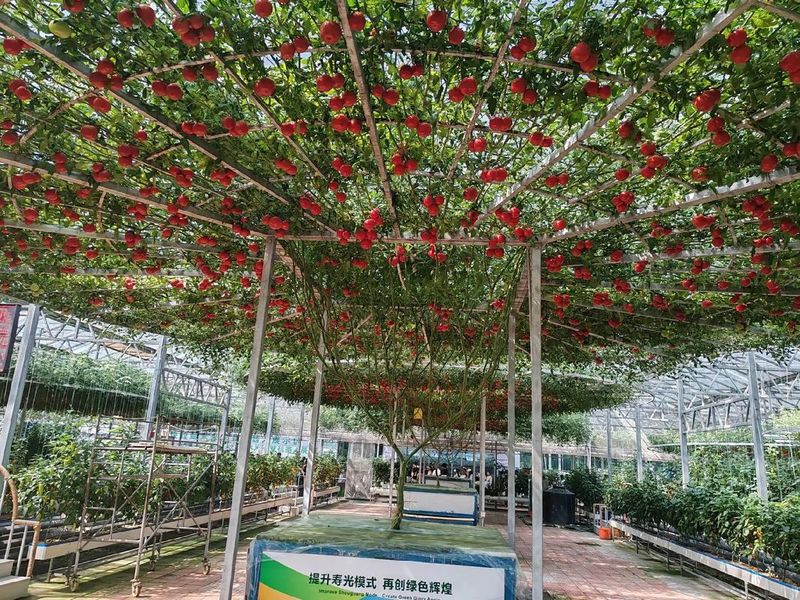
2. Varieties selection. The selected varieties should have the following characteristics: strong skin types of hard fruit for storage, red or pink fruit, colour colour, disease-resistant, low-temperature, high-temperature, high-temperature, strong light, good wind and good quality。
3. Cultivation. It is available for four seasons of the year, with plantings in the planting tanks in early october, with flowers beginning at the end of january and fruit turning red in april. A 10 per cent sodium phosphate is disinfected using a warm soup leaching method and can be nourished for seeding. The specific method is the same as the general tomato production。
Pre-plant preparation: (1) first preparation of the liquid. For example, the preparation of 1 ton of nutrients to be fed into the drums with a quantity of specially designed fertilizers, adding 10 litres of water, fully broken and dissolved into 10 litres of liquid. Another special fertilizer is taken in another drum in terms of volume, and 10 litres of water is added to the tank, fully broken and dissolved into 10 litres of liquid. Adding 0. 2 tons of clean water to the nutrient tank, adding the first dissolved liquid, continuing with water and mixing. When the amount of water in the nutrient tank reaches 0. 8 tons, it is added to the second original liquid, which continues to be watered and mixed, and when the water is added to one ton, it is stopped. The mixture of 22 g microfertilizers and 200 - 250 ml of phosphoric acid, added to the dissolved process, is evenly mixed and the liquid is complete. The liquids shall be distributed in accordance with the above-mentioned operating procedures, and it shall be forbidden to enter the first and second liquids too briefly to prevent deposition. (2) pumping of well-equipped nutrients from nutrient tanks to planting beds and formation of cycles. (3) timing. To automate adhesion, timers can be attached to pumps at the power source to control the time of the switch pump. Switching times are determined on the basis of the size of the seedlings and the season, with inter-circumulation. Pumps of well-equipped nutrients to the planting tanks so that they can circulate. Timers are fixed six times during the day, for a duration of 10 minutes each, with nutrients to flow out of the pipe when the supply is made, and three times at night, of which one is required before dawn. (4) preparation of planting tanks. A slightly thick plastic hose will be placed on the piping tube at the bottom of the planting tank and the plastic hose will be inserted into the underground backpipe. Plantation cells are filled with a planting matrix of 0. 4 m thick, with flat surfaces awaiting planting. Be careful not to trample on the matrix so that it is too tight to breathe。
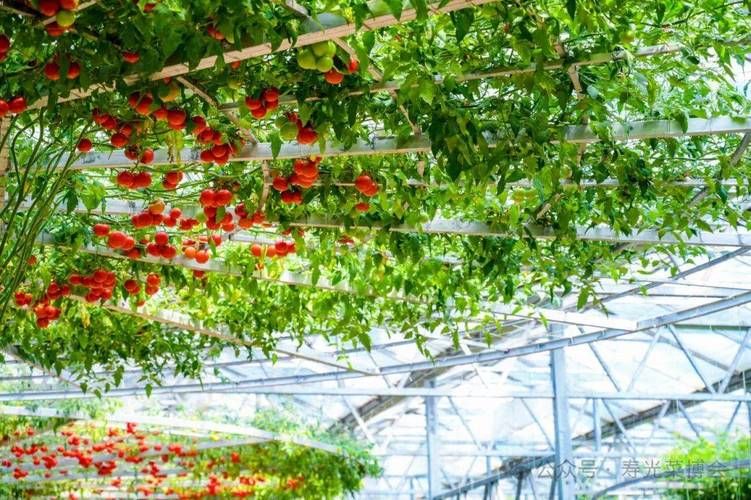
4. Plantation. The plant is suitable for planting periods up to 30 to 120 cm. When the planting tanks are well prepared, early planting is desirable. At the time of planting, the plant is planted in the centre of the planting tank, with one plant per tank, with as few roots as possible, and it is appropriate to plant the material at depths below 5 cm. Once established, nutrients are poured into the pipes. Plantation density is appropriate at 8 x 8 metres on a single farm。
5. Post-plant management。
(1) the whole branch. Using the whole drying method, i. E. The selection of a strong branch to be drawn through a string to enable the branch to grow in a balanced manner in different directions as a tree crown. Note: each branch and horizontal angle is 40-45 degrees. East, north and west are evenly distributed. The long branches go to the periphery and the back branches fill the centre to avoid the middle vacancies and make the seat unequal. The number of growth points is 25-32 when each plant grows into a grid. I'll keep the chicken, and then i'll pull it. It is evenly distributed on the hangers, and it removes secreted chickens from each other by cutting. The growth point is to remove all the flowers before reaching the frame. The old yellow leaf and the lower twigs are found to be removed in a timely manner, and the next leaf is found to be ageing, fertilized or diseased. Swords used to beat old yellow leaves and extra branches need to be plastered with multibacterium and water, and microbicides are naturally painted on wounds during trim. In time, remove the leaves under the net of the coloured fruit and pull the ears under the net and increase the visibility。
(2) save the fruit. When the plant is growing at 3-4 metres horizontally on the planting shelf and has more than 200 growth points, it starts to leave fruit. Do not leave fruit too early to prevent nutritional growth from being suppressed. When flowers are left, all the ears above the net are left behind, as are the ears above 20 centimetres below the middle frame, and all the ears below the net are removed from the 20 centimetre penalty. In order to promote good sit-in fruit, which expands rapidly, it is possible to use 20-40 mg/kg of porconin to pollute or spray. Four to six fruits per ear. Note: don't spray on the blades while you're in the bag. It can also be used to pollute with shennon bounty 2 bear bee can be pollinated and the vents of the greenhouses are sealed with insecticide-proof nets。
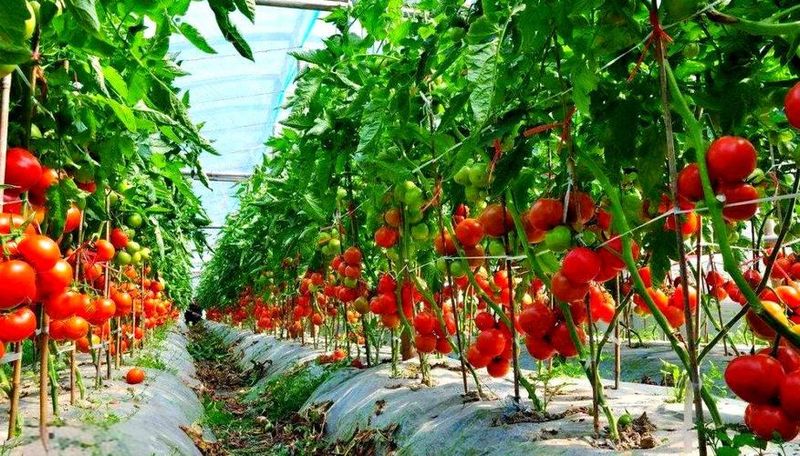
(3) temperature light management. Temperatures during the winter bring the minimum temperature below 12°c and often clean up the shanty films and increase the amount of light。
(4) pest control. The main diseases are viral disease, foetal disease, late disease, etc. Owing to the low plant density and less serious diseases, it was found that the leaves were removed in a timely manner and prevented by fumigation from the fumigants. Pests, mainly white powdered lice and twilight flies, can be fitted with insecticide-resistant nets at the vents at the greenhouse entrance, and cedars can be placed in the greenhouse to trap the insect。
(5) collection in due time. They may be harvested in the fruit or single fruit. Because of its long shelf life, the fruits can be reded for 20 days and not harvested immediately in order to increase their visibility and the fresh colour of the fruit is not good. When the fruit is soft, it should be harvested in a timely manner, when the wind is the best and it smells of the odour specific to tomatoes。



