


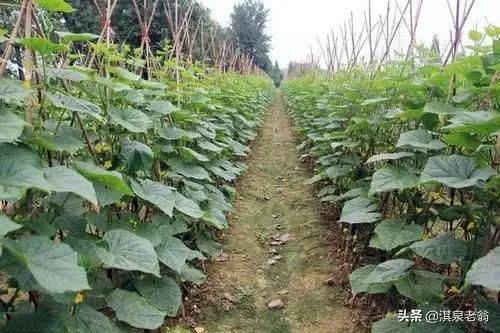
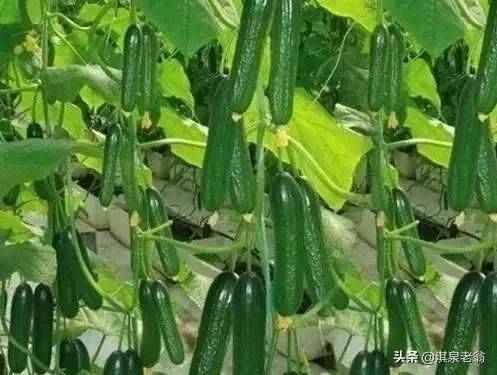
In recent years, cucumbers have been grown mostly in sheds, with poor tastes and no plain cultivation. As a result, some growers returned to the former era, developing open cucumbers, which won the market with pure green natural cucumbers, with considerable economic income. The investment in cultivation is much less than in sheds, mainly for labour. It is also relatively simple in terms of planting techniques, and a little management can lead to high yields. Farmers believe that open cucumbers are mainly caught in the following measures。
I. Tight planting times
When cucumbers are grown in the open, the seedlings are able to meet suitable growth temperatures in the outside world when soil is released. This requires determining the appropriate planting period based on local climatic characteristics. The minimum temperature of cucumber seed sprouts is 12. 7 degrees, the most suitable is 28 degrees, root system growth is particularly sensitive to the temperature, with temperatures above 15 degrees to begin to grow and temperatures above 38 degrees to stop growing, and cucumber seedling growth is at 20-25 degrees. In order to meet the above temperature requirements for field cultivation, seedlings should be established in the yellow area in late february and early april. It depends on a return to temperature, if the average temperature is 20 degrees or more for five to seven days in a row, or if it is fixed three to five days later or not earlier, so that it does not form a “cool seed”, which affects future growth。
Ii. Issues to be addressed in child-rearing
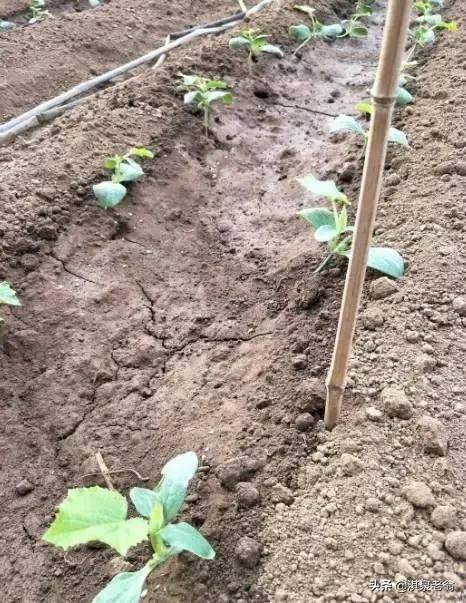
(1) pay attention to the protection of the root system in seedlings, depending on the weakness of the cucumber roots and their low regenerative capacity. The measure is to breed with nutrients to prevent the spread of roots during planting。
(2) the cucumber seedlings grow at a fast pace, with a long stasis and leaf handle, taking into account temperature changes and the amount of moisture, preventing the seedlings from growing and placing a danger for later growth。
(3) the cucumber females produce biomass and quantities, subject to temperature and humidity conditions. In so doing, care will be taken to regulate temperature and humidity, to create an appropriate growth environment, to nurture seedlings and to create a good basis for pre-maturity。
Scientific development
1. Soil fertilizer
The cucumber root system is shallow, while part of the ground is large, evaporating and evaporating, which requires more fat water. This requires fertile soil and sufficient organic matter. It is therefore important to focus on organic fertilizer, using a combination of decentralized and concentrated fertilisation, whereby organic fertilizers are buried deep in arable land, and cake and fertilizer are applied in the cleavages when the ground is made. Anthropogenic 3 squares per acre, about 40 kilograms of cake fat and 40-50 kilograms of compound fat。
(2) plantation density
The density is determined by the characteristics of the cucumber species, the method of the whole branch and the size of the frame. Pre-cooked varieties of the main cranium, such as the beijing pumpkin, the blue 2 and so on, 12 to 14 leafs are grafted, planted with a small shelf, 1 to 1. 2 metres tall, with a range of 18 to 24 cm x 83 cm, 7,000 to 8,000 cm. Medium- and late-literate varieties, such as the old zin studies series, the chinese farmer no. 8 etc., require large-scale planting, two metres tall, 18-20 leafs with a ceiling of 20 to 25 cm x 83 cm, with a range of 3,000 to 3,500 cm。
(3) emplacement
Early spring temperatures are low and can be planted at noon in the middle of the sun, using ditch-opening plantings, with a view to the depth of the earth, so that leaves are not buried and bodies are not touched in order to avoid injury. After planting, water is poured out in time to facilitate seedlings. When you're planting it, you can build it
Management
1. Cultivation and fatty management
(1) the planting of seedlings shall be carried out in a manner that increases the temperature of the land, so that when the new leaves of seedlings are released, they shall be so grown, so that they may be so plowed as to be soaked. Water should be watered on the basis of the principles of low-intensity and hard-working, so that the soil is humid。
(2) the flowering result period: after a slow planting, the planting of seedlings is carried out in china, fertility control is controlled, and the duration of seedlings is determined in a flexible manner depending on the growth of the soil, the air and the plant, the criteria for which are the end of the scavenger when the roots and leaves are green. The application of fatty water, 10 kg urea per acre, has been introduced to boost the growth of the seedlings and to build productive shelves. When the roots are sequestered, the leaves grow rapidly and in a booming phase, when the water is fertilized, increasing the frequency of the water. 5-8 kg compound fertilizer per acre. Water is poured every three to five days, every one to two days after the guacamole is harvested, and after the guacamole is collected, it is applied in a timely manner. After entering the high-temperature season, no more fatting and watering to lower the temperature should take place sooner or later。
(iii) late period: preserve leaves do not fail at an early age, allowing for foliage and temperature-sensitive adjustments。
2. Plantation adjustments
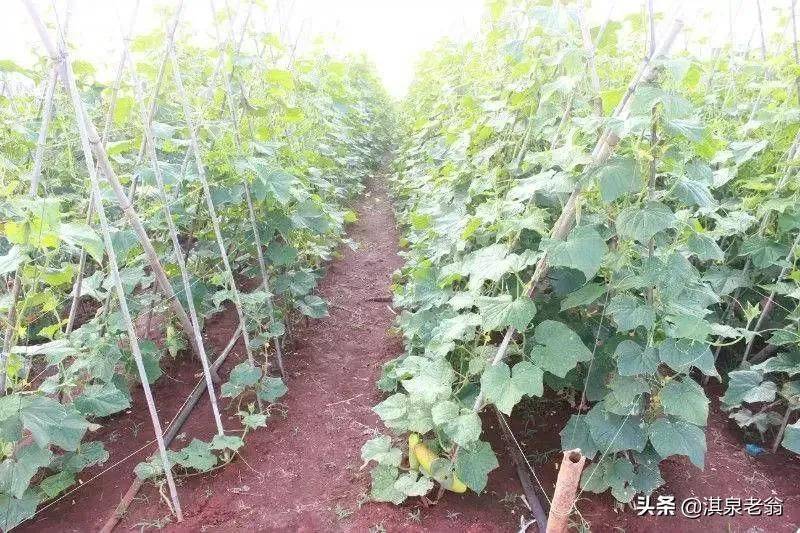
(1) chicken binding: there is an agricultural proverb, “qucucumber binding, eggplant poaching”, which illustrates the importance of timely chicken binding. Starting with 30-50cm loft entry frame, the height and direction of the chickens are adjusted appropriately so that the group grows free from each other and the field is ventilated。
(2) carcinance: in the light of the characteristics of the species being cultivated and their gravity, and in due course, the measures taken to promote the growth of the melon, the growth of the side branches and the increase in production, with the pre-maturized varieties taking place between 12 and 14 leaves, and the mid- and late-literated varieties taking place at the peak of 18 to 20 leaves。
(3) pumping: the species that use the main side branches, which are well developed, can leave two to three strong branches in each base, leaving two leaves to remove their hearts and promote the fast growth of the bars after the presence of a female on the side branches。
Collection
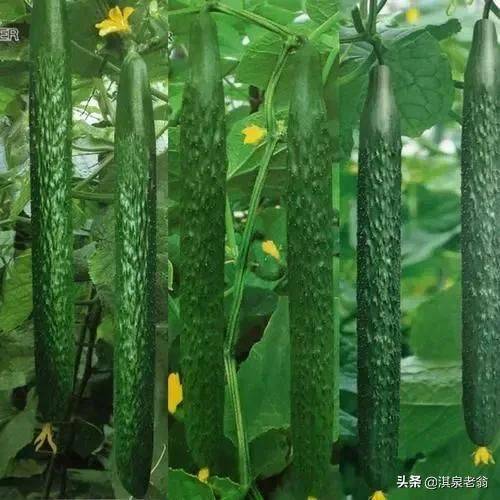
Rational harvesting is one of the measures to ensure high quality production of cucumbers. The cucumber harvest differs from other melons, taking into account both the growth of the melon and the overall strength of the plant, and the farmer has the adjective “the melon is to be harvested early, the waist is to be picked up and the melon is to be picked up”. In the early years, the melons competed with plants for nutrients, such as too late harvests, which prevented the whole plant from growing and affected total production. In the medium term, the plant thrives and grows fast in the central region, taking advantage of the moment, and when it is appropriate in its size, removes it, thereby promoting more melon development. Post-plant growth has slowed, nutrient supplies are inadequate, deformed melons are prone, removed in a timely manner, and good shapes of nutrient supplies are concentrated to ensure good pick。
These are just the main points of planting, and they serve as an example, and friends have better technical measures to share in the comment area。



