


The botanical and biological properties of luice fa
1 botanical characteristics
The bean belongs to the bean bean bean, which is a year old or a year old。
1. 1 roots with strong roots, which produce a number of fairly thick sides on the root, deep into the earth and well developed into well-developed roots, sometimes deep below 2 m. There is a root tumor in the upper part of the main root, which is spherical in form and on the surface is a separate tissue, which can gradually form a block and encircled the root。
1. 2 the tubers are strong and rough, and branched when they bloom. There is a series of first-tier branches, some of which are of limited growth, while others are of limited variety and secondary branches. If the growing season is sufficient, a third branch or even a fourth branch can be grown on a secondary branch。
1. 3 the leaves are palm-shaped and each of them usually has 5-11 small leaves; the size of the small leaves varies from species to species, and the narrow leaves of the narrow leaves are narrow or linear; there are leaf pillows in the base of the small leaf, which can rotate with the sun。
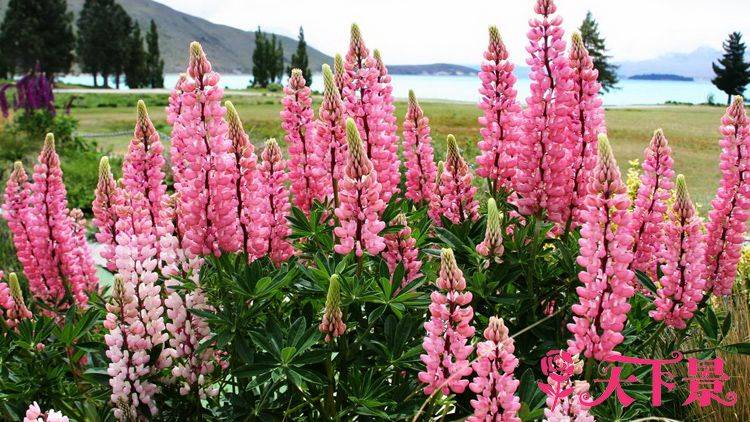
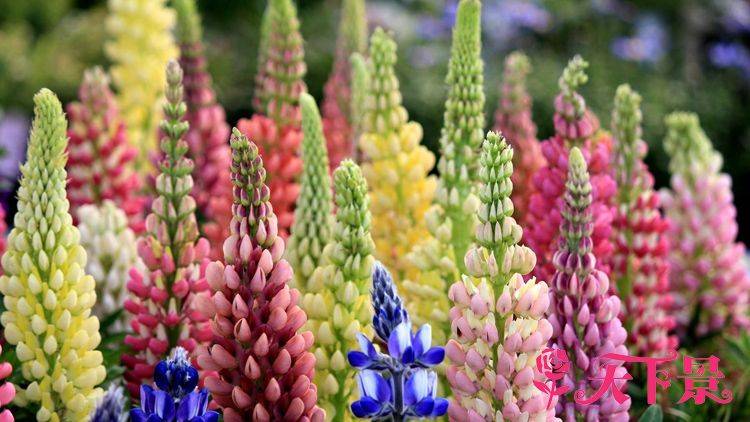
1. 4 flowers. Large crowns, butterflies, yellow, beautiful, integrated branches in general, and sometimes curvatures. The top sprouting, usually on the main tubing, begins to bloom as soon as it grows and continues to form on the side branches. The flowering of a flower in a bouquet goes strictly to the top. The flowering period of the narrow leaves fan bean master is about 42 days. The number of flowers varies from 50 (white bean) to 200 ( narrow leaves bean)。
1. 5 the argon is formed from a single heart, with two major vertically bound tissues clogged along the back and one of them stretching along the abdomen. There's a web vein on the side wall of the bail. Seeds are born alternately on the back. The length varies from 35 to 135 mm depending on the species. It's thick, it's gravy, it's luminous, it's luminous. It's so flat, there's a lot of plasters in the seeds or a horizontal dent. There's usually hair on the turret。
1. 6 seeds the mean weight, size, shape and surface mass of seeds varies widely between species. The amount of seed is larger than the amount of beans consumed. Depending on the amount or availability of the bioalkali contained, it is divided into two categories: bitter and sweet. There are hard and soft differences in skins. Seeds of narrow leaf plume are usually smooth, near-spherical, about 6-8 mm long and about 5-6 mm wide. Particle colours are of white, black, brown or intermediate type, sometimes grey with brown spots and white dots. Seeds of white plum bean are usually soft, with rounded rectangles or squares of approximately 14-16 mm length, and skin wrinkles or smooth types are usually white or white with peaches, seeds are usually bitter and have developed sweet low-bioalkali species. The seeds of sand plain plume bean are hard and bitter, about 6-9 mm x 4-7 mm, flatball, tan, light grey, with a narrow ring around the umbilical cord, with black ring marks. Yellow plume seeds usually have light colours, often around the umbilical umbilical cords, and some varieties are pure white. The seeds of south american plume bean are bitter, smooth, glitter, egg-shaped, flat, usually about 7-10 mm long, about 6-8 mm wide, white, or brown to black。
The botanical and biological properties of luice fa
2 biological properties
2. 1 temperature plumbes are warm and cold-resistant crops, adapted to temperate and cold temperate zones. The minimum temperature at which the seed is sprouts is around 8°c, the most suitable temperature is 20°c ~ 22°c and the highest temperature is 32°c ~ 34°c. The seedlings are able to withstand the frost of less than 4°c ~ 5°c, then die at less than 6°c; they are more resistant to heat, and still grow well at a peak temperature of 36°c in the summer. A plume is grown, which generally requires coolness and proper growth seasons of up to five months and sufficient water, with an average monthly temperature of 15°c ~ 25°c, which is most appropriate at 18°c ~ 24°c。
2. 2 humidity most plumes require an annual rainfall of 400 ~ 1000 mm, which takes at least five months without more severe water coercion. The climate is generally mild, dry and wet as the most appropriate. Drought resistance is so strong that it can grow smoothly on dry sands, known as sand plants. Roots are growing rapidly and deep into the soil, and water can be absorbed from deep soils during drought to sustain normal growth. The requirements for soil moisture are high in the seed season. Root tumor formation is hampered when soil moisture is insufficient and nitrogen-fixing capacity is reduced. Some are more humid, with excessive rainfall and wet air, and are still growing well。
2. 3 soil plumbes can be grown in rougher soil of various types, but require good drainage, less alkaline, less saline soil at the bottom and less suitable for acid to neutral soil (ph5. 0 ~7. 0). Pyramids are highly resistant and can grow in areas where ordinary legumes cannot survive. This is due to the roots of plumes, which have a significant capacity to extract mineral nutrients from insoluble compounds. Plumbes are free to absorb phosphate from phosphate that is completely unusable in cereal crops, and the ability to absorb nutrients from deep soils is also stronger than other plants。
2. 4 lighted bean is a radiant plant, suitable for growing on a well-lighted open ground. All mediterranean plumbes are long-lived plants, but the light cycle response of some plant varieties requires further study, especially in relation to the light cycle and springing effects。
The botanical and biological properties of luice fa



