


Problem: what are the common types and areas of coffee
A: the coffee beans are in their outer form and can be divided into bean and bean. The fruit of coffee is usually composed of two elliptical fruits, one of which is flat, known as peas, but also of a round bean, which becomes soybeans。
It is often divided into sunburn (dry), water washing, and semi-water washing (honey treatment). After harvest, coffee beans must enter the process immediately, otherwise they will start to ferment, which will make them taste different, and different processes will produce different flavors。
The coffee varieties, most commonly arabica, robusta and leberica, are concentrated in the coffee varieties of arabica, robusta and leberica。
Question: what are the types of imported coffee and related products
Response: coffee is broadly classified into the following broad categories, based on consumer cognitive habits in the area of customs declarations and market circulation。
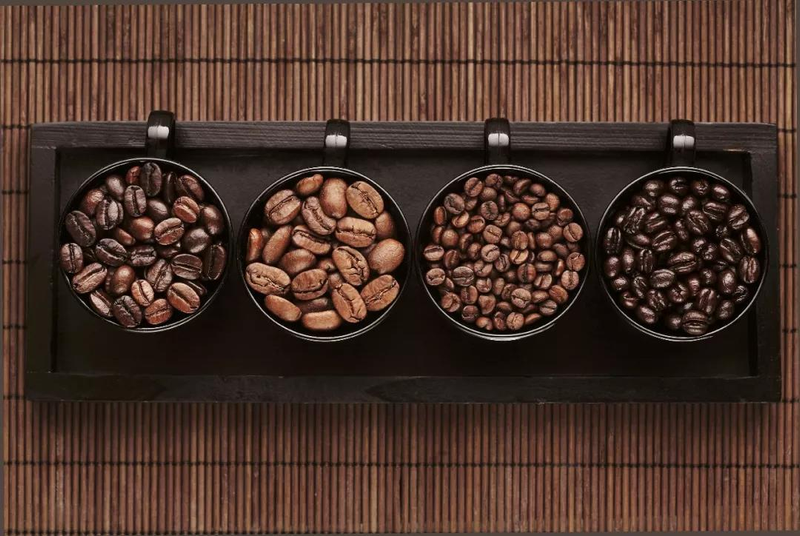
Coffee beans (screwd): baked or made at high temperatures, produce a fragrance of coffee, which can be used as a material for food。
Coffee powder: on the basis of baked coffee beans, grinding them into powder by hand or using machines. Powdered coffee is prone to oxidation and usually grinding before cooking。
Envelope coffee: a portable coffee sealed in a filtered bag after milling the coffee. When drinking, the bag is torn open along the seal line, the paper plywood on both sides is torn to the cup and the coffee powder in the filter is to be slowly injected with hot water。
Quick soluble coffee powder: commonly known as “black coffee powder”. It is mainly baked, extracted and evaporated by coffee beans before they are frozen and dry, and metal tests are completed and filled into tanks。
Triple soluble coffee: mainly white sugar, glucose, vegetable oils, instant soluble coffee, with a small amount of stabilizers, emulsifiers, antics, pigments, etc。
Capacitor coffee: after milling the coffee beans, they are filled with a glass of capsules or pills made of aluminium or other materials, vacuumed or filled with harmless inert gases (e. G. Nitrogen), which act as a barrier to oxygen, extend the shelf life, and eliminate problems such as ordinary coffee beans or coffee powders from oxidizing acid after exposure to air。
Coffee beverages: the main components are water, coffee extraction fluids, white sugar, powdered milk, emulsifiers, acid regulating agents, etc., for direct drinking in cans。
Question: what is the normal procedure for importing coffee beans (screwed) and manufactured products, coffee drinks and so forth
Ans: imports/exporters file and qualify-declarations-sanitary-sanitary-sanitary-accreditation qualifications are qualified and are granted; non-conformity orders food importers to destroy or withdraw。
Question: are there any special requirements for coffee beans imported from different countries
The production, processing and storage of lost coffee beans must be approved and registered by the general customs administration. The register of enterprises is available on the website of the general customs administration。
Domestic importers should register with the customs authorities of their place of registration before importing coffee. At the same time, the application form for filing is completed and submitted through the system of record keeping of importers and exporters of imported foodstuffs of the general customs administration of china, which provides information on the name of the consignee, its address, the name of the contact person, the telephone number, the name of the enterprise producing abroad, its address, the name of the person filling in the account, the telephone number and the statement of commitment, and is responsible for the authenticity of the information provided。
Specific requirements and procedures of the recipient of imported foods can be found in the column on “customs of china's general customs website www. Customs. Gov. Cn/internet+customs/office guide/enterprise management and inspection/exportation of food cosmetic imports and exporters recording of food cosmetics” and in the column on “customs of china's single window for international trade https://www. Singlewindow. Cn/standard version application/enterprise qualities/importation of food cos and cosmetic importers recording”。
Question: what information needs to be prepared for declaration
Ans: importers or their agents are free to choose the customs clearance site for declaration. The declaration shall be made by name, brand, country of origin (region), specification, number/weight, total value, date of production (volume number) and other elements specified by the general customs administration, and shall provide the following information:
(a) the necessary documents such as contracts, invoices, packing orders, bills of lading
The name of the exporter or agent outside the country, the importer's name and the filing number, the import and sale records of the previous shipment
(a) the phyto-sanitary certificate issued by the official (regional) country of origin, the laws and regulations, bilateral agreements, protocols and other provisions requiring the accompanying certification (e. G. Health certificate)
Import prepackaged original labels, original stickers translated into chinese, chinese stickers sampled; for those indicating nutrient content, supporting documentation should be provided
In the case of health functions, a certificate of authorization issued by the competent authority should be provided
Other certificates or documents that should be attached. The implementation of paperless declarations is subject to paperless requirements。
The importer shall be responsible for verifying that the chinese labels for imported pre-packaged foods conform to the requirements of our laws, administrative regulations and national standards of food safety. The audit was not qualified and could not be imported。
If imported prepackaged foods are sampled for on-site or laboratory examination, the importer shall submit to customs its qualification documentation, the original label and translation of imported prepackaged foods, the chinese label sample and other supporting material。
Question: what are the requirements for importers
The food importer shall establish a system for recording the import and sale of foodstuffs, such as a proper record of the food name, net content/specify, quantity, date of production, production or import lot number, warranty period, name of the exporter and purchaser abroad, address and contact information, date of delivery, etc., and keep the relevant documents. Records and certificates must be kept for a period not less than six months after the expiry of the food security period; in the case of a non-defined warranty period, for a period of more than two years after sale。
Question: what are the requirements for packaging and transporting coffee beans
Answer: there are three requests:
Processed coffee beans should be stored separately from coffee beans sold to other markets and unprocessed coffee beans to prevent contamination。
Coffee beans should be packaged using clean sanitary, new materials that meet phytosanitary requirements. Each packaging shall be marked with the words “this product is delivered to the people's republic of china/thhispropractwillbeexportedtothepeople's republic of china china” and with chinese or english information such as the name of the product, the processing enterprise and its registration number。
Before shipment, the means of shipment are thoroughly inspected to prevent contamination by harmful organisms。
Question: what is the difference between coffee in different areas of production
A: african-producing areas: in africa, where coffee originates, there are many fine coffee-producing areas, such as ethiopia, kenya, rwanda and tanzania. Ethiopia is the largest arabica-producing country in africa and can be divided into nine major regions, the most prominent of which are sidamo and yegachef. The smell of african beans is mainly fragrance, fruit and sweet acid, typical of ethiopia, whose capital is also famous for flowers, with the disadvantage that the alcohol is not thick enough。
Americas: the main coffee-producing areas in the americas are in colombia, brazil, chile and guatemala. Brazilian coffee, which accounts for 70 per cent of global coffee production; pure colombian coffee; the world-renowned blue mountain coffee; the panama shusha, known as the most expensive coffee; the taste of hawaii, cona; the sweet new guatemala, antigua, etc., all of which come from the americas. The flavour of bean is predominantly nuts and cocoa, and it is thick and cozy. The disadvantage is a lack of aromatics and a moderate performance of sweetness and acidity。
Asia-based regions: the major cultivation areas in asia include viet nam, india, yunnan, myanmar, thailand and indonesia. Indonesia is the most well-known coffee-producing country in asia, with its unique taste of gold, mantnin and mantnin sitting in the middle of a huge crowd. Viet nam is the world's largest coffee-producing country, robsta. Asian beans are thicker than beans in the americas and africa, but they are less acidic, smelled with wood, cloves, herbal herbs, oil, spices and dirt, and have a lower sulliment than the yogurt of the upper fruit。
Domestic production areas: 99 per cent of china's coffee is produced in yunnan, mainly in tehon, paoshan, pu ma and the four prefectures. In recent years yunnan has also begun to have a number of high-quality estates, producing excellent coffee beans. Yunnan espresso is thick, symmetrically balanced and smells like nuts, caramel and even chocolate。
Question: best time for coffee
A: cortical alcohol, a kind of wake-up hormone, which is our own “natural caffeine”, which acts as an inspiration. The peak time for cortisol distribution is usually 8-9, 12-13:30 and 17:30-18:30. If we drink coffee at the peak of cortisol, the effect of caffeine will be significantly reduced, and if we drink coffee often during these periods, it will be easy for our bodies to withstand, and later the anointing effect of coffee will be significantly diminished. The best time frame for coffee is therefore 9. 30 to 11. 30, 13 to 17:00。



