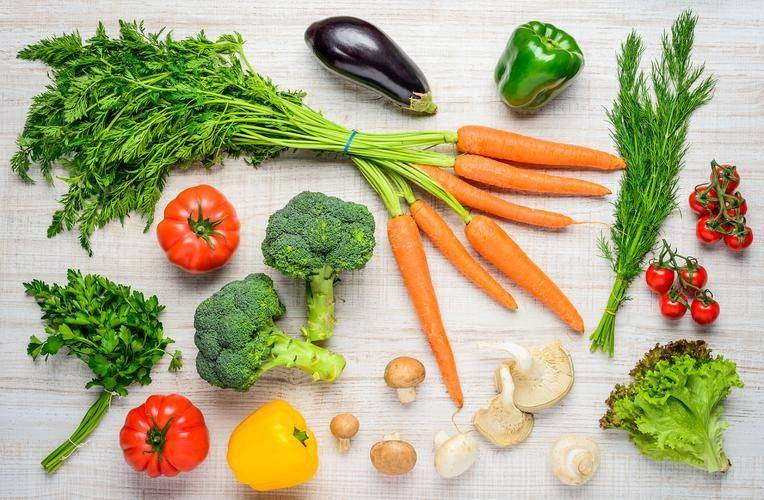
The scientific cultivation of ke xue zhongzhi organic vegetables, also known as eco-vegetables and green vegetables, does not use pesticides, fertilizers, additives and does not pollute the surrounding environment or endanger human health. Organic agricultural vegetables follow natural and ecological principles and adopt sustainable agricultural technologies, with nutritional values more than two or three times higher than those of ordinary vegetables, in order to maintain agro-ecosystem stability. The development of organic vegetables has very broad market prospects and better combined benefits. Thus, in order to promote the development of organic agricultural vegetables and to achieve high productivity of organic vegetables, this paper provides information for the development of organic vegetables in terms of the selection of the production environment, cropping management, fertilization techniques and pest and grass control. First, organic agro-vegetation needs to be based on the choice of the environment in which organic vegetables are produced, taking into account the production environment and production requirements, and a good production environment is a prerequisite for the safe production of organic vegetables. Production bases should be remote from urban areas, industrial or mining areas, main transport routes, industrial sources of pollution, waste sites, etc. To prevent contamination of organic vegetables. Physical barriers can be used to isolate organic agrovegetation bases from polluting sources. The production base requires a complete piece of land with open terrain, sufficient sunlight, good ventilation, sufficient water sources, no other crops and safe production of organic vegetables. Factors affecting the growth and development of organic vegetables include air, irrigation water and soil, the need for organic vegetable production bases to be away from waste gas, the absence of industrial sources of gas pollution above the main wind and acid-free areas. Keep away from wastewater, ensure that irrigation water is of a stable quality, provide good drainage conditions for organic vegetables, and ensure that water is not contaminated while it is being delivered. It is also important to stay away from waste soil, soil fertility, high organic content, moderate alkalinity, pesticides, fertilizer residues, etc. In addition, the production of organic agricultural vegetables requires the provision of infrastructure such as water, electricity and roads, functional areas such as agricultural storage, product detection, integrated planning, rational layout and scientific cultivation. Establish a complete inventory of organic vegetable cultivation, documenting problems and solutions encountered in vegetable cultivation, building up experience and upgrading cultivation techniques. Second, organic vegetable cultivation techniques need to be based on natural patterns, maintain ecological balance and create an environment conducive to vegetable growth in order to achieve high productivity and efficiency. The selection of organic vegetable varieties must be strictly closed and only a good variety can be prepared for subsequent cultivation. As much as possible, more resistant varieties are selected, and certain pest resistance is not prohibited. Genetically modified or pharmaceutical-treated vegetable seeds cannot be selected to avoid harm to health. At the same time, ensuring that organic agrovegetation varieties are adapted to local soil and climate characteristics and increase growth capacity. In the production land of clean organic vegetables, the land should be effectively cleaned up in accordance with the corresponding criteria and harmful factors in the soil should be addressed. Clean-up activities, such as deep tilling and tanning, are carried out on a regular basis for disinfection purposes. If disinfection is not complete, residual bacteria can affect the growth of organic vegetables, resulting in a decline in their quality. Cultivation should be based on the choice of strong seedlings, and water fertilization should be managed to ensure the normal growth of organic vegetables. It is well known that organic vegetables are popular and market-oriented, but they are much more demanding than ordinary vegetables. It is important to ensure a change of roots, start-ups, membrane cover, rational planting, plant adjustment, and to focus on the adaptation of light, moisture and temperature conditions to meet the demand for organic vegetables. Third, organic agriculture, which is applied to organic vegetables, emphasizes the non-application of any chemical fertilizers and promotes the use of organic fertilizers. The organic fertilizer referred to here consists mainly of human and animal faeces, straw rots, grass and ash. Organic vegetables are subject to local fertilization, strict control of fertilizer types, soil fertility testing, improved soil diagnosis, and thus appropriate fertilisation techniques and scientific long-lasting mechanisms. Different organic vegetables are fertilized in different ways, with rational fertilizer use and fertilisation methods based on different crops and soils that can truly function as fertilizers, eliminate harmful organisms and reduce the source of disease. Pre-plantation is preceded by the application of bottom fertilizer, which is evenly integrated into the farming layer and promotes absorption of roots. The timely pursuit of fertilizers before peak periods of growth and outcome ensure that fertilizer supplies meet plant growth needs. For shallow organic vegetables, fat-for-fat, for more concentrated vegetables, and for large-range vegetables, open-for-fast. Fertilizer application should take into account three points: human urine and fermentation should be fully fertilized and not be overused on crops such as potatoes, melons and beet; straw fertilizers should be pressured into the soil at an early stage before planting or planting, so as not to cause oxygen deficiency in the soil; organic compound fertilizer should generally be long-activated fertilizers, preferably applied with farmer fertilizer, and scientific applications should be applied to improve fertility. Iv. Control of organic vegetable diseases and pests, whether organic vegetables or ordinary vegetables, is threatened by diseases during their growth, with large-scale diseases causing huge losses in vegetable cultivation. Pest and pest control is the focus of the organic vegetable production process, which, in accordance with the technical requirements for organic vegetable cultivation, is strictly controlled in accordance with the principle of “preventiveness, prevention and integration”, with early detection, early detection, a combination of agricultural and physical measures, integrated management of pests and diseases, and a good growth space for organic vegetables. Organic vegetable production sites are regularly observed and pests and pests are promptly removed. First, the prevention of diseases can involve the use of lime, sulphur, potassium permanganate, plant formulations, copper sulphate, etc., and different prevention measures for different diseases. Secondly, pest prevention uses manual, biological and physical methods. Artificial control refers primarily to the manual capture of insects and biological control mainly to the artificial release of natural enemies of pests. Physical control refers primarily to artificial physical barriers, such as insect nets, traps, etc. Finally, the prevention of grass can prevent and control the occurrence of weeds in a timely manner by means of artificial weeding, weed cover, and deep soils. Spray acids can be sprayed at between 4 and 10 per cent of edible vinegar for weed elimination. Weed control can also be done by man-made ducks, geese, etc., but genetic engineering products and chemical herbicides are prohibited. (by: 066,400 agricultural and livestock directorate, lulong county, qin emperor island, hebei province)