(extract)
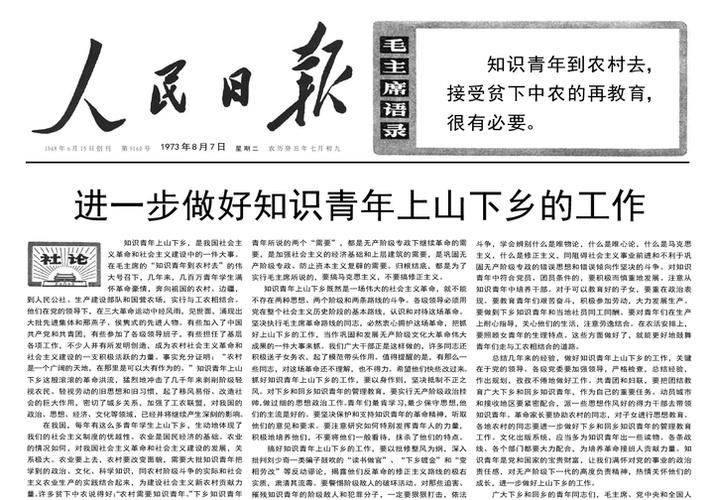
In order to meet the requirements of the overall mission of the new period, to develop a stable and united situation, and to accelerate the implementation of the four modernizations, and in line with the “integrated and comprehensive” approach, the following provisions are made for a number of issues relating to the advancement of knowledgeable youth into the countryside:
Distribution of urban secondary school graduates
1. Distribution of secondary school graduates from urban areas, with a “four orientations” (into schools, uphill villages, support for border areas, town arrangements). Broad opening of doors and gradual expansion of urban integration capacity in accordance with the needs of national economic development. In addition to direct education, military and urban placements, intellectual youth are mobilized and encouraged to go up and down the hill and contribute to the four modernizations。
Secondary school graduates from mining, forestry, rural enterprises, small towns, general county towns, and non-agricultural households in the regions are not included in the range of up and down the hill and are arranged by the system or the region itself. Collectively owned agricultural, industrial and commercial enterprises may be placed, and under the national plan, jobs may be recruited, middle-level specialized and technical schools。
Cities with resettlement conditions may also not mobilize knowledge youth to go to the countryside。
The children of the cadres and employees of the armed forces who have graduated from secondary school in the towns and towns shall be placed in their own right and, in case of difficulties, in local integration。
3. Cities in which young people need to be mobilized to go to their villages, where only one child, both parents are dead, foreign students and foreign children of chinese nationality are not targeted. Families with many children are allowed to stay. Persons with disabilities who are unable to participate in agricultural work and their families have particular difficulties and can take care of their families. The specific arrangements for the stay and resettlement are determined by the provinces, municipalities and autonomous regions themselves。
Selection of knowledge youth in rural areas
17. In accordance with the national plan for the recruitment of workers from society, young people left behind and young people living in rural areas should be integrated. Local ownership and collective ownership are available to hire young people from rural communities. Annual recruitment times should be relatively concentrated. At the time of recruitment, an examination is conducted for merit. However, it is necessary to take care of families with large numbers of children and small numbers of employed persons, as well as young knowledge-based youth who have had difficulties with long-term work in the countryside, to broaden the age of recruitment and to increase the proportion of girls enrolled。
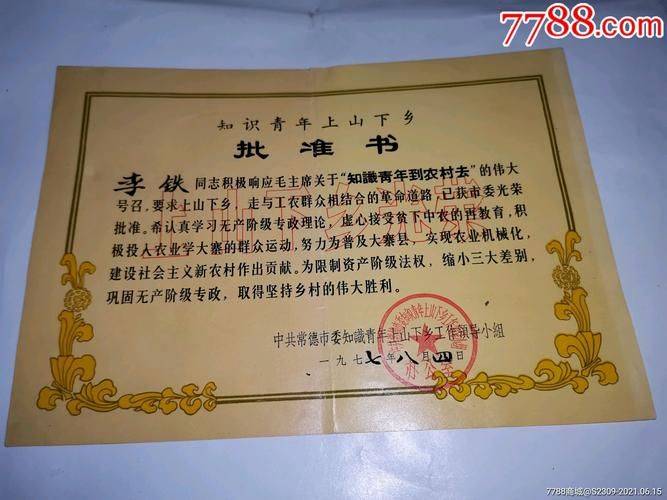
The recruitment of young people from rural communities is organized in an integrated manner under the leadership of the riac. This may be done by mobilizing the labour and youth sectors in urban and resettlement areas to agree on a target for recruitment and after consultation with social teams. No unit should be allowed to recruit young people from rural communities without permission, nor should it be allowed to recruit others using indicators for young people from rural areas. The “back door” is strictly forbidden。
19. A reasonable solution to the issue of pay after recruitment of young people with knowledge in the countryside. If you are assigned to a skilled job, you are entitled to the second year of apprenticeship before the final grade, to the last year of apprenticeship after three years and to the first level of employment after five years. The previously recruited young people with knowledge in the countryside are paid less than this standard, and the difference is not paid back. Persons assigned to skilled and heavy manual labour are treated in accordance with the relevant provisions in force。
Knowledge youths who join the armed forces who are no longer integrated back into the countryside after their discharge from the army are assigned, in principle, to their parents' places of origin or to the areas of origin。