With a national development perspective, the mission of the personal risk industry is even more daunting at the critical nodes of the “14-5” near the end of the process: how can reforms be further deepened on the basis of a high-quality transition? How can risk be integrated into the chinese-style modernization process and play a greater role in serving people and entities
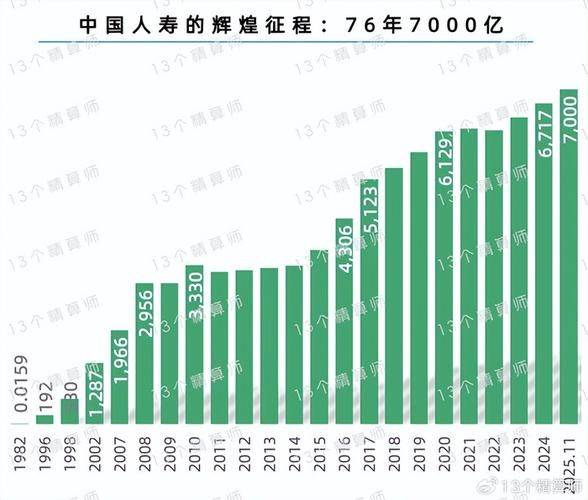
Under the twin challenges of micro-development and macro-problems, the life insurance industry's geese, china life insurance, inc. (hereinafter referred to as "life in china", stock code: 601628. Sh, 2628. Hk) injected greater dynamism into the market. According to the company's public information, as at 30 november 2025, its total premium exceeded the rmb 700 billion, a new breakthrough in the size of the total premium throughout 2024 and a steady market lead。
So, what was the right thing to do behind the high-level breakthrough in chinese life business? What business logic and industry insight? As a large state-owned financial insurance enterprise, how does life in china coincide with national development
Human nature: "the great father of the nation"
In recent years, our country has accelerated its efforts to build a financial power, which, as the backbone of the national economy, has been entrusted with the task of serving the real economy and the well-being of the people, and insurance, which is an important pillar of the financial system, also carries out the important functions of a social “stabilizer” and an economic “shock reliefer”。
Thus, while pursuing their own high-quality transformations, it is even more important to integrate the political and popular nature of financial work into business development, both as a necessary requirement of china’s unique financial development path and in keeping with its national strategy, regulatory orientation and popular expectations for a better life。
As a state-owned financial insurance company with which china has lived, life in china is based on a political background and a deep-rooted sense of people-centredness. It is particularly valuable that it always integrates its initial heart and heart into its primary business, implementing the concept of “finance for people” with practical action。
Focusing on the main industry, china has been able to protect and safeguard the lives of its people, providing insurance and value-added services to over 600 million clients. In the first half of 2025, over $48 million was paid and the expenditure on compensation was $16. 9 billion, of which health insurance liability was over $34 billion. Effectively meeting the needs of specific groups, providing risk protection for micro-enterprises and self-employed businesses of approximately 2. 7 trillion yuan. Extensive participation in the construction of the third pillar of old-age pensions has resulted in significant increases in personal pension premiums over the same period, with commercial insurance annuities accumulating nearly 4 trillion yuan in reserves for future liability. In addition, using the advantages of a network of services spread throughout the country, the resources of remote areas have been increasingly targeted, providing the necessary insurance programmes and timely and effective services for the local population in tibet, qinghai, heilongjiang and ningxia。
In the area of innovation in insurance products, in the face of the acceleration of the ageing of our population and the deepening of the social dimension of the implementation of the “health china” strategy, china's life expectancy is at the heart of its national strategy and its livelihood needs, and it is making every effort to promote the development of diversified products。
In the area of health security, china's life expectancy has focused on the real health needs of the population and has integrated the supply of products for health, medical care, incapacitation and care insurance. Since this year, a number of health insurance products have been introduced around market security needs, including insurance for the well-being of the elderly and the long-term loss of personal income from disability, while keeping pace with the development of medical and pharmaceutical technology and incorporating more innovative medicines into health security responsibilities。
In the area of old-age insurance, active participation in the third pillar of the old-age pension system has led to the creation of a system of commercial insurance pensions with a wide variety of product types, broad population coverage and diversified distribution channels, as well as to the development of insurance against accidents among the elderly, through the intensive allocation of individual pension services。
In the area of inclusive security, it has responded positively to the requirement of a “sound system of inclusive insurance” under the new country article 10 of the insurance industry, promoting the expansion of inclusive insurance, focusing on priority groups and specific regional security needs, and providing individualized solutions such as exclusive products, such as innovative introduction of refined universal insurance products such as accidents and diseases among domestic workers, exclusive tourism accidents in old age, and the “one-way” series。
It is worth mentioning that, along with the upgrading of client demand to full-cycle, diversified services, adding to the deep-seated requirements of a high-quality transformation of the industry, life in china continues to drive the transition from “after-action compensation” to “insurance+services” business models, relying on its strong resource endowments, actively pursuing a health and pension strategy and building a system of welfare services。
In terms of the distribution of pension services, life in china has led to the landing of three main lines of old-age products in the ccrc old-age community, in the city's inner-hearted apartment, and in the rest of the community. A cumulative total of 20 institutional old-age projects are being organized in 16 cities, with the introduction of four “hot-in” residential products。
Thus, whether it be insurance or customer service, life in china has long been based on the concept of “finance for people” and its incorporation into its own development practices, not only in line with national strategic requirements and regulatory policy orientation, but also in the long-standing trust of clients and the market。
Growth: focus on value creation, enhancing endogenous dynamics
At the heart of this high-quality development path, which looks at life in china, is that it keeps the domestic engine of growth motivated by value creation and efficiency enhancement as its main line of business。
China's life continues to enhance the diversification of the supply of products and accelerate the transformation of the channel. From the end of the product, consumer demand for insurance has become more diverse and personalized in recent years, as people's living standards have risen and risk management awareness has increased. With this recognition, china, as a large state-owned financial insurance company that serves more than 600 million clients, has chosen not to be self-proclaimed but to be proactive and responsive。
As can be seen, life in china revolves around customer demand, accelerating the improvement of products and operations in the direction of diversity in morphology, duration and cost. The data show that in the first three quarters of 2025, the company's share of life insurance, pension insurance and health insurance policy premiums reached 31. 95 per cent, 32. 47 per cent, and 31. 15 per cent, respectively, and that business was growing evenly while the new policy premium was growing faster。
If the product is the core carrier of the venture service client, then the marketing channel is undoubtedly a bridge between the customer and the deep-farm market. At the moment, with the high-quality transformation of personal risk into deep water, it has become an industry consensus to promote the upgrading of channels。
Looking at changes in the marketing channels for life in china, they range from steadily moving forward with the reform of the individual risk marketing system, the upgrading of the professionalization and professionalization of the workforce, to promoting the reduction of the efficiency of the banking system, the broadening of the banking cooperation network and the deepening of the internet, and the exploration of landscapes, digitization and eco-service models, which closely follow regulatory orientation and market trends, creating a multi-coordinate network of channels。
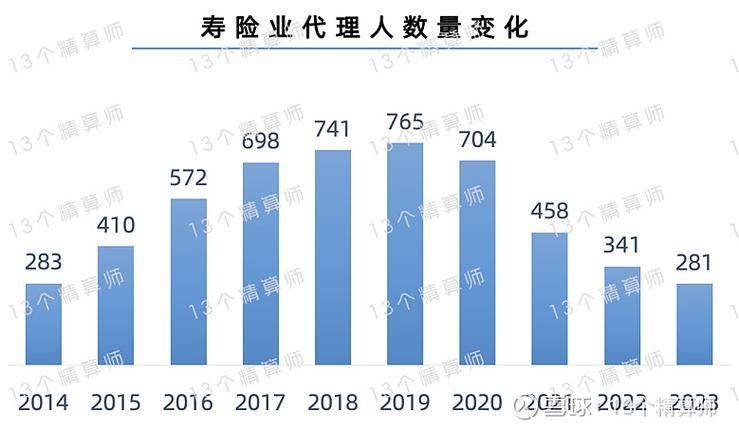
The data show that, as of 30 september 2025, china's total sales capacity for life stood at 657,000 people, of whom 607,000 were at risk. The size of the workforce continues to be at the top of the industry, and the quality of the workforce continues to improve. A multi-dimensional approach, a coordinated approach and reform initiatives have also brought value-driven energy to china's life. In the first three quarters of 2025, the value of new company business grew by 41. 8 per cent。
Of course, as the largest life insurance company in the country and globally, risk prevention and control are also central to china’s high-quality life development. At this time, in the context of the increase in uncertainty variables in the external environment, the strengthening of multifaceted development and the consolidation of asset-liability linkages have become important points of focus for venture operations。
In this context, china's life as an industry's geese plays a leading role in building the foundations for long-term sustainable development of the industry by increasing the deployment of floating revenue-based operations and optimizing the corporate debt structure. According to the data, by the end of the third quarter of 2025, the share of chinese life-floating revenue-producing operations had increased by more than 45 percentage points in the first year of contributions over the same period of the previous year, thus contributing to a significant decrease in the cost of their new operating liabilities over the same period. In parallel with the growth of operations, cost controls were strengthened through the active implementation of the “one-in-one” policy, which resulted in a year-on-year decrease in cost expenditure and a significant increase in cost-input output efficiency。
It is not surprising that china’s total life insurance premium has reached a new high scale and has achieved a high level of business performance. This has been backed by a series of initiatives to enhance the supply of products, deepen reforms, and reduce efficiency gains。
Long-term: deepening the negative funding linkage and implementing long-term value investments
When it comes to the value of insurance, in addition to the provision of risk security and customer services, insurance funds, because of their long duration, size and stability advantages, are seen as an important financial “live water” for the long-term stable development of capital markets that serve the well-being of the population in the country。
As national and regulatory efforts to steer insurance funds towards a stable market and a steady expectation in the capital market, the investment logic of venture capital is being reshaped, with a greater focus on long-term investment and value investment, enhancing the qualitative impact of asset-liability linkages and enhancing the economic capacity of service providers. The observation of chinese life at the end of the investment cycle has long translated the concept of value investment and long-term investment into concrete actions in the service real economy。
As a trade geese, in the face of a complex and volatile market environment, chinese lives are governed by the principle of matching assets and liabilities and operate with robustness. Over the long term, the company has been actively exploring multifaceted allocation strategies and continuously upgrading its investment expertise through continuous optimization of large asset classes, robust cross-cyclical investment configurations。
Maintain a steady configuration of the base. China has maintained the fundamental principle of asset-liability matching management, advanced solid long-term consolidation of asset allocation, with investments of over-long debt amounting to 2 trillion yuan, and has been steadfastly long during periods of higher interest rates, with a negative long-term gap at a low industry level, thus laying a solid foundation for addressing the low interest rate environment。
While well-configured across the cycle, there is flexibility to adjust the pace and variety strategy of sequestered asset allocation to market conditions。
Active allocation of equity investments. China's life is based on the long-term capital advantage of insurance, patience and capital. It actively implements the medium- and long-term capital entry requirements and steadily advances the optimal allocation of equity assets. Since this year, china has taken the initiative to seize market opportunities and increase investment in equity markets. As of the third quarter of 2025, the size of the open market had increased by more than 380 billion yuan compared to the beginning of the year, with increasing support for capital markets。
Securely configured alternative assets. In implementing the long-term investment concept, china has placed greater emphasis on resonance with national strategies and people's needs, transforming the long-term advantage of venture capital into a long-term dynamic force for socio-economic development, developing investment packages around new industries, stock-taking, green transformation, etc., and innovative investment models to enhance returns。
China has continued to increase investment in science and technology. It has set up a billion-degree science and technology fund, which invests in strategic and emerging industries, such as chips, new energy sources and biomedicines, and has been improving the quality and efficiency of the service economy and new quality productivity. At the same time, active participation in investments in innovative varieties, such as gold, continues to broaden access to insurance funds and enhance portfolio diversification。
The key to the leadership role of geese companies across the spectrum is to be able to move away from the “small me” thinking, build on the broad national context and industry and take a long-term strategic perspective and do hard and right things. Life in china, as the representative of patient capital and long-term capital, is the living implementer of that logic。
Concluding remarks:
It is not hard to see at the bottom of the logic of an in-depth analysis of china’s life performance to achieve a high-level breakthrough, that the core code of “ears dance” is either to integrate its high-quality development into the national development agenda and to create a more political and strategic vision。
With a view to the next steps, china will continue to focus on its clients, implement the “333” strategy in depth, implement the “three-plus” “three-breaker” business approach, give greater priority to benefits, focus more on long-term concepts, focus more on risk prevention and risk reduction, and promote business development throughout the year, with a view to achieving a successful return to “145”。