"red lips" for fresh grapes is a high-quality production technique in yunnan lok
Li yiqing
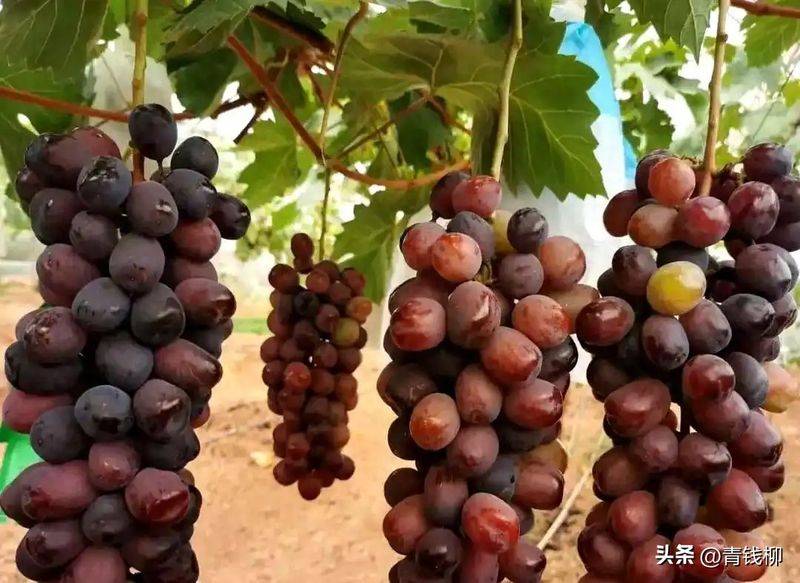
In recent years, with the introduction of red lips for fresh grapes in the country, it has become known and appreciated by a growing number of consumers. The red lips belong to the medium-pretty grape varieties, with large grains of fruit, a light greening of the skin to the red of the fruit, a slight oscillation of the touch of the skin, a slight dent in the upper part of the upper part, which is like the lips, which is known as the red lips, a non-nucleus, a soft and sweet taste of the mouth, a thick juice, and a little fragrance. Roku, an autonomous hmong district, is located in the northern part of phi, mainly in the middle highlands, with wide variations in altitude, creating a rich stereoclimatic climate and creating a favourable natural climate for the cultivation of red lips grapes. Added to this, red lips have the advantage of durable transport over crystal grapes, which are an efficient and commercially valuable grape variety. The mastery of high-quality cultivation techniques for red lips by fruit farmers can contribute not only to increased yields but also to the green, efficient and quality development of the local grape industry, which is important for the overall revitalization of local villages。
Environmental requirements for 1 vineyard site
1. 1 land-based environment
Vineyard sites should select well-lighted plots (average annual daylight hours of 2,000 hours), well-ventilated plots, avoiding low-lying flooding, wind vents and industrial pollution sources, with average annual temperatures of 12°c and extreme temperatures of not less than 15°c。
1. 2 site selection
The site of the vineyards should choose mountains or slopes with relatively flat terrain, high position, low groundwater table, fertile soil, deep earth layer (80 cm), ablaze gas, sandy or border soil with ph 6. 0 ~ 7. 5, avoiding clay of clay, salty soil (0. 3% salt). At the same time, drainage and irrigation systems are easy, and transport routes are well-placed to facilitate harvest management。
Two grape sheds
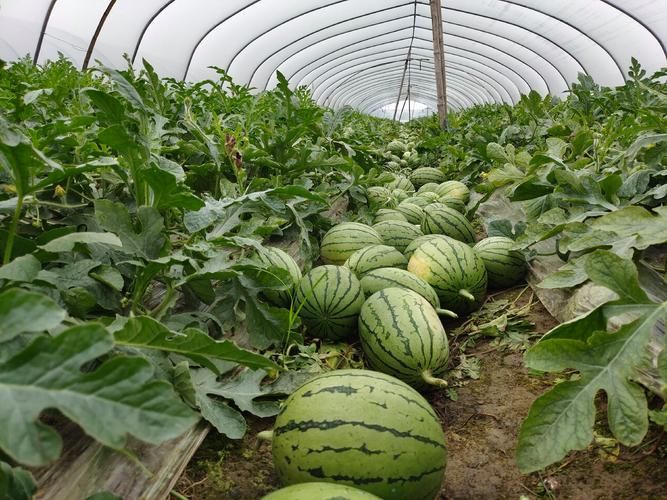
In combination with the climatic advantages of the hmong autonomous district of lobo, simple plastic shacks are generally used for planting. The ceiling is generally 6-10 metres wide, with a height of about 4 metres, with polyethylene or pvc-specific membrane on the top of the roof, and 50-100 metres in length, for day-to-day management and harvesting operations. The use of sulphur powder, potassium hydroxide, etc. To disinfect the grounds. Sulphur powder is fungicide and can effectively kill bacteria in the soil. Potassium hydroxide can alter the alkalinity of the soil and is not conducive to the survival of the fungi. Where conditions permit, facilities such as automatic spray systems, vents, anti-worm nets (verbide stickers) and luminous nets are configured to facilitate modern scientific management。
3 grape trees planted
3. 1 shrimp selection
The selection of healthy trees for planting is essential for the future strength of grapes. The three to four seedlings, 50 centimetres tall and 0. 8 centimetres thick, were born and fed over a period of one to two years. Before planting, the roots of the tree should be properly trimmed to remove the weak, decaying parts and ensure healthy growth。
3. 2 digging and replanting
It is most appropriate to set a gap between north and south. The depth of the ditch is 0. 6 to 0. 8 metres and the width is 0. 8 to 1. 2 metres, and the middle layer of the ditch is applied to corroded organic fertilizer, which is mixed with soil, usually 5 metres per acre and 3 metres per acre; if a large shed is to be built, additional fertilized weight is required, at 10 metres per acre. Filling up the ditches and pouring heavy water and flatting the ground. At the end of the fertilization, it was fertilized at depths of 40 to 80 centimetres; the sand was shallower and the soil was fertilized at depths of 40 to 50 centimetres. The soil can be modified by mixing organic materials, such as straws, rods and rice shells, with pig or goat dung, adjusting the carbon nitrogen ratio and moisture, which needs to be stacked two to three times during production。
3. 3 timing, density and mode of planting
(1) timing. In combination with the natural climatic factors of winter and summer-free hmong autonomous districts, it is advisable to plant the grapes after they fall and before the spring of the following year, with the temperature stabilizing at more than 7°c。
(2) plantation density. Lines range by 3. 0 metres, with a range of 1. 5 to 2. 0 metres, and plant a tree by-line and a 1. 5-metre wide course of work with a pole. A chain of about 100 plants per acre。
(3) cultivation. The roots of the seedlings are impregnated for 15 minutes in 500 times the amount of more than 50% of the filamentable powder. Excavating a defined pit of 30 cm in diameter and 20 cm in depth, evenly plaguing the sterile tree, stretching the root line up to 5 to 10 cm above the ground (to prevent the aluminum from growing), filling back the soil, pouring down the water and covering the membrane to protect the temperature and humidity。
4 grape shelf construction and plastic trim
The main stem is controlled at a height of 1. 5 to 1. 8 metres, with a single arm extending to one side with a fixed binding or a fixed wing, with a new v-shaped ligature. The arm leaves a parent branch of the result every 20-25 centimeters. On the basis of keeping the tree body ventilated, it is reasonable to leave branches in line with the growth of the tree body and space, to avoid excessive or too few branches and to trim dead leaves in time to reduce the occurrence of pests and diseases。
4. 1 summer trim
4. 1. 1 embroidery
The buds on the logs must be erased at any time. Erasing occurs 10 to 15 days after the sprouting of the grapes, wiping out the weak sprouts, the twin sprouts, and retaining the strong sprouts (between 15 and 20 cm), in two to three sessions。
4. 1. 2 set
In the event of the emergence of new flowers and their large hours of identification, the space between the branches is between 1. 5 and 2. 0 cm, with each acre being kept at 1,500 to 2,000 cm in order to avoid being too dense. Of these, 90 per cent were new results and 10 per cent were suitable nutrition。
4. 1. 3 tie
After a new length of more than 25 cm, the new floor is bound in batches, evenly bound on the linen wire and presented in v form. Take care of the looseness of the grip。
4. 1. 4 cardiac
One week before the flower blooms, the heart of five or six leaves above the tree。
4. 1. 5 subtraction
After the main stench, only one stench is left at the top, the rest leaves a leaf and removes it until the top stench is extended to five to six leaves, leaving three leaves to be removed repeatedly. By 15 to 17 leaves of each chicken, all subsequent new hairs were cut off。
4. 1. 6 elimination of rolls and leaves
Remove all curls and remove two to three leaves from the base during the coloring period of the fruit。
4. 2 winter trim
Winter cutting takes place after planting leaves and before budning. It was mainly short-cut, supported by trimmed, resulting in two to three sprouts of the parent branches. Amputation (medium- and short-stamping), defusing disease branches, cross-cutting branches, thin branches, and keeping the tree crown radiant。
5 sequence and fruit management
5. 1 flowers
Depending on the overall growth of the plant, the primary flowering result is two to three bouquets of length over one metre, which removes small or stunted bouquets and leaves no order within 50 centimetres。
5. 2 plumbing
In the first week to the beginning of the bouquet, you will strangle the tip of the ear from one fifth to one quarter, then cut off the shoulder of the ear, and then cut off three to four large branches of the raisins from the top and keep the small branches of the raisins as close as possible. The small branch of the layer near the axis leaves four to five fruit grains, three to four fruit grains in the lower two layers, two to three fruit grains in the lower three layers and one to two fruit grains in the remainder. The small ears are trimmed and the ears are conical。
Zingho, 5. 3
The bag is preceded by a poignant poaching, which takes place two to three times, resulting in 2,000 to 3,000 ears per acre, removing the poignant and defective poaching, with production being controlled at 2000 to 2,500 kg per acre。
5. 4 extremists
The fruit is adjusted to the size of the soybeans for two to four weeks after the flower, so that the fruit can be fertilized, the deformity and the small fruit can be fertilized, the fruit of the fruit of the same size is chosen, and 50 to 65 are left in each ear. After the first oscillation, to the upper of the bag, in the case of partially slow-growing small fruit, individual cones outside the ear, and localized crowding, two or more twigs are required until the ear is adapted to the cone。
5. 5 fruit packs
The hard-core option is to prevent a disease and pest after 8:00 to 10:00 or 16:00, and then dry with a white or green paper bag. The kit is followed by a sample of pests and pests every 15 to 20 days and, if they are found, they are immediately removed and repackaged after spraying. When a small number of fruit grains begin to colour, the bottom of the bag is opened and the ear is rotated once for 7 to 10 days to make it fully coloured。
6. Fertilizer management
6. 1 water management
Water is poured once before the bud and once before the flower begins to fertilize and pollinate. Water is controlled within 10 to 15 days between the beginning and the end of the bouquet, and excessive moisture can lead to the growing of branches and the seizure of nutrients, to the detriment of sitting fruit. Special attention should be paid to water management during the chrystal period, which is followed by a one-time run-off of fruit, with a control of 85 to 90 per cent of the amount of water held in the field; in other periods, a control of 65 to 85 per cent of the amount of water held in the field; and in the week preceding the harvest of the fruit, proper water control of 50 to 60 per cent of the amount of water held in the field. In combination with local weather conditions, winter water was poured out at the end of october or early november to ensure a safe winter。
6. 2 fertilizer management
(1) base fat. Organic fattening (decomposed cow and goat dung, chicken dung, composting, etc.) in conjunction with potassium phosphate is applied to the garden in the autumn. Adult trees are exposed to organic fattening of 3,000-5,000 kg per acre, calcium perphosphate of 50-100 kg and an appropriate potassium fertilizer。
(2) following fat. The application of ammonium carbonate per acre, pre-breeding dominated by nitrogen fertilizer, 10-15 kg of ammonium carbonate per acre, to promote new and bouquet growth; the application of potassium nitrous phosphorus compound fertilizer before and after flowering, to promote sit-off fruit; the application of high potassium compound + nitrogen fertilizer during the cedar bulge period, to promote the expansion of fruit grains; and the need for high potassium low nitrogen fertilizer during the chromosomal period to maturity, to promote the upward colour, sugar improvement and maturity of branches. At the same time, leaf fertilisation is carried out before flowering in combination with anti-pathological sprays, where 0. 2% ~0. 3% boron+0. 3% potassium phosphate is sprayed; and 0. 3% potassium phosphate is sprayed during fruit expansion, which is mixed with microfat and polycomposed fertilizer。
7 major pest control
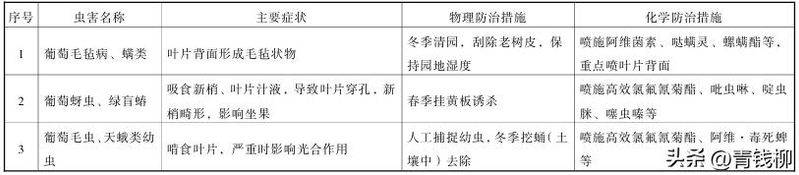
In combination with the basic principles of “prevention, integrated management”, priority is given to environmentally friendly technologies such as ecological regulation, biological control, physical control and precision science (tables 1, 2)。
Table 1 main diseases and measures to combat them
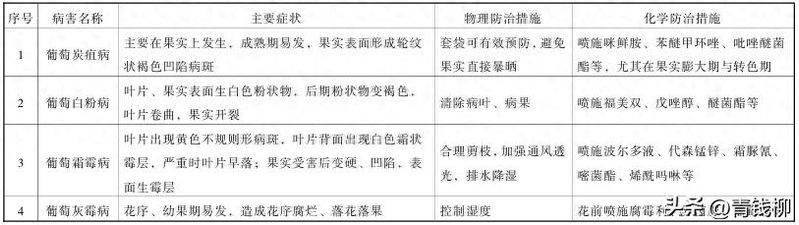
Table 2 main pest and control measures
8 harvest and transport
The red lips usually mature between the end of august and the beginning of september, and harvests take place in the middle of the sun, and are not suitable for harvest in the rain, open water or hot noon. Vegetable skins are collected when they contain pink to slurry and soluble solids of more than 18%. After harvest, pre-colding, classification, bagging, etc. Should be performed in a timely manner。