0 introduction
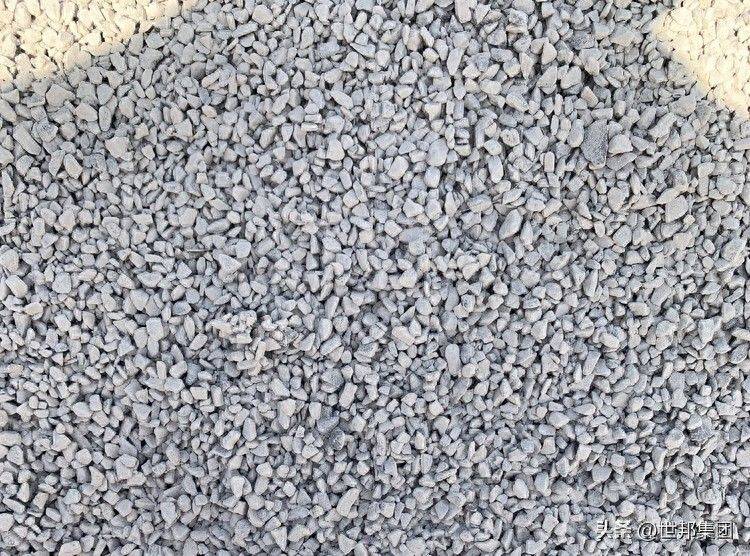
Cement is an uneven form of brittle matter consisting of gravel bone, cement, water and other substances. The defects in the concrete structure itself and its own deformations and constraints have led to a large number of small holes, empty holes and tiny cracks. Micro-fissures are typically non-toxic cracks that do not destroy the weight of the steel bars, waterproofness and other functions. In concrete structures, however, due to the effects of such factors as load, temperature differentials, microcrackers are expanding and interconnected, ultimately producing significant cracks。
1 type of mass concrete crack
There are many reasons for cracks in the general concrete structure. The main factors affecting the type of cracks are the break-up of the structure caused by the outer load, which is caused mainly by thermal stress. The cracks of bulk concrete are mainly caused by temperature distortion. Because concrete is thermally ill conductor, the dispersion is slow and the internal temperature of the concrete blocks is much higher than the external temperature, resulting in greater temperature differentials and internal expansion and contraction. Surface stress and crack. Therefore, reducing internal and external temperature differentials is an important issue。
1. 1 dry cracks
Constriction usually takes place after concrete has been disposed of or one week after concrete has been laid. In concrete ash, the volatilization of water causes the dry contraction of concrete. The cracks are caused by changes in internal and external humidity. The external environment has led to rapid loss of moisture, deformation and wetting of the concrete surface. By being bound by concrete, significant stretches and cracks have been created. At smaller relative humidity, the drying of cement sand is more constrictive and more prone to dry condensation。
1. 2 plastic constriction cracks
The process of creating cracks as a result of the concretization of concrete is associated with concrete genre. Leakage refers to the presence of a layer of clean water or a small amount of water on the concrete surface before the concrete is hardened or not. This is because water is the least dense ingredient in a concrete mixture. Sedimentation will cease relatively only if the cement strength generated by the waterization of cement is sufficient to prevent the relative movement of solid particles or the movement of various solid particles to solid form. The cracks caused by concrete-plastic contraction not only affect the physical quality of concrete structures, but also lead to adverse consequences such as reduced concrete water retention capacity and erosion of steel bars. Impacts the useful life of concrete structures。
1. 3 collapse
Sedimentation is caused by uneven, soft, underfilled or uneven deposition due to water accumulation. It may also be due to the lack of rigidity of the template, too much space between the frame and the looseness of the frame. In winter, in particular, the template's support in the frozen soil resulted in an uneven sinking after unfrozen, resulting in cracks in concrete. Most of these cracks are deep and cross-cutting, and the pattern of their development is associated with sinking. Usually in parallel positions with soil or at 30° ~45°. Large-scale cracks tend to have cracks proportional to their level of sinking. The width of the cracks decreases with changes in temperature. After the deformation of the foundations has stabilized, their deposition and fragmentation have also been controlled。
1. 4 temperature cracks
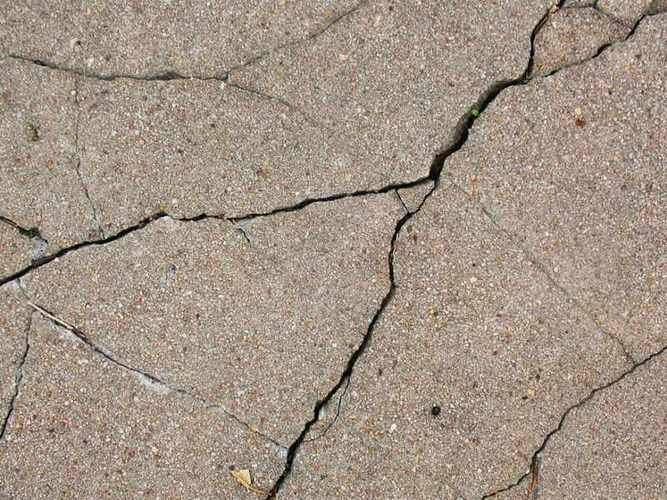
Especially in areas with relatively high temperature changes, in large areas of concrete ground or concrete construction. After concrete has been laid, hydrosis during the solidification phase has led to an increase in hydro-heating. Concrete, because of its large volume, accumulates more hydro-heat in concrete, resulting in a rapid rise in its internal temperature. Owing to the high heat transfer speed of concrete, changes in internal and external temperatures are significant, leading to changes in internal and external temperatures. In the middle and late stages of concrete work, concrete cracks were caused by a greater pull than its stretch strength。
2 reasons for the break-up of the bulk of concrete
2. 1 structural cracks
With the construction of the foundations, and with the construction of the foundations, the build-up of concrete on the foundations will give rise to stress; the current phase of temperature reduction will result in a build-up of concrete due to ground conditions. Concrete generally does not create cracks when under pressure, but vertical cracks occur when the stretching strength exceeds the intensity of the concrete。
2. 2 changes in external temperature
During the planting process, the temperature of the injection will vary according to the external environment. Especially when temperatures drop sharply, they cause a sharp increase in temperature differentials in the internal and external walls, with a significant impact on large areas. The temperature stress is caused by temperature changes, which increase the internal heat stress as the temperature rises. At higher temperatures, it is difficult for the bulk of concrete to dispense heat, with a maximum temperature of 60-65°c in the interior, and therefore a longer working life. Temperature regulation is required to avoid temperature stress due to temperature differences within and outside concrete。
2. 3 the contraction of concrete
The conservation of concrete accounts for approximately 20 per cent of the total water volume of concrete, while evaporation accounts for about 80 per cent, and the evaporation of the remaining water volume can lead to loss and contraction of concrete volume. The condensation of concrete is due to the vapourization of water inside it. If cement is compressed and water-filled, concrete will continue to expand until it reaches its initial levels. In dry and humid environments, cyclical changes in the volume of concrete have increased its constrictive stress, resulting in cracks. The constrictive effects of concrete include, inter alia, cement, concrete density, additives, changes in additives, concrete processes, conservation, etc。
2. 4 cement hydrolytic heat
Owing to the relatively large fractures of the bulk concrete and the low area coefficient of the surface layer, it is difficult to lose its heat at accumulation. As a result, watery heat in cement cannot be rapidly digested, increasing the accumulation of cement and increasing temperature differentials within and outside concrete, thus creating pressure for temperature and contraction. In concrete, the maximum temperature caused by hydro-heated heat is reduced by the addition of cement and the increase in cement content after the construction of 3-5 d. The breakdown of the structure was due to low temperatures and compression. The first is external constraints, mainly due to large gaps; the post-cracking is a constraint, the main effect of which is to create surface cracks. Therefore, there is a high probability of early cracks when temperature changes during cooling times are significant。
3 prevention and treatment techniques for the break-up of bulk concrete
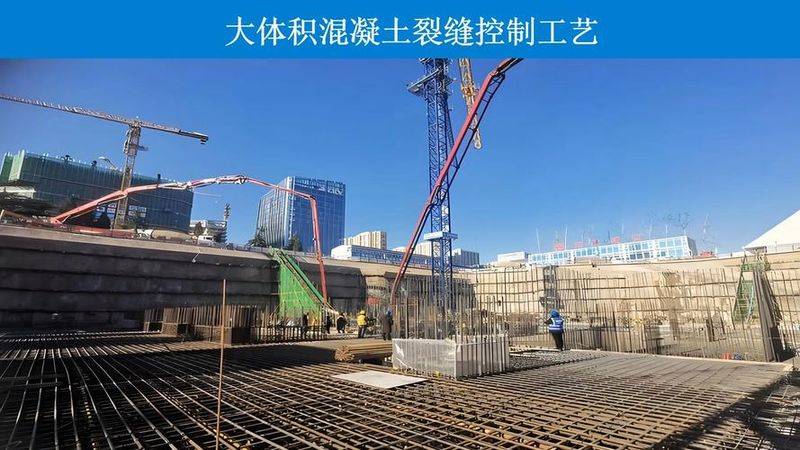
3. 1 optimization of mass concrete matching design
3. 1. 1 selection of suitable varieties of cement
For bulk concrete, the selection of low-water temperature and uneven hydrocement is recommended. Where possible, the choice may be made for slag cement, coal ash cement, volcanic ash cement and mixed cement. The hydrogenic energy intensity and density in cement is strongly related to the cement composition, cement detail and particle size of cement. In cement clinkers, the hydrosis rate of silicon dioxide is higher and the hydrosis rate is higher; c3a has the highest hydrosis rate and c3a has the highest hydrolysis rate; and, as concrete surface mass scores increase, their hydrosis increases accordingly. Larger and more severe cracks occur when the heat density is high; because the particle distribution of concrete is more dense, it is not easy to produce continuous, evenly mixed systems with larger particle sizes and smaller concrete systems, resulting in poor resistance. Therefore, when hydrolytic temperatures must be closely regulated, their composition and physical properties must be tested to determine their scope of application。
3. 1. 2 increased ash mixing and efficient water abatement
The mixing of powdered ash will improve both its ease, pump delivery, permeability and permeability, while reducing water impregnation, treating concrete on the surface and making a significant contribution to concrete resistance, especially to his strength. Tests have shown that the temperature can be reduced by 1 °c when powdered ash is inserted above 10 kg instead of cement of equal weight. The incorporation of large amounts of fly ash into concrete is therefore an effective way to reduce the volume of cement used and the waterization rate of glue。
3. 1. 3 added agents with swelling components
The temperature differentials are limited by adding microinflators to the concrete to compensate for the partial contraction of the concrete. In the case of uea, 10 to 12 per cent of internal cement can be blended into the condensed concrete, with a maximum inflation rate of 0. 02 per cent to 0. 04 per cent. The pre-force is 0. 7 mpa, which can almost compensate for the pull, condensation, which is generated during the solidification of the concrete, so that the structure is not fractured or controlled indefinitely。
3. 1. 4 increased use of crude bone in concrete
Adding bones to concrete is also an effective measure to prevent cracking. If there is too much bone use, there will be a relative decrease in the use of adhesives and a decrease in the hydro-heat produced by the adhesive。
3. 2 late conservation and data collection
Concrete treatment is primarily based on the maintenance of appropriate temperature and humidity conditions. Temperature materials can reduce the heat spread on concrete surfaces, reduce temperature differentials on concrete surfaces and prevent surface fragmentation. Once concrete is laid, it enters the conservation phase. The following are some of the lessons learned during the maintenance period: implementation of strict maintenance and maintenance measures. Once the concrete surface has been polished, a plastic film shall be placed immediately to prevent the fragmentation of the plastics as a result of premature dehydration; the plastic sheet shall be immediately covered with two layers of earth cloth for temperature protection, and the cooling pipe shall be placed in the concrete for cooling, which is sufficient to ensure that the cement is compensated for by the timely addition of water to the plastic film. When cooling pipes are laid, the temperature measure points are placed together in concrete to guide the cooling process and the heat is maintained through the temperature measure of the temperature point during the processing process to control temperature differences within and outside the pipeline。
3. 3 treatment after crack
3. 3. 1 surface repair
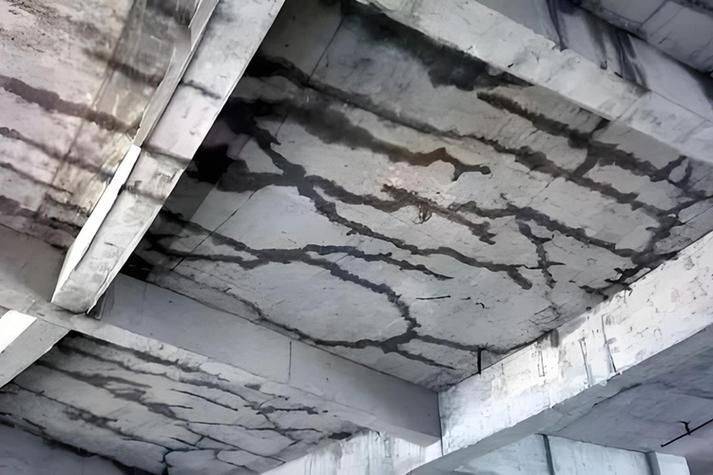
The surface restoration method is particularly applicable to the treatment of surface cracks and deep cracks without affecting structural stability and carrying capacity. A common treatment method is the coating of cement sand, epoxy resin slurry or paint, asphalt and other preservative materials on the fractured surface. Fragments, such as tape, can normally be treated on the surface。
3. 3. 2 embedding
Embracing is the most common method of sealing cracks, usually by opening a sink along a crack and immersing a plastic barrier or hard water into a gutter. Common plastic materials include pvc cement, resin ointment, butyl rubber, etc. The most common rigid waterproof material is polymer cement slurry。
3. 3. 3 structural reinforcement
When cracks affect the performance of concrete structures, concrete structures need to be addressed by means of consolidation. The main methods commonly used for structural strengthening include increasing the cut-off area of concrete structures, packaging steel at the corner of the building blocks, pre-resilience reinforcement, steel sheet bonding, stretching, etc., and spraying concrete for enforcement。
3. 3. 4 concrete replacement method
Concrete replacement is an effective method for dealing with severely damaged concrete by removing damaged concrete before replacing it with new concrete or other materials. Common alternative materials are general concrete or cement sand, polymer-modified concrete or sand-modified polymers。
4 concluding remarks
The fragmentation of the bulk of concrete is an important problem in today's engineering field, which is caused mainly by temperature stress and concrete contraction. As construction science and technology progress and the application of new building materials, the approach to restructuring will be constantly updated, and options for reinforced construction options will be refined and more extensive。