Executive summary: since this year, the united states has accused china of “compulsory technology transfer” and unilaterally provoked a trade war against china. The protection of intellectual property rights was a clear and consistent position of china, and the united states ' accusations of china's weak protection of intellectual property rights were not consistent with reality. The united states approach was self-serving and had a negative impact on international intellectual property protection. The rules for the protection of intellectual property currently in force at the international level represent a legal order that has evolved over many years of practice in the field of international economic and trade. Despite its imperfections and irrationalities, this system has played a positive role in advancing economic globalization and in sustaining the intellectual property international order. Parties should commit themselves to reforming and improving the system to make it more fair and equitable and should not be left out of the narrow interests of their own. In the future, china will place greater emphasis on intellectual property protection and make a positive contribution to improving the global governance of intellectual property。
Since this year, the united states has unilaterally provoked a trade war against china, not only imposing tariffs on goods from china, but also publishing the so-called “301 survey report”, accusing china of “unfair trade” in intellectual property. The united states has used this non-objective basis to justify its misperception of chinese law and practice in protecting intellectual property rights, and, at a deeper level, its narrow position that it only considers its own interests。
Protecting intellectual property rights is a consistent chinese claim
Since its accession to the world trade organization (wto) in 2001, china has amended its laws and regulations, policies and regulations, as well as judicial interpretations, so that the protection of intellectual property rights in china is consistent with the prevailing rules of international law in terms of the spirit of legislation, the content of rights, protection standards and legal remedies. These include the agreement on trade-related aspects of intellectual property rights (trips) and world trade organization investment rules, trade rules, etc. This is a full expression of china's open heart and conscious commitment。
It should be clear that at present the international community has not developed multilateral rules for technology transfer. Even so, at the time of its accession to the world trade organization, china had made a commitment that foreign investment was not subject to technology transfer. The government does not, however, interfere with the autonomous cooperation of the joint venture. China does not have any mandatory transfer of technology in its relevant legislation. Article 43 of the implementing regulations of the law on joint ventures between china and foreign countries contains binding provisions on the transfer of technology agreements, such as fees for the use of technology, the duration of the agreement, the continued use of technology after its expiry and the reciprocal exchange of improved technology between the parties, but there is no requirement for foreign enterprises to transfer their technology to chinese enterprises. Article 27 of the regulations governing the import and export of technology stipulates that improvements in technology will be made during the duration of the contract for the import of technology. On the basis of the principle of who creates who enjoys it, there is no blame on the provisions of the improvement party that have an interest in improving the results of the technology, and the improvements here can be made by either the technology supplier or the technology recipient or the parties to the agreement. Article 29 of the regulations governing the import and export of technology is a restrictive clause in contracts for the import of technology, such as the right not to restrict the assignee from improving the technology provided by the grantor or from restricting the assignee's use of the improved technology and the right not to restrict the transferee from other sources to acquire technology similar to or in competition with the technology provided by the grantor. These are general rules for international technology transfer and do not involve mandatory technology transfer。
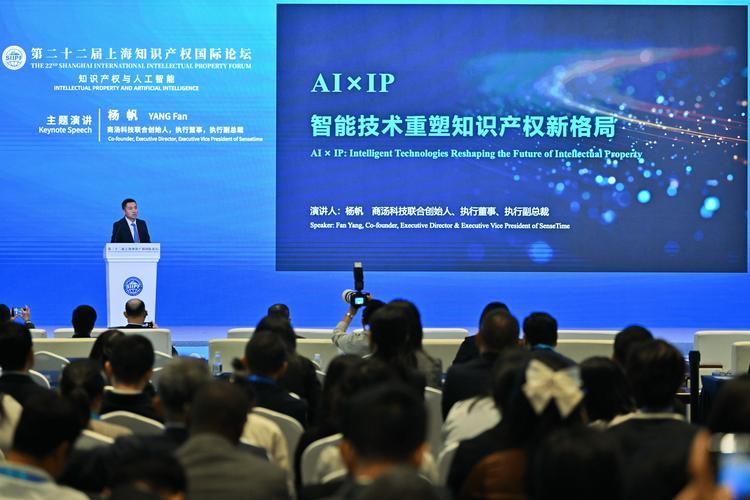
The chinese government and the judiciary have strictly honoured china's commitment to join the world trade organization (wto) as a model student in the world trade organization. Over the past decade, the protection of intellectual property rights in china has been increasing and the business environment has improved markedly. As early as june 2008, china issued the national intellectual property strategy framework, which is specifically designed to put in place a strategic deployment strategy for the strict protection of intellectual property rights. In the area of legal system-building, successive amendments to patent law, copyright law, trademark law, anti-improper competition law, etc. Have led to the construction of an intellectual property legal system that is consistent with world trade organization rules and chinese national conditions and provides legal safeguards for the protection of intellectual property rights. With regard to the construction of the judicial system, china has set up intellectual property courts in beijing, shanghai and guangzhou, and has established intellectual property courts in 15 cities. The “third instance” has been introduced in national courts, thus promoting the harmonization of standards, standards and quality of intellectual property cases. In particular, over the past five years, almost 800,000 civil, administrative and criminal cases of intellectual property have been concluded by national courts. In the area of administrative enforcement, the national intellectual property authority was reconstituted, law enforcement was strengthened, law enforcement was strengthened and joint administrative enforcement and cross-regional enforcement coordination mechanisms were established. It can be said that the patterns of intellectual property protection, protection, rapid protection and protection have largely developed. In 2018, the state council issued a circular on a number of measures to promote high-quality economic development through the active and effective use of foreign investment, emphasizing greater protection of intellectual property rights, the strict fight against fraud and abuse, and increased penalties for foreign investment enterprises that reflect a greater number of violations of trade secrets, malicious trademarks and commercial markings that confuse unfair competition, patent infringement and forgery, cyber piracy and other violations of intellectual property rights, reaffirming that the conditions for technical cooperation in foreign investment processes are to be agreed upon by the investment parties, and that people's government officials at all levels may not use administrative means to enforce technology transfer。
As can be seen, the protection of intellectual property rights is a clear and consistent position of the chinese government. In foreign investment activities, china has not implemented compulsory technology transfer through legal policy provisions and administrative approval procedures. As for the transfer of technology by some enterprises or individuals, it was a normal business practice and an expression of the autonomy of the market. If these acts involve intellectual property disputes, which are also a case-by-case issue, it should be left to the relevant judicial authority to decide on the basis of an established fact. The accusations made by the united states about china's inadequate protection of intellectual property rights were not true。
Unilateral approaches are not conducive to global governance of intellectual property rights
The united states unilaterally provoked trade disputes, mainly under its domestic laws, the trade act 1974 and the integrated trade and competition act 1988, and initiated the so-called “301” and “special 301” investigations. Of these, the “301 survey” covers all “unfair trade” practices, while the “special 301 survey” is a specialized survey on intellectual property. These surveys tend to emphasize that the realization of the interests of the united states is not objective and impartial, whereby the united states government will judge whether foreign policies and actions harm its trade interests and decide whether to impose sanctions. In the event of a conflict over intellectual property rights with other countries, prior to the establishment of the world trade organization, the united states imposed unilateral sanctions based on its domestic laws; following the establishment of the world trade organization, the united states in most cases resorted to the world trade organization multilateral dispute settlement mechanism。
In recent years, unilateralism and trade protectionism have increased in some countries as negative factors affecting international intellectual property protection. The rules governing the protection of intellectual property currently prevailing internationally are the legal order that has evolved over the years in the field of international trade and trade, and the rules governing international protection of intellectual property, together with international trade rules and international investment rules, constitute the basic rules of the world trade organization。
The international protection regime for intellectual property, centred on the agreement on trade-related aspects of intellectual property rights (trips), has two features: first, consistency of protection rules. Under the “minimum standards of protection” principle of an international convention, the protection of intellectual property rights provided by parties in their domestic law cannot be lower than the minimum standards set out in the convention. “minimum standard of protection” is a consistent standard that deals with fundamental norms such as the subject, acquisition, content and protection of intellectual property. It is the universal application of this principle that has contributed to the emergence of an international integrated protection of intellectual property rights. The second is the binding nature of the dispute settlement mechanism. The agreement on trade-related aspects of intellectual property rights (trips) provides for procedures for consultation, good offices, adjudication, appeals and enforcement of dispute settlement. In the event of an intellectual property dispute between a party, the parties shall consult or engage in the good offices of a third party; in the event that the consultations or good offices fail, the panel of experts may apply for a decision; in the event of disagreement with the expert's decision, the appellate body may be requested to make a final decision; and once the final decision has been rendered, the parties shall comply. This rule makes it clear that any party must deal with intellectual property disputes under the world trade organization dispute settlement mechanism and not resort to unilateral trade retaliation。
Over the past 40 years, intellectual property-related disputes have arisen in the context of the development of trade and trade relations between china and the united states. Prior to china's accession to the world trade organization in 2001, there had also been a number of intellectual property conflicts between china and the united states that had culminated in agreements. Following china's accession to the world trade organization, most intellectual property disputes between china and the united states were resolved through consultations, which were then referred to the world trade organization for decision. Since march this year, however, the united states has resorted to direct trade retaliation. This unilateralist approach to abandoning the dispute settlement mechanism is a departure from the very spirit of the world trade organization and a source of great disappointment to the international community。
The united states and china are the world's largest developed countries and the largest developing countries, respectively, at different stages of development in the economic, scientific and intellectual property sectors. Since its reform and opening up, china has evolved from being a follower and a follower of international rules to a participant and promoter, contributing actively and continuously to the international community. The united states, which has always been a leader and leader in the process of economic globalization and the integration of intellectual property rights, has today, in its own right, repeatedly become the violator of international rules. This not only affects the effectiveness and authority of the relevant international rules, but also creates great uncertainty about the international regime of protection of intellectual property rights。
China will continue to strengthen intellectual property protection and international cooperation
The united states media also acknowledged that the united states “301 survey” of china had more than a trade dispute itself. The united states views innovation-based intellectual property rights (iprs) as its competitive advantage and core interest, provoking disputes under the pretext of so-called compulsory transfer of technology, infringement of business secrets, etc., suggesting that the dominance of high-technology technologies behind iprs has become the focus of international competition. In the face of the complex changes in the international situation and the inherent need for its own development, china has actively promoted higher levels of openness to the outside world, comprehensive reforms, investment in innovation and development, stricter protection of intellectual property rights and active international cooperation。
Maintaining the multilateral mechanisms of the world trade organization. The global intellectual property protection system should be jointly negotiated, constructed and shared. The international trading system, led by the world trade organization, and the international intellectual property protection regime, centred on the agreement on trade-related aspects of intellectual property rights (trips), had played a positive role in advancing economic globalization and sustaining the intellectual property international order, despite imperfections and irrationalities. Parties should commit themselves to reforming and improving the system to make it more fair and equitable and should not be left out of the narrow interests of their own. In the field of intellectual property, china has always insisted on sharing differences and working together to win and win. It has played an important role as a participant, builder and contributor in the international system. It has maintained the multilateral mechanisms of the world trade organization. It has promoted the construction of international rules on intellectual property that are inclusive, fair and equitable. It has endeavoured to contribute to the international protection of intellectual property rights。
Increased capacity for autonomous innovation. A new technological revolution and industrial change have begun. Intellectual property rights are strategically important in a country's economic and social development, and high-level, high-quality and cost-effective autonomous intellectual property rights are an important underpinning for the enhancement of innovation capacity, the output of innovation outcomes, innovative economic development and an important measure of the country's combined strength and core competitiveness. China's development of intellectual property rights requires the implementation of the concept of innovative development and the commitment to independence and self-empowerment. Greater emphasis should be placed on the innovative development of “the weight of the nation”, such as the key core technologies, and on the ownership of intellectual property rights in order to preserve national economic security and the initiative for scientific and technological development。
Improving intellectual property protection systems. China was moving towards a stage of high-quality development, and the protection of intellectual property rights was needed not only for china to expand its openness and integrate into economic globalization, but also for its economy to achieve transformational upgrading and high-quality development. China will further improve its intellectual property protection system in order to create a more equitable and attractive investment climate and promote high-quality economic development with a high level of openness。
(by honorary director and professor, centre for research on intellectual property rights, university of finance and economic law, china)
Daily people's journal (14/09/2018)