
The country is now entering the advanced phase of late retirement, which has contributed both to responding positively to the ageing of the population, making full use of human resources and exposing an increasing number of older and middle-aged persons to the health challenges of long working hours. For workers in middle- and old-age situations, physical functioning is in the stage of natural decline, and the burden of long-term work can lead to a range of health problems, and the risk of occupational diseases increases with the length of work. Understanding these impacts and harnessing scientific responses are now indispensable health issues。

I. Impact of delayed retirement on the health of middle-aged persons
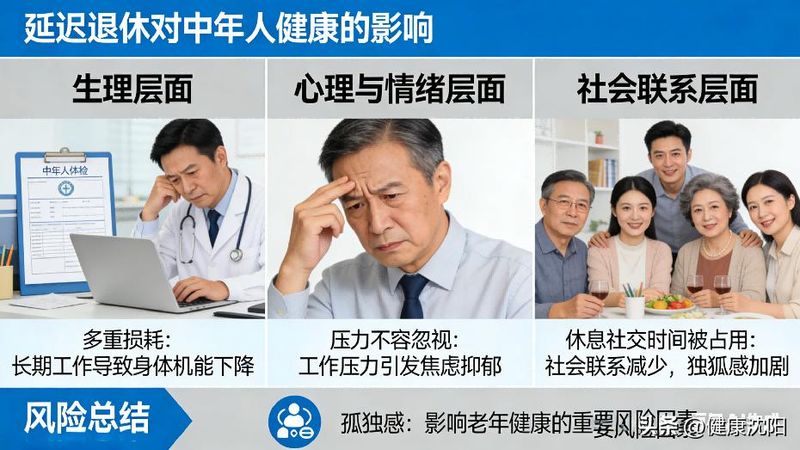
The effects of long-term work on the health of the elderly are reflected, first and foremost, in multiple losses at the biological level. As age increases, the human cardiovascular elasticity, bone density, immune system function, etc. Will gradually decline, especially after age 55. For manual workers, long-term heavy loads, standing or repeated movements can exacerbate occupational diseases such as vertebrates, arthritis, etc., most of which occur after 50 years of age, and chronic diseases have a higher incidence than the general population. Even for intellectual workers, long-term concentration on work increases cognitive loads, leading to slower reaction, lower memory, longer years of learning of new skills for middle-aged older persons than for young people and significantly less efficient information processing。
The psychological and emotional stress must not be overlooked. At the end of their careers, older and middle-aged persons are vulnerable to professional fatigue and long periods of high-intensity work stress, performance appraisal, etc., which can lead to emotional depletion and reduced personal achievement, leading to psychological problems such as anxiety and depression. Some older persons also have psychological burdens arising from fear of being unable to adapt to new job requirements, age discrimination, etc. This negative sentiment can continue to stimulate stress hormones, further inhibit the functioning of the immune system and form a vicious circle of “psychological-physics”。
In addition, long-term work takes up rest and social time, which may lead to reduced social ties among middle- and senior-aged people and increase the sense of isolation, which itself is a major risk factor affecting the health of older persons。
Response measures
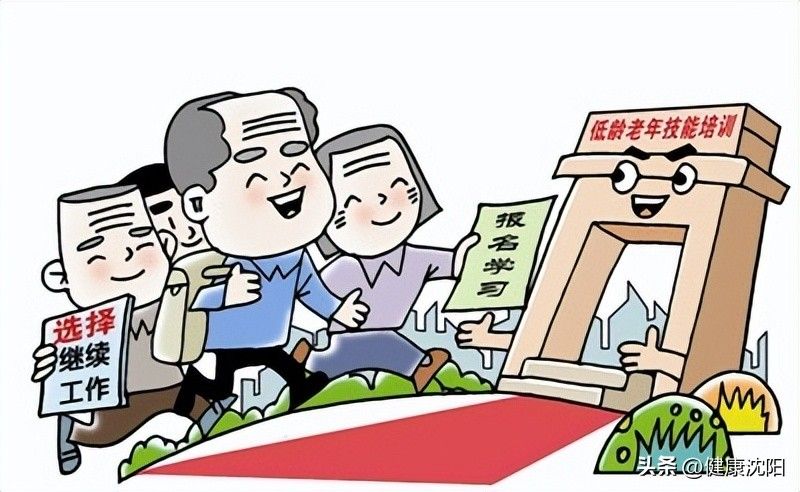
Addressing the health challenges of long-term work requires that governments, businesses and individuals work together to build a comprehensive safeguards system. At the policy level, flexible implementation and promotion of classifications are key. The scheme clearly provides for the possibility of applying for early retirement for workers in special types of work, such as underground, high altitude and particularly heavy manual labour, which should be further refined. At the same time, it is necessary to improve the protection of the rights and interests of over-age workers by including them in the scope of work-related injury insurance, specifying the basic rights and interests of rest and rest, safety and hygiene at work, and ensuring that the work of older and middle-aged persons is safe and secure. In addition, a system of lifelong vocational skills training should be developed to provide appropriate training for the characteristics of middle-aged older persons and to reduce the stress on their jobs。
Businesses need to implement a special responsibility to protect as agents of employment. In the organization of work, it is important to avoid overloading middle-aged older persons, to refrain from forced overtime and to minimize the scheduling of night work. At the same time, it is necessary to improve the working environment, equip manual workers with protective equipment, optimize the office facilities for intellectual workers, organize regular and targeted occupational health check-ups, and establish health-care records for early detection and early intervention. More importantly, it is necessary to eliminate age discrimination, to take full advantage of the experience of older persons, to create an inclusive working environment and to enhance the sense of value of their work。
Scientific self-management is a healthy first line of defence for individuals of middle-aged age. The first is an objective assessment of their health and, in the case of basic diseases such as hypertension, diabetes or family history of cardiovascular disease, they should actively avoid high-pressure, high-strength jobs. Work must learn to combine effort, get up every hour of work, stretch your bones and ease your fatigue, and intellectual workers can increase their focus through brief meditation. Life must be based on regularity, adequate sleep, a reasonable mix of diets, protein supplements and dietary fibres, while maintaining moderate exercise, such as tai chi, walking, etc., to improve the health. In addition, attention should be paid to the mental state, communicating with families and friends, developing hobbyes and prompting negative emotions。
Postponement of retirement is a necessary option for the development of the times, and the health of middle-aged older persons is the basis for successful policy advancement. Faced with the impact of long-term work on the health of middle-aged older persons, “active ageing” and “health” win-win situations can be achieved through bottom-up policies, corporate responsibility and individual self-regulation. After all, the value of work lies in self-fulfilment and contribution to society, and a healthy body is the premise and guarantee of all this。