In high school, mathematics tends to be the first “roadblocker” to be experienced by new students. Its difficulty is reflected not only in the vast expansion of knowledge capacity — from a fragmented knowledge point in junior high school to a systematic knowledge system — but also in the qualitative leap of thinking requirements: junior high school mathematics focuses on “intuitive understanding” and “approach formulae”, while senior high school mathematics places greater emphasis on “logical reasoning” “abstract modelling” and “flexibility”. In particular, the content of the first semester, which is the “basic skeleton” of high school mathematics, and the “core soul” that runs through three years, directly determines the degree of adaptation to the higher school year and even affects the course of mathematics throughout high school. Many follow up on poor mathematics and follow-up, mostly at a higher stage where they fail to set the foundation and find a rhythm。
I. Breaking the error zone: identifying the “real difficulty” of higher mathematics
A number of students and parents have differences in the perception of advanced mathematics, and need to clear critical error areas and avoid turning:
1. High school achievement potential
The weak correlation between lower secondary and upper secondary mathematics does not mean that upper secondary grades are easy to cope with, nor does the lower secondary grades mean that there is no chance of a backlash. Lower secondary mathematics focuses on “knowledge memory” and “simple applications”, such as the one-dollar binary equation, geometrical properties, etc., most of which can be learned through repeated exercises; and upper secondary mathematics, starting with the concept of function, aggregate logic, requires “absorption thinking” and “deep understanding”, such as “single modulation of function”, not only to remember definitions, but also to be able to extrapolate proof and to judge the unimodality of different functions, which are distinct from lower secondary schools and represent a completely new learning starting point。
“advanced learning” “win at the start”
After taking the baccalaureate, they appear to have taken the lead, while hiding risks. Most preparatory courses are confined to “knowledge surface”, such as a simple description of the underlying concepts of aggregation, the definition of functions, and the lack of depth and expansion of knowledge logic. This makes it easier for students to develop a “high school math” low-profile mentality, and when they enter formal studies, when they encounter difficult questions that require deep reflection (e. G. Functional combination applications, abstract function problem solving techniques), they are trapped by poor pre-existing foundations and inadequate intellectual preparation. By becoming aware of the problem, the course has progressed and has become more difficult to make up for。
Understanding differences: from “ground” to “windows” viet
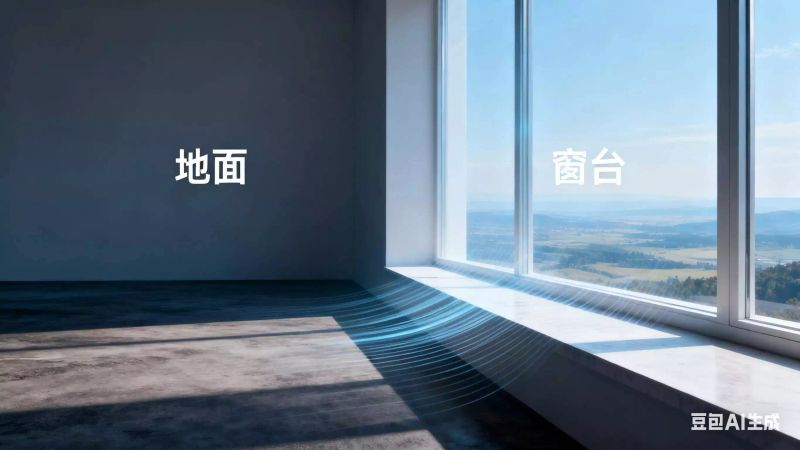
If lower secondary mathematics is compared to “standing on the surface of the classroom” — where knowledge is seen intuitively, in close proximity and easily accessible — then upper secondary mathematics is “standing on the window” — a broader vision, but requires a proactive “step-by-step” process, which is at the core of mathematics in upper secondary schools and the key to learning in the first semester。
Knowledge difficulty: from “scatter” to “system”
The junior high school mathematics knowledge points are mostly stand-alone modules, such as equations in algebra, geometric triangles, and low inter-module correlations; and high school mathematics from the outset emphasizes " systematization " , using as an example the "functions" of the high school term, not only to learn specific functions such as one function, two functions, index functions, logarithmic functions, but also to learn the common logic of "functional definition, nature, image" and the following trigonometric functions, conductor numbers, etc., need to be based on this logic. The shift from “specific to abstract, from single to systematic” requires that students no longer learn “one council” but “one class”。
Thinking requirements: from “intuitive” to “abstract”
Secondary school mathematical solutions rely heavily on “intuitive experience”, such as geometry, which can be directly observed by drawings; and high school mathematics, which is heavily concerned with “absorptional concepts”, such as “collectiveness”, which is an abstract overview of “classification of things”, which is an abstract expression of “variant relationships” and is addressed in isolation from specific examples, relying on logical reasoning and analysis of mathematical languages (indents, formulae, theorems). For example, judging “function f(x) = 2^x relation to g(x) = \log 2 x” requires not only understanding the definition of both, but also extrapolating the logic of “inversely” by image, nature, which requires upgrading from “intuitive perception” to “abstractive thinking”。
Learning concepts: from “mixed materials” to “higher than teaching materials”
Mathematics studies in junior secondary schools are mostly organized around the subject of textbooks and after-schools, and the contents of teaching materials are subject to examination, while mathematics in upper secondary schools requires that it be “based on, but not limited to, teaching materials”. The teaching material is a “basic vehicle” of knowledge, but the examination and the practical application will be extended on this basis, for example, in the course of which only “the basic nature of the second function” is explained, but in the examination there will be a combination of “the second function is combined with the other “the most valuable application of the second function in the actual problem”. This requires students to actively explore the logic behind their knowledge in their studies, and to move from “learning materials to applications” in combination with case studies and practice development。
Iii. Practical strategies: the three core methodology of holding a ground
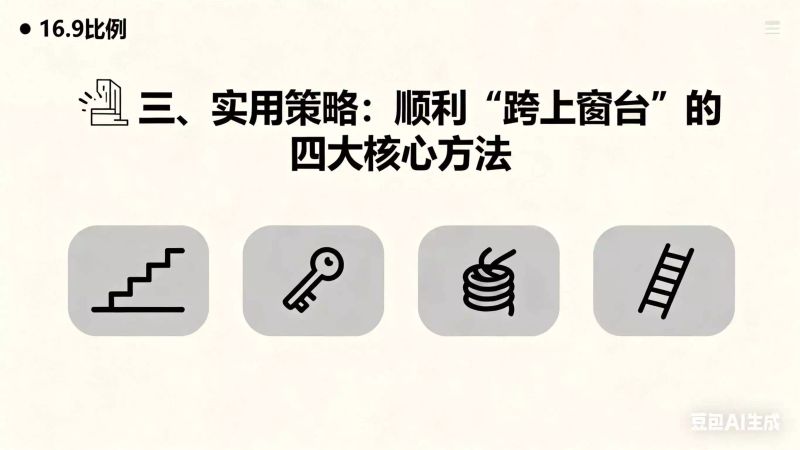
In order to achieve a smooth transition from the first grade to the third grade of high school, the following four strategies will have to be used to translate “work” into “effective results”:
Building confidence: investing in learning with a “new start” mentality
Whatever the basis of mathematics in junior high school, make it clear: first grade mathematics is a whole new beginning. Do not be humbled by the poor performance of junior high school, and do not be conceited by “early learning”. In the classroom, the teacher is followed in his or her thinking, after which he or she does every job carefully and does not give up easily when he or she encounters a problem — he or she can think independently, then combine his or her teaching materials and notes, and then ask teachers and classmates. Remember: “the heart is the winner” and only by believing that it can learn well will it be possible to remain resilient and develop a sense of achievement in the face of difficulties。
Ink-to-do: exercise your mind with a “written + brain”
The requirements of high school mathematics for “think dynamics” are to be achieved through “active exercise”, with the focus on “multiplier, multi-thinking, multi-temporal”:
• multiple pens: not only does it have to be written in writing, but rather does it have to be written in prognosis (e. G. “why does the definition of a function take into account that the denominator is not zero?”), in retrospect (e. G. In concoction of “the nature of a function: monotonous, peculiar, periodic”), and in error (mutual confusion, miscalculation or error of thought)。
• multi-mutilistic: not to be content with “doing the right thing”, but to think about “any other solution” and “what is the point of knowledge for this question to be examined” and “how to get into it next time you encounter a similar issue”. For example, once a second function is solved, the three methods of "formulation" "image method" can be tried to verify and deepen the understanding of knowledge points。
• multiple repetition: 30 minutes per week to review key knowledge (e. G., function nature, aggregation rules) and error-prone points (e. G., neglect of function definition domain, confusing index and logarithmic calculations), internalizing knowledge by “reading and rehearsing” and avoiding “learning to forget”。
Notes and errors: developing a “personalized learning manual”
In high school, which has a great deal of knowledge of mathematics and a great deal of logic, classroom memory alone is far from sufficient
• classbooks: focus on the “knowledge logic” and the “discussional thinking” rather than simply copying formulas. For example, when learning “the convergence of collections” it is important not only to write down definitions, but also to write down the “vennchard of aggregations” “intersections and synthesizing patterns” (e. G. A∩b⊆a, a∪b⊇a)” of the teacher's presentation, as well as the steps and conceptual analysis of typical case studies。
• mistakes: the organization of faults by “knowledge points” (e. G. “function-type category” “collective operators class”) and each error consists of five parts: “preliminary title, error resolution, correct solution, cause of error, summary reflection”. For example, in a case where an error is made because of the “overlooking the definition of a logarithmic function”, it is necessary to indicate in the reflection that “the true number of a logarithmic function must be greater than zero, and the problem is solved by identifying the definitional field before analysing the other nature”, and periodically revisiting the error to test the level of mastery。
• attention: avoid “blind notes” — do not miss the teacher's thoughts for copying; and do not “just organize” — • the core value of the error book lies in “the consolidation of knowledge by re-exposing the problem” rather than simply “the collection error”。
4. Simmering learning: value the process, build up the mindset
Mathematics studies in high schools are not “short-term sprints”, but “long-term accumulation” and require input at a “simmering” attitude, balancing “process” with “outcome”:
• independent focus: pre-learning, re-studying, performing homework, time-bound completion, without relying on mobile phones for answers and without recourse to others. When it comes to uncharacteristic issues, it is the process of “independent thinking” that is the key to exercise. Even if it did not end up taking lessons with questions, it would be more impressive than looking directly at answers。
• focus on the process: rather than focus solely on whether “business is right and examinations are good”, the focus is more on “knowledge is understood, methods are mastered and thinking is enhanced”. For example, if an examination fails because it is “not familiar with the solution of the abstract function”, it needs to be tailored to practice the subject of the abstract function and to summarize the solution techniques (e. G., value-granting, tectonic function) rather than simply fix the score。
• integration into everyday life: integration of mathematical thinking, such as “functional” understanding of “cell phone calls” (monthly rent + traffic charge, corresponding to a function model), “shopping list” classification of “collective” and “living scenes” to feel the relevance of mathematics and reduce resistance to abstract knowledge。
Looking ahead: building on the first grade and steadily advancing three years of high school
Mathematics in the first semester of the first year of high school is the “baseline” of three years of high school — the foundation of the foundation — so that subsequent studies can be “stable and steady”. After this term, follow-up content (e. G., 2nd-high stereometry, guide numbers, 3rd-high cone curve, probability statistics) is based on the knowledge and thinking of the 1st-higher, although it is still difficult. As long as the habit of “active thinking, writing, collating, immersing in immersion” is developed at a higher stage, with core knowledge, such as functions, assembly, etc., follow-up learning, like the “ slow march”, is gradually taking the hard spot, protected by basic knowledge and basic methods, and ultimately achieves the desired results in advanced examinations。
The “window table” of high school mathematics has not only a broader vision of knowledge, but also a wonderful experience of thinking and growing up. If you are willing to take the initiative of “step-by-step” and work continuously in the right way, you will be able to successfully bridge the “dual divide” between primary and secondary schools and reap growth and progress in high school mathematics。