The radiator is the basic equipment for the domestic heating system and the end-of-pipe device for the civil heating system. The radiators, depending on their mass, can be divided into cast iron heaters, steel heaters, aluminium alloy heaters and copper aluminium composite heaters。
Despite its corrosive and wide application advantages, cast iron heaters are becoming increasingly ill-adapted to the development of our system for measuring heat, as the internal cavity of cast sand can cause congestion in the system。
Gb50736-2012 " design code for the heating of buildings for ventilation and air conditioning " requires:
5. 3. 6 when selecting a radiator, the following provisions shall be met:
5. Thermal water heating systems with heat meters and heated valves are not suitable for the use of cast iron heaters with slime in water flow lanes
6 high space heating is not appropriate for the use of current-type heaters alone。
Different types of radiators
Scatterer type
Special
Cast iron radiator
The surface is rough and corrosive. Hot inert, room temperature is stable。
Steel radiator
Surface smooth and pressurized. Thermal inertity is small, which facilitates the regulation of heat transfer performance and is therefore the most common radiator in europe。
Aluminium alloy radiator
Mechanical processes are good and light and internal surfaces should be preservative。
Copper aluminum complex radiator
Copper aluminium or steel aluminium complex tubes with aluminium alloy ribs of light weight。
In general, the wall-mounted radiator system provides water at a temperature of 80°c and backwater at a temperature of 60°c。
A water supply temperature of 60°c and a return water temperature of 40°c could also be used, but the size of the required radiator would be increased。
Classification and characteristics of the main heater interface mode:
Interface mode
Special
Up and down
Standard interfaces, with the best dissipation effects and the greatest heat transfer coefficient。
Down and out
The dissipation effect is relatively poor, with a heat transfer factor of about 15 per cent when the temperature differential is the same, compared to the up- and down-side connection。
Bottom out
The bottom of the radiator sets a water shield to force changes in the way the heat flow in the radiator to achieve the same dissipation effect as the upper and lower interfaces。
5. 3. 13 vertical single-pipe and vertical double-barrel heating systems, with two sets of radiators in the same room, which may be connected by a horizontal single-barrel connection to the opposite side, or by an upper-down interface. When the upper-down interface is connected to the side, the upper-down tube between the radiator should be the same as the radiator interface。
Single-barrel flow/cross-system:
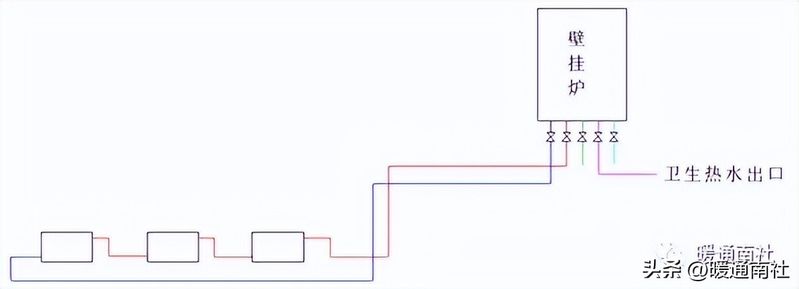
Single-barrel system:
Thermal water enters the radiator in turn, the temperature of thermal water supply is decreasing, and the end radiator is not hot. The system is simple and provincial, but not partially regulated. Household heating is generally not recommended。
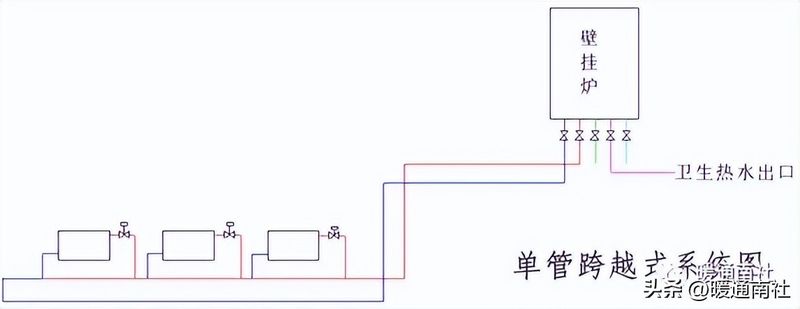
Single tube crossing system:
Cross-pipes connect the water supply pipes of each group of radiators, allowing each group of heaters to regulate independently and flexibly without affecting the flow of water. In the actual works, the temperature valves are installed on each group of radiators and the flow can be adjusted automatically in accordance with the user's requirements for room temperature。
Double-barrel system:
In such a system, all radiators have the same imported heat media temperature, and a more mono-barrel system saves investment in end-of-pipe heat-dissemination equipment; the radiator can be equipped with a temperature-control valve that allows independent and flexible regulation. The same program, in turn, makes the water flowway through each group of radiators equal in length, so the system is more hydro-balanced。
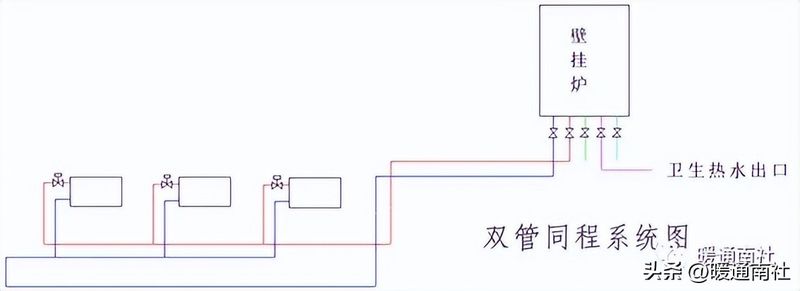
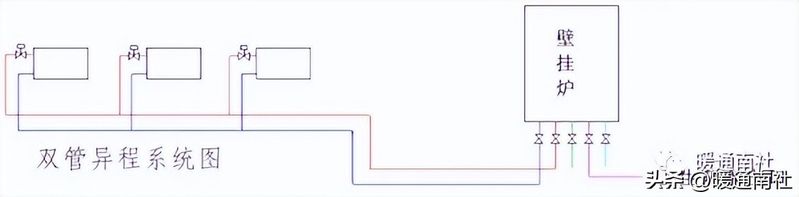
Double-barrelled systems:
This is a more common connection in europe, where all radiators import thermal heaters at the same temperature as the one-way system, which saves investment in end-of-pipe heat-dispersion equipment; where the range system is installed, the heat-dispersording tube is not at the same level of distance from the wall-mounted furnace, and a temperature-control valve is installed on each set of heat-dispersors to balance resistance between the various heat-dispers loops in order to avoid excessive flow of the nearest heat-dispersor and the least flow of heat-dispersors from the wall-mounted furnace; and where the temperature of the room can be adapted to the user's needs, flexibility and independence to regulate, heat comfort and energy conservation。
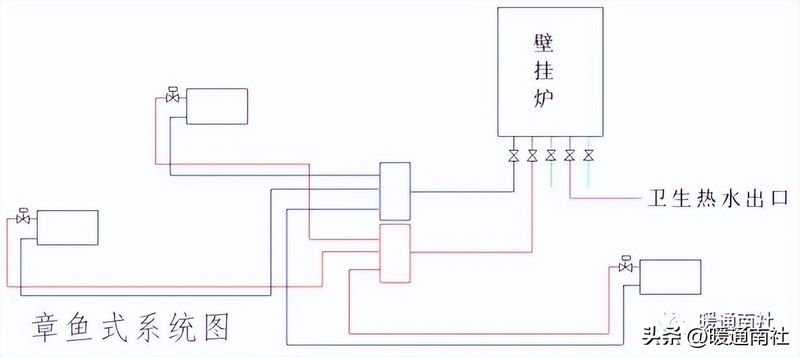
Octopus systems:
The boiler's import and export are connected to groups of heaters by water-separators and collectors, and the hydraulic balance between the separate and connected circuits is balanced against the resistance of the loops through the valves on the partitioner, with room temperature control. The hot water pipes are usually based on plastic pipes such as pex or xpap, which are placed below the floor and are a more beautiful connection, but more expensive。
Scatterers set:
The principles for the deployment of radiators should be a flow that is easy to cause indoor cooling air; the cold air that enters outside the room is hotter, warm and comfortable in people's areas of stay and less use of indoor effective spaces and areas of use。
5. 3. 7 when the radiator is placed, the following provisions shall be met:
1 the radiator should be installed under the external wall window table and reliable interior wall installation when installation or installation of pipes is difficult
No radiator should be installed in the door fight between the two outer doors
3 thermal heaters in stairwells shall be assigned to the floor or to the lower floors in proportion。
When the room has an outside window, the radiator should normally be installed under the window of each outside window. This would prevent and improve the effects of cooling streams and cold radiation from glass windows, and make the air flowing through the working area warm and comfortable。
In order to facilitate the layout of the furniture, the selection of high-cost, small-scale radiators to be placed on the inside side of the room near the window is also considered. In relatively small-deep rooms, the air is easily formed as a loop, increasing the flow for heat。
5. 3. 8 the number of assembly plates for casting iron heaters shall be such as to meet the following requirements:
1 hard column (including column wing) shall not exceed 20 pieces
2 a fine column should not exceed 25 pieces。
5. 3. 9 in addition to kindergartens, the elderly and buildings with special functional requirements, radiators shall be clearly fitted. Decoration masks should have a reasonable flow of air, sufficient area of passage and ease of repair. Non-metal coating should be painted on the outer surface of the radiator。
Steps for the installation of radiators:
1. Checks the integrity of the radiator packaging and fittings. The whole group of heaters out of the plant shall be subjected to hydraulic pressure tests before being installed。
2. Accurate measurement of data, taking into account the beauty of the overall layout and determining the location of the radiator installation。
When the radiator bronchies are installed, a slope of 1 per cent shall be maintained to facilitate the system's exhaust。
4. When the radiator hanger is installed, care is taken to protect the radiator surface spray coating and to avoid bumping。
5. When the heaters and pipes are installed, the system shall be subjected to pressure testing。
6. Cleaning of heating systems to prevent the blocking of pipes and equipment with sewage and miscellaneous items。
7. Upon completion of the work, the site will be cleared and the items will be repositioned。
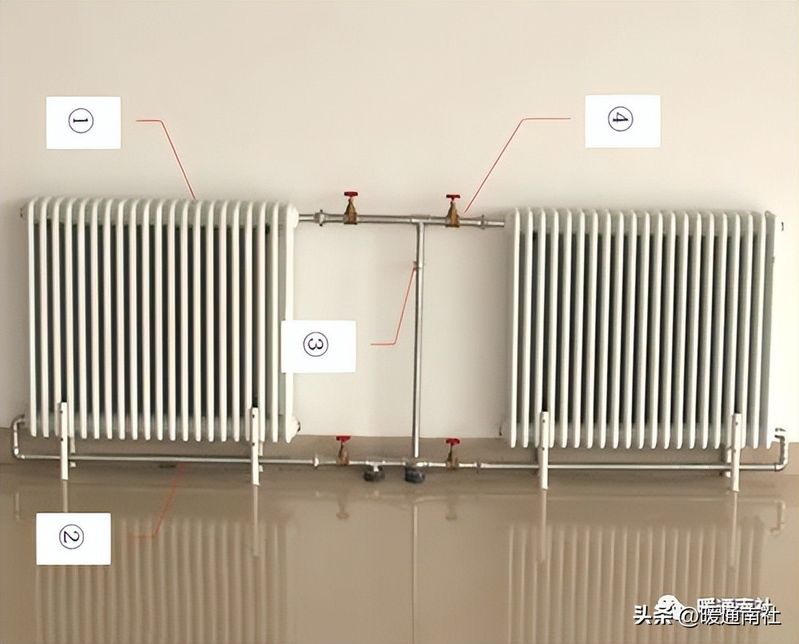
1 the distance between the back of the radiator and the decorated interior of the wall shall conform to the design or product specifications. If the design is not specified, it should be 30 mm。
2 the slope of the radiator bronchial shall be 1 per cent, and the slope shall be returned to a higher end of the equipment than the supervisor, to facilitate the discharge and discharge。
If the length of the bronchial 3 is greater than 1. 5 m, the tube card shall be installed on the bronchial。
4. Disaggregation of access to water pipes as required by design. The active interface is installed on the rear side of the entrance valve and on the front side of the exit valve to facilitate maintenance. The heating chip valves should be concentrated near the equipment entrance。