


A few months ago, my son held a “professional week” in a kindergarten in shanghai, inviting parents to introduce themselves to the classroom. I had an idea almost immediately when i got the invitation. Other parents introduced careers such as directors, physics teachers and television reporters, and i intend to challenge climate change for three or four-year-olds。
I'm doing research on climate policy for adults, and i haven't told children — especially pre-school children — about the experience of such complex issues as climate change. The day before the class, i was in my parents' twitter group and i said, "it's a little nervous, like taking exams."
But i've been thinking about talking to my son about climate change for a long time。
Children will face the challenge of climate change throughout their lives
In the winter of early 2023, we stayed in california, united states, where we were known to be in sunlight, beaches and dry deserts for more than half a month, and even a little hail. While the small towns in which we live have not been affected by disaster, in the news people are trapped in floods waiting for helicopter rescue, and in santiago, vehicles are abandoned in surges, with huge losses on roads and homes。
This is attributable to successive landings of atmospheric rivers, which are like rivers flowing in the sky, carrying water from low to medium latitudes. Available studies suggest that, as climate change increases, atmospheric rivers will carry more water, with attendant disaster risks such as heavy rains and floods。
I found animated film on the internet, octonauts: above & beyond. Children's books, animation short films, etc. Have been used to help parents and teachers introduce the topic to younger children. And this is a small series of animations focused on climate issues. This other series of animations is very popular in itself, and it makes me a treasure。
I recommended it to my son. He was soon attracted to the hero of the story trying to save the animals. He knew that sea level rise would drown the sea islands where the albatrosses hatched, and that the small columns had to look for higher islands for them. In his favorite concentration, the small column is in danger of melting glaciers. "the polar bears and seals are gone." he told me。
However, this animation, while illustrating the threat that climate change has posed or could pose in all corners of the planet, lacks a critical link: it does not tell children that burning fossil fuels is the root cause of climate change. I tried to explain that to my son, for example, that emissions when driving would make the earth burn, and he was just looking at me. He was three and a half, and now he's over four. I thought maybe we could try again。
Gary evans, the environment and development psychologist at cornell university in the united states, is conducting a study on kindergarten-to-primary children to understand their perception of climate change and its implications for them. For the time being, however, he told the media that no one really knew at what age children could understand climate change and that any best way to claim that the topic was being discussed with young children was not based on scientific data research。
In terms of knowledge, i can't agree with those who say that the subject is not suitable for the underage. After all, how many people can choose to ignore the fact that the dominant view of earlier years has considered climate change to be a relatively distant phenomenon, experiencing extreme weather events such as floods and high temperatures over the past two years? And our children will have to face the challenges posed by climate change throughout their lives。
Like what next seed
I started looking for more advice on how to communicate with preschool children. An article by the association for the conservation of natural resources (nrdc) suggests that, for pre-school children, the objective of climate education is to stimulate environmental enthusiasm in young minds and to plant a seed in their hearts, which can begin with a small event like hiking and knowledge of four seasons of change。
A beijing kindergarten friend participated in the lingling project launched by the friends of nature of the environmental organization. This project empowers and supports people from different sectors who are committed to climate action. Through the training and funding provided by the project, she guides children in kindergartens to understand climate change and helps them to express themselves through different artistic forms。
She cautioned that the focus and understanding of children should be taken into account, that “translators” were given to them in a language they could understand, and that they could understand and feel through a variety of forms, such as game interaction。
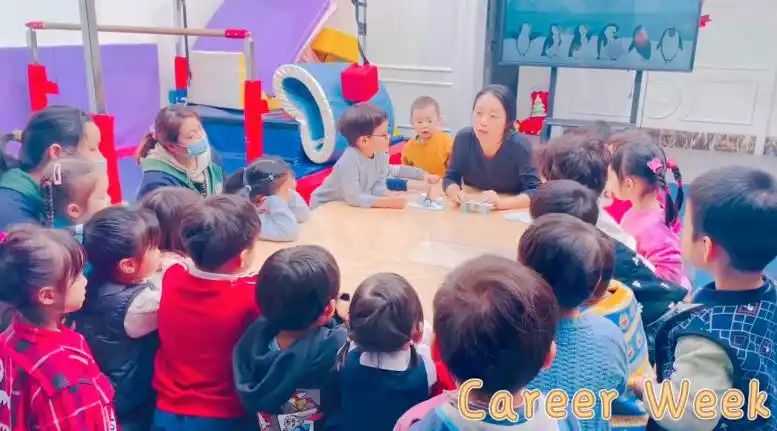
Playing with the kids on the table, glacier adventure
It reminds me of the usual "glacial adventure" with my son. Four small animals, penguins and polar bears, go through the bridge and go back to their arch-top ice houses, with a couple of big ice blocks, and children roll their dice to decide whether a small animal goes further or a bridge melts, and if all the ice melts, the bridge collapses, the game mission fails。
By the day of the class, the table was a game for me and the kids. We didn't succeed in saving small animals, but they all seemed to be very happy. And i said, "do you know why the ice melts?" "because, because it's too hot!" and a child answered aloud。
And i went on to explain that, just as the virus causes a fever, the earth also “burns” because of some gas that melts ice and prevents small animals from coming home. It's also because the kid recently learned this at school, and when he came home, he went to wash his hands, "mom, i don't like the virus." he said。
I went on to explain with some simple pictures: it came from something we drilled from the ground called oil, and we made it into oil for cars and aircraft, electricity for lighting lights, and plastic bags for mom to go shopping in supermarkets, and whenever we used it, more “viruss” would be released and the planet would burn。
Adults in important roles
In 2022, the ministry of education of china set the goal of universalizing green low-carbon education by 2025. In preparing the course, i noted that the curriculum was more focused on climate education in the middle and upper grades than on the lower grades. For example, the ministry of education issued the same year standards for the compulsory education science curriculum, which require junior high school students to “know about the effects of fossil energy development and use on global climate change”; the fifth and sixth grades should be aware that “adaptation of unreasonable human production and lifestyles can reduce the impact on the earth's environment”, and that there is no explicit requirement for junior students。
In comparison, europe and the united states place greater emphasis on age-wide climate education. In the united states, in 2020, new jersey became the first state to require public schools to teach climate change in all subjects, starting in kindergarten, with $5 million allocated to support professional development of teachers, case assessments, etc. In the same year, italy announced the compulsory inclusion of climate change in public school education, which provides students aged 6 to 19 years with no less than 33 hours of climate change education per school year。
Speaking of kindergarten, my early childhood friend mentioned that, as far as she was aware, there were not many kindergartens for climate change education in beijing, and even if teachers were willing to do so, there was a lack of guidance from the education system and support from the community. “if i did not join ling ling, i would not have the opportunity to learn the expertise of climate change and would not be able to enter the community ... A group of people would walk with you and inspire each other, she said.”。
She shared the work done by the middle and class children with her assistance. They remind us that children's ability to understand complex issues should not be underestimated。
In a short film of a middle-class child, a small fish felt that the sea was hotter and dirty, thinking that it was sick and that it was human activity when it swam to the surface. And finally, the kid calls out in a childish voice: "you can sort out the garbage, you can reduce the driving... I don't know. The fish returned to the sea, hoping to be happy and swimming in the blue sea.”
When discussing climate change with children, many are worried about the question of whether climate-induced disasters can scare them. Research confirms that children are equally affected by emotional reactions and ecological anxiety when aware of climate change, including extreme emotions such as depression, anxiety, grief, anger and fear。
Even if parents are not experts in climate issues, they play an important role in communicating with their children. The nra proposal mentions that for young children, it is important to help them realize that the world is a beautiful place where people look after it and can help themselves. There are also suggestions that parents should give their children the opportunity to share their feelings about climate change, not belittle them, focus on the local level and more specific behaviour when encouraging young children to act, and set goals that families can achieve together. It is important to build confidence in humanity, which in turn may help build confidence among adults。
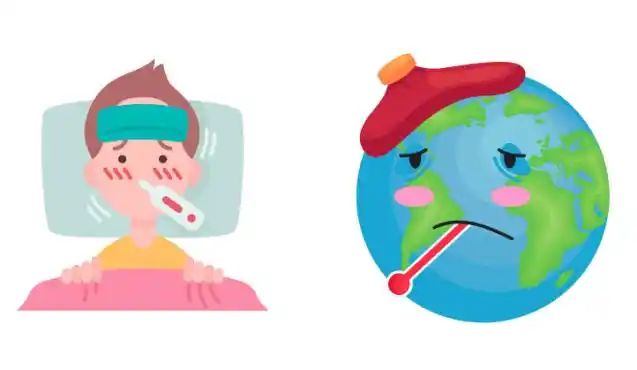
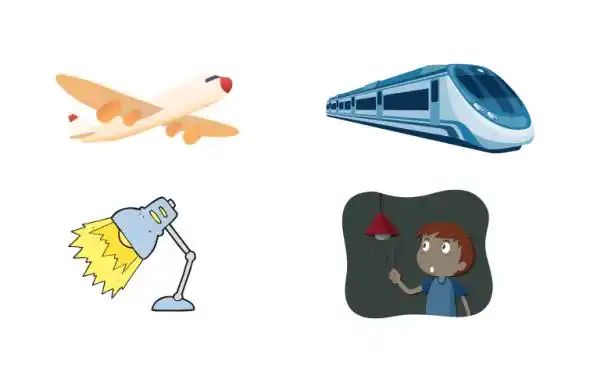
Some slides used in the course
Back in my class, kids want to know how to help little animals affected by climate change. I told them there was a need to cool the earth, and my job was to tell more adults to do it together, and now they can help. A few of them, who seemed a little older, soon thought of less driving and light. I'm surprised they came up with solutions so quickly。
A little girl came up and pulled me, and she said, "you can also ride a scooter to school." "you're so great that it doesn't drain the gas that burns the earth." i gave her the credit immediately。
My son's got something from that class. When i go shopping at the supermarket, i forget to bring a shopping bag, and he reminds me. In the past, i hardly talked to him about my work, which i think was too hard for him to understand compared to a profession like a teacher or a doctor. But one day after the class, he was asked about his parents' work and he said, “daddy is helping people (father in the medical profession), mother is helping animals”。
I've never been so proud of my career before。
Ishi yi, a researcher at the centre for circulatory science and technology extension, shanghai



