


“children are scientists, and although infants and young children are far from understanding the world, they are natural explorers who often have better eyes than adults to discover the world. Young children have inherent curiosity and desire to explore, and teachers should be guided by the characteristics of their physical and mental development, using nature, things and phenomena in their lives to educate them about scientific enlightenment, enabling them to develop a positive scientific attitude in their hands-on and brain-searching activities, enhancing the ability of scientific exploration to acquire a wealth of scientific knowledge and developing diverse scientific experience. The cognitive development of young children of all age groups that choose scientific activities appropriate to their age has different characteristics, and early childhood science education should follow its own growth patterns and design curricula that are appropriate to the cognitive development of young children of all ages。
There should be more observational activity in science education at the primary school age. By giving young children an initial understanding of simple scientific changes and scientific phenomena, there is a certain interest in wonderful changes in science, such as the interest of young children in observing natural phenomena, a small flower or the development of young children's observation and imagination of the surroundings. There should be more cognitive activities in science education in the middle age. For example, young children develop a sense of love for nature and environmental protection by recognizing the name characteristics of flora and fauna, observing the common features of flora and fauna, understanding the interesting aspects of flora and fauna, and first grasping the relationship between human beings and flora. The observation of young children in middle school has a clear purpose and is no longer content with a preliminary understanding of the shape of some plants and animals, but rather to explore their inherent patterns of scientific development. As a result, areas such as the natural corner of classes can be used to develop plant and animal breeding activities that allow young children to experience first-hand changes in animal and plant development. In science education in the older age groups, there should be more activities in the field of practice. Through practical activities, young children are able to use a variety of sensory, proactive knowledge of the nature, uses, etc., and to exercise observation, operational capacity, practical competence and a sense of cooperation. In addition to observing, young children in large classes prefer the mystery of discovering things through operation. Teachers can place suitable materials, such as circuit toys, in class towns, and place graphics and smug instructions to enable young children to discover the secret of images in observation and action and to feel the pleasure of collating. In addition, in the course of scientific research, teachers should remind young children to document their practice and findings, make bold assumptions about the problem-solving process, implement the corresponding activities according to the plan and share the process or results of the experiment with their peers. “environment is an important educational resource that should be effectively promoted through the creation and use of the environment”. The creation of areas of good scientific activity allows young children to engage in autonomous scientific exploration in their interaction with the environment, materials, and teachers can integrate the development of the kindergarten environment and curriculum development, making the areas of scientific activity part of the curriculum preparation, curriculum development, curriculum documentation and course continuity。
“theory + practice” explore a three-step approach
- general planning of the ecological areas of the park. Cultivated varieties make the park's ecological environment a resource for four seasons of outdoor scientific exploration. Teachers can use the time of after-dinner walks, outdoor self-help activities, etc., to guide them in observing, experimenting, comparing and documenting the rich plant in the garden in accordance with the needs of young children, thus generating interest in natural exploration。
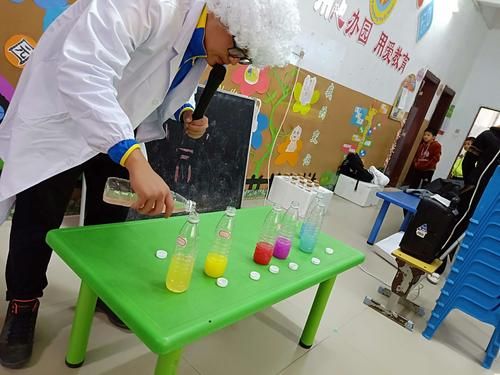
(b) integration into the public environment of kindergartens. Through panels, pictures, paintings, etc., creative science explores the content and seeks to be visual, educational, interactive and participatory. In the case of young children, who have developed a desire to explore space, teachers can use a variety of materials to work with young children to create an art gallery in the sky, creating an atmosphere of “aesthetic” and sharing the knowledge of space collected by young children and learning in the process of appreciation。
Flexible design of class science areas. The science corner of the class, which combines the subjects of the class and the interest of the young child, can be combined with the natural corner and can be integrated with the mathematical area. When delivering materials, teachers, in addition to providing a wealth of operational materials, are required to explore the placement of target layers, remove interference from too many materials and direct young children to meaningful exploration activities. On the other hand, science rooms have been set up to take into account the age characteristics of young children, and various science rooms are an important vehicle for early childhood science exploration. Science activities must always adhere to the principle of first-hand experience of young children, namely, that young children should be able to experience, learn, think, and create through materials provided by teachers, and that the scientific knowledge they contain should be translated into visible, felt and dynamic things, that they should be provided with autonomous, operational and creative spaces for their own activities and that they should create a dynamic, comprehensive and open environment for scientific exploration. The activity rooms can be divided into four main districts: problem areas, pilot areas, upgrading areas, and challenge areas. The problem areas can be found in plant horns, horns of animals, horns of natural phenomena, riddles of the human body, angles of life, etc. The experimental areas can be set up to float and sink, birds can fly into cages, the magic box of singing toothpicks, home-made scales, paper boats, parachutes, non-failables, ping-pong balls, etc. The upgraded areas can be set up with puzzles, chasms, clubs, bars, frictions, screwdrivers, cars, colours become empty, fishing, etc. The challenging areas can be set up with magic formulas, mazes, badges, unlocks, vortex, toyms, toys, vantah towers, fraff。
“summary + application” to develop a scientific exploration of the experiences of young children
Young children have their own development characteristics, and in the specific teaching of early childhood science education they need to be guided by both the development of young children and the science and the systematic application of teaching methods and strategies. A model of integrated scientific education activities is to be developed in accordance with the principle of holisticism. In early childhood science exploration, teachers should follow this basic premise and use basic teaching methods such as experiments, production, demonstration, discussion and play to design models of scientific activity。
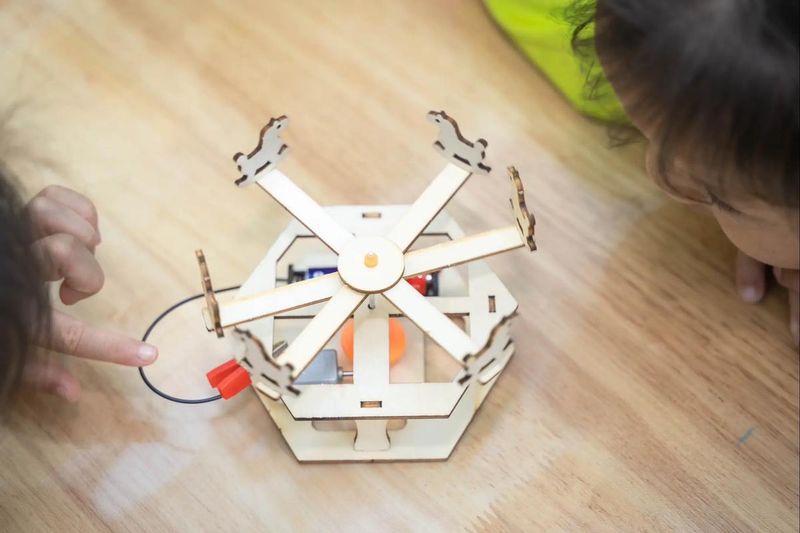
Specifically, it can be summed up in four major “eights”: one look, one play, which stimulates young children's interest in their viewers in displays and games; one think, one guess, which focuses on young children's exploration of the problem, not just on the answers to the problem; one try, one do, that young children themselves experience the whole process of scientific exploration after observing and conjecture; and one remember, that it is the record and discovery of the young child's operation, which promotes the understanding and construction of young children's experience in the process through sharing。
It's a game and practice to advance scientific exploration. Based on the principles of autonomy and pleasure in the science of early childhood, emphasis is placed on early childhood as a centre for scientific exploration, respecting the interests and needs of young children, and on targeted organization and implementation of exploration activities. For example, in the aftermath of the summer rains, many earthworms appeared in the soil of the flower field, young children were drawn to the attention of sudden earthworms during their activities, and teachers captured the interest of young children by asking, “why are earthworms out after rain?” the series of activities that stimulate young children to explore earthworms allows young children to develop their special explorations and to gain emotional satisfaction with experiential operational findings, including through the collection of general drawings of earthworms, the raising of earthworms in natural horns, etc. In accordance with the principles of creative principles and rules of early childhood science education, young children are encouraged to observe, understand and explore weekly events, phenomena, through activities such as scientific mini-programs and performances。
At the same time, young children are empowered to think and create through questioning and validation in the process, exchange and sharing of knowledge and experience。
“integration + linkages” integration of resources for early childhood detection
Kindergartens, families and societies are a closely related whole, and in conducting scientific research on young children, emphasis should be placed on their respective strengths, integration and effectiveness in promoting scientific literacy。
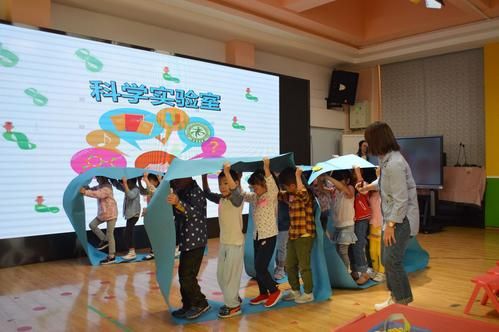
Kindergartens are the main position in early childhood science education, where the scientific literacy of teachers is key. Kindergartens should organize teacher training in a planned and purposeful manner in conjunction with scientific research activities, enrich teachers'scientific knowledge and help them to acquire support strategies and pathways for early childhood science research. In conjunction with the general education week, teachers are organized to conduct practical exercises in the form of "three sessions" of high-quality early childhood science research, to stimulate innovative thinking among teachers, to develop a creative spirit among teachers, to develop a firm scientific attitude and to foster scientific literacy among teachers。
The scientific spirit of young children is fostered by home-based co-production. In order to provide parents with a timely and comprehensive picture of the objectives of science education in kindergartens, a special section on early childhood science activities could be set up in the park to enable parents to learn about recent scientific activities. Specialized science corners are set up in the column to showcase the science curriculum of the garden, where parents learn together with young children, supplementing the knowledge that is not available in kindergarten and prompting them to continue their research. In addition, parent-child science research activities can be carried out in conjunction with parents'schools, science week, etc., so that parents can keep up with kindergarten, enrich the scientific experience and operational skills of young children, and raise awareness of parents'support for young children's scientific research activities。
The scientific exploration of young children should also be integrated with social resources. Teachers should identify young children's interests in a timely manner, encourage young children to document their findings or questions in their own way, and be proactive in conducting relevant inquiry activities. Early childhood science exploration activities not only explore and understand the objective world, but also enhance its ability to solve problems and to be happy in its operation。
As teachers, it is more important to develop the scientific literacy of young children in accordance with their age characteristics and needs, to question, to deduce, and to be boldly tested to create an environment in which young children can try, operate and explore to achieve sustainable development in all its dimensions! Zhou ting



