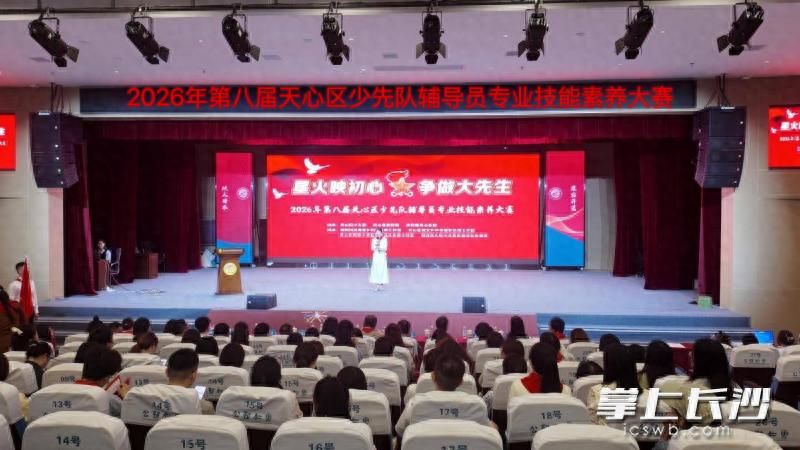
On the afternoon of 20 june, the subject of the comprehensive examination for the 2026 examination for the secondary school level in shanghai was successfully carried out. At the end of the examination, the ces invited specialists from relevant disciplines to assess the comprehensive test papers。
Physics:
It's true
In 2026, the science section of the comprehensive examination of the secondary school level examination in shanghai implemented the fundamental tasks of the lyde trees, focusing on the core of the physics section. The paper is presented in the form of a situational theme that is close to the reality of productive life and that is a good illustration of the close connection between physical teaching and productive life. The whole volume focuses on the coverage of the content of the curriculum, the extraction of materials, the stabilization of knowledge and competence, and a good pedagogical orientation for the reform of the physical curriculum。
I. Adherence to discipline as a human being based on curriculum standards
It is based on the standards of physical curriculum for compulsory education, which achieves full coverage of “material” “motion and interaction” “energy” “exploration” and “interdisciplinary practice”. The papers focus on the examination of the students' physical cores, such as the test of similarity between the atomic structure and the solar system, which reflects the harmony and unity of nature, prompts students to view the world from a physical perspective and enhances the material outlook; the test of selecting suitable experimental devices based on different experiments, which encourages students to use their knowledge and use known scientific methods to explore the world; and the test of knowledge related to “hydroenergy” and “wind energy”, which directs students to the development and use of renewable sources of energy and enhances their environmental awareness of energy conservation。
Ii. Focusing on the content of teaching materials and returning to their original sources
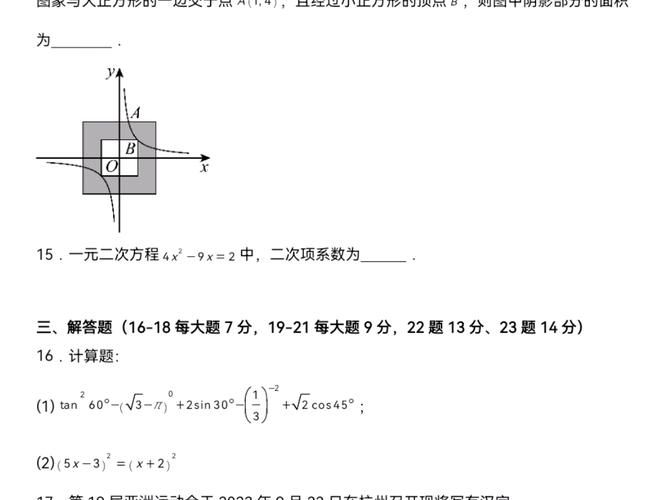
It focuses on basic concepts, basic norms and consistency. Some of the test materials are derived from teaching materials such as the manual of physical teaching materials and the manual of complementary activities, with a view to guiding the teaching focus on the requirements of the curriculum, with emphasis on the main teaching resources such as teaching materials. For example, for the interpretation of the phenomenon of “fish swimming in the clouds” in lake waters, examples from the teaching materials were directly selected for the examination of the principles underlying the use of ancient “ceilings”; the theme of “measurement of electrical resistance” “research floats” was derived from the student experiment in the teaching material “measurement of electrical current and voltage gauges of electrical resistance” “to explore the size of buoyancy and what factors are relevant”. The aim of the study is to make teachers and students aware of the importance of learning basic concepts and basic norms in their daily teaching, making good use of teaching materials, doing good experiments and promoting efficiency。
Iii. Infiltration of physics in the context of reality
With the theme of “life and nature”, “engineering and practice”, “robots”, the paper creates a variety of real situations, including discipline practice, productive life, natural phenomena, technological engineering, etc., and examines students' ability to use the knowledge they have learned to explain phenomena and solve problems. For example, the process of robotics in the various scenarios reflects social development and forward-looking technological advances in the country。
Iv. Emphasis on experimental exploration, highlighting thinking mass
The test papers are based on the characteristics of physics, are carried by experiments and examine students'scientific thinking skills, such as scientific reasoning and scientific reasoning. For example, the subject of “measurement of electrical resistance” requires students to reasonably select experimental equipment based on experimental data, extrapolate electrical failure based on experimental phenomena, and examine the students' ability to obtain information and generalize reasoning. Moreover, “research float” subjects require students to analyse data, make reasonable selections of images based on the cause of buoyancy, and give an analytical reasoning process to examine the students' scientific justification capabilities。
Chemical:
Focusing on practice thinking based on curriculum development
The chemical component of the secondary school examination in shanghai in 2026 is based on the standards of the chemical curriculum for compulsory education (2022 edition), which fulfils the fundamental tasks of the literian people, upholds the core values and values of the evaluated breeder. The paper created the real context of the theme, the whole volume was well structured, the issues were well-designed and the overall difficulty was appropriate. It focuses on assessing the performance of students ' core qualities in conjunction with the content of the curriculum, and on the ability of students to identify problems, analyse problems and solve problems in specific contexts, strengthening the quality of thinking and providing good orientation to the teaching of subjects。
I. Enhancing the scientific structure
The selection focuses on the realities of traditional culture, green development and everyday life, closely linking productive life and scientific practice. For example, the chinese blue is an ancient man-made pigment, which, by analysing the composition and preparation of the chinese blue, helps students to feel the wisdom of the ancients, foster national self-confidence and pride, and promote the transmission and development of the best traditional culture of china among young people. For example, frontier studies on the industrial production of urea and its synthesis methods demonstrate the important role of chemistry in promoting agricultural production and food security, the concept of green development and the important role of chemistry science in reducing energy savings and protecting the environment, and contribute to the development of scientific nature and green development in harmony with nature. The selection of scenarios highlights the value of disciplines and reflects their important contribution to social development and the quality of life of people。
Ii. Presentation-based presentation and central quality
The test is based on teaching practice and examines the determination of the composition of the material in different real situations, the analysis of the price of the elements, simple chemical reactions and the underlying knowledge of the subjects, and the different aspects of the core mass. In the context of the “china blue”, the nature of the structural decision, the constant law of quality and the chemical perception of chemical change from different perspectives were examined through the design of different issues. In its exploration of wastewater treatment programmes, students were examined for their ability to develop evidence-based reasoning, to speculate about substances and their changes. In the urea production process, scientific methods such as analysis and comparison were examined by comparing data on carbon emissions and energy consumption during synthetic ammonia with data on suitable feedstocks for production. By analysing the implications of new methods of urea synthesis for the protection of the environment, it combines a transformational view, a constant view, a systematic thinking and an attitude towards the protection of the environment. It leads students to understand the interrelationships between science, technology, society and the environment and to make sound value judgements on issues of social science, gradually developing a sound understanding of chemistry for the sustainable development of society。
Focusing on scientific exploration and highlighting mental capacity
It is based on the basic lines and methods of chemical experiments, and addresses practical problems through a series of scientific research processes such as the determination of the purpose of the experiment, the understanding of the principles of the experiment, the analysis of experimental programmes, the selection of experimental instruments and the design of experimental devices. For example, in the case of wastewater treatment, the scientific thinking of students in modelling and innovation was examined through the design of experimental programmes; in the search for maximum deoxygent in iron deoxygents in foods, the true course of research was recreated, the experimental principles were similar to the principle of “calculating oxygen levels in air” in teaching materials, reflecting the value of the migration applications of learning, the students' information processing abilities, scientific thinking on evidence reasoning, and their practical abilities to analyse, process, draw sound conclusions and express them in scientific languages。
Interdisciplinary:
It's from the real situation
The interdisciplinary case analysis in 2026 was based on the criteria of the subject of geography and life sciences in the secondary schools of the city of hai city, with an organic integration of scientific literacy and social responsibility, and an examination of the students ' ability to apply what they have learned to solve real problems in their living conditions. The structure of the test papers is stable in its entirety, focusing on the interdisciplinary thinking of students and implementing the fundamental tasks of the literian。
I. Addressing the real situation-driven problem
The subject focused on creating real problem situations and directing students to use core concepts of the discipline to solve practical problems. Using the subject of “school traps” as a situational vector, it provides specific information on weather and transport in shanghai and golo, as well as on the characteristics of insect s at golo campus, the way in which insects are treated, and sets out a number of real tasks that drive students to choose reasonable travel options based on their actual itinerary, leading them to judge the relative stability of the human body in a changing environment. Students experience the close connection between geography and biology and life by obtaining useful information, analysing and questioning questions, and making recommendations on related issues。
Ii. Integrating science with discipline
Scientific exploration is a key path to building capacity for scientific thinking, innovation awareness and practice. Through teacher-student collaboration to optimize the insect trapping programme, which brings students closer to learning life, the study of the problem to the level of awareness of junior high school students, the improvement of the programme, the reflection and analysis of the elements of the induction approach, the formulation of recommendations for adjustment, the evidence-based reasoning process, and the examination of students'scientific thinking and research capabilities. In the process of solving the problem, students are required to establish a logical link between geographical characteristics and insect characteristics, to analyse and improve experimental programmes using geographical and biological principles, and to validate and reflect on the reliability and rationality of existing inferences, thus implementing an interdisciplinary assessment of student literacy。
Iii. Building the soul of the leed in value
The test is based on a human orientation, integrating the values of ecological civilization into the whole process of exploration, so as to solve the problem, explore it and promote it simultaneously. In the context of the shanghai counterpart's support for the goloche autonomous region of qinghai province, the entire volume is structured around four types of “scientific exploration” of “climate” “climate” “human life activities,” from shallow depths, from surface to surface, from layers, integrating geographic and biological interdisciplinary qualities, by means of realistic, temperature-sensitive propositions designed to allow students to submersible identification of people and nature as a community of life through the “application of solutions to problems”。