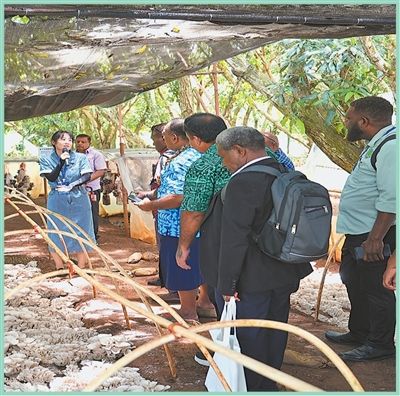
On 19 november 2025, representatives from several countries, including fiji, tonga and samoa, visited the fungroom cultivation demonstration base in nadi, fiji, at the china-pacific island state mobgra technology demonstration centre。
High
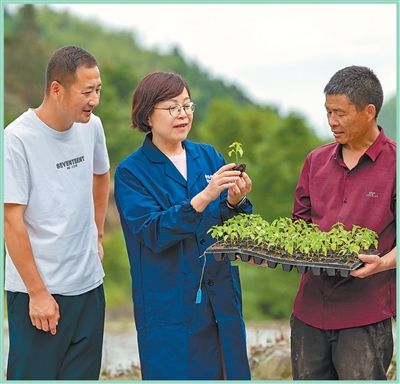
Zhejiang province, in the village of zhuangyang, in the city of guanghua, the technical and technical attaché is directing farmers to grow hot hot pepper seedlings。
Hushaw
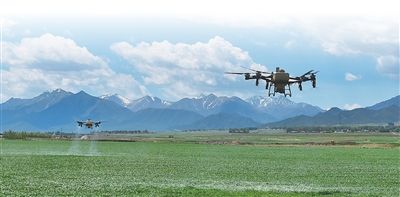
In the wheat fields of yongfung village, south fung town, zhang jiang jiang, gansu province, the plant protection drones are conducting a “one blow-out three defence” operation。
Wang xiaoshan
This year marks 40 years of planned and organized large-scale poverty-reduction development in china and 30 years of collaboration between east and west china on poverty reduction. On 27 may, at the 2026 high-level forum on poverty reduction and development, china and 53 countries and nine international agencies launched the global alliance of poverty reduction and development partners. This is an important step forward in the global fight against poverty and the latest practice of working together to build a community of human destiny free from poverty and development。
Poverty was a scourge of human society, and anti-poverty had always been a major issue in the governance of the country. Since the beginning of the new era, china has confronted the global challenge of poverty reduction by handing over responses to the era of people's satisfaction and world visibility. In this issue, multi-country experts and scholars were invited to speak freely about china's poverty reduction practices and to demonstrate the wisdom and strength of china's experience in contributing to global poverty governance。
Lin jianxi (professor at fujian university of agroforestry, innovator of herbicide technology, principal scientist at the national center for research on herbicide engineering)
Felix da cora (bachelor of the african academy of sciences, foreign fellow of the chinese academy of engineering, senior adviser, national institute of nanjong, chinese academy of agricultural sciences)
Evandro carvalho (professor, freminense federal university, brazil, and expert on international issues)
Hassan daoud bout (director, regional research centre on global governance, “the way forward”, pakistan institute for sustainable development policy)
Thomas heibel (senior professor of politics, society and culture, china, duisburg-eisen university, germany)
Shemonil (president, cambodian society for the development of relations in cambodia)
New ideas:
From one-way blood transfusion to system blood production
Hassan daoud bout: in recent decades, china has made unprecedented strides in human poverty reduction, lifting more than 800 million people out of poverty. China was committed to a people-centred approach and had embarked on a path of poverty alleviation that was very different from traditional western aid modalities。
China's battle against poverty has not only been a major economic achievement, but also a remarkable human rights practice, which has been enriched by a unique concept of poverty management. China has eliminated extreme poverty, allowing hundreds of millions of people to achieve comprehensive improvements in such areas as food, clothing, education, health care and employment, raising living standards and demonstrating national dignity, and stimulating people's initiative to participate in economic and social construction. The process of reducing poverty is one of solid protection of human rights and deepening awareness of human rights for all. Today, there is a consensus in the international community, particularly in the global south, that national development and human rights guarantees are mutually reinforcing。
Shemonil: china's anti-poverty theory has brought about a conceptual innovation ranging from “one-way blood transfusion” to “systematic blood production”, insisting on a combination of poverty alleviation and empowerment, and breaking the vulnerability of traditional poverty reduction models to welfare dependency. From passive recipients of development assistance to active participants in autonomous development, the “modernization of people” is a central innovation for poverty reduction in china. The concept of “weak birds first” and “dropping through stone” provides a profound interpretation of the key value of human internal dynamics in poverty alleviation practices. These provide important insights for global poverty reduction: poverty reduction cannot be based solely on external aid, but rather on the creation of long-lasting mechanisms that stimulate individual dynamics and activate local dynamism, providing new ideas for other developing countries to emerge from the dilemma of “yearly poverty reduction and year-to-year return”。
Lin zheng zhen: china's major experience in poverty reduction is to fully respect and fulfil the role of the poor population as a major contributor to development, to enhance its capacity to participate in development, to share development and to develop on its own. China has applied the technology of bacterium to international poverty reduction, and is equally committed to the development of a blood-formulation “inspiration of internal dynamics” to promote sustainable poverty reduction by fostering the capacity of poor groups to develop themselves. So far, weed technology has been transferred directly to more than 10,000 international participants, translated into 18 languages for global dissemination, becoming an example of china's “small, beautiful, effective and productive” assistance, bringing technology to the local community and conveying the concept of sustainable development。
Evandro carvalho: china is deeply aware that poverty is caused by multiple factors such as infrastructure, education and health, and weak market systems. Insisting on systemic thinking is an important reason for china's success in escaping poverty: poverty is not treated as an isolated issue, but rather as a comprehensive approach to the causes of various kinds of linkages; and the balance between support and development, urban and rural, and so forth, is consistently applied. The key to china's success in the fight against poverty is to raise poverty reduction to a national strategy and to work together in industrial development, regional synergy and the building of civilization。
Thomas heibel: poverty reduction in china is a long-term and complex process rooted in rapid long-term economic growth. China's most prominent advantage in reducing poverty is its ability to focus on the major issues of governance, which is reflected in capital investment, targeted support, strict regulation, etc. China has built the world's largest high-speed iron network, and many districts and counties have led to labour mobility, agricultural flows and tourism development through improved transport; in poverty alleviation practices, initiatives such as easy-to-poor relocation, specialty industrial support and micro-credit for poor families have landed efficiently。
Good governance:
Accurate identification of poor families, tailored support measures
Thomas heibel: in china's poverty reduction practice, the practice of capturing five-level clerks from cities and towns together is impressive. This mechanism has proved to be highly effective in terms of administrative mobilization and implementation, particularly in the context of major efforts to overcome poverty on such a large scale and with clear time points。
Guizhou is a classic example. On several occasions, i have visited the field to see clear lines of responsibility at all levels, a responsibility agreement between provincial leaders and cadres at the grass-roots level, a district and sub-district cadre based on quantifiable poverty reduction results, and twinning of villages. The central strength of this mechanism lies in the vertical continuity of authority and responsibility, which translates central decision-making precisely into local initiatives and grass-roots action。
Hassan daoud bout: accurate poverty reduction is a major innovation and distinguishing feature of poverty reduction in china. It is based on data orientation, precision identification of poor families, tailoring of support measures, focus on improving the employment, education, health, etc. Of the poor, supported by strong monitoring mechanisms to ensure efficient use of pro-poor resources and quantifiable results。
Another major innovation in reducing poverty in china is the breaking down of the dual structure of urban and rural areas through large-scale infrastructure, the integration of rural areas into the overall national development plan, the integration of agricultural products throughout the country through a network of logistics, the creation of niche industries in many rural areas and the emergence of self-reliance from poverty; and the ability of infrastructure and science and technology to enable tele-health and tele-education to sink into rural areas in a sustained manner. In addition, china attaches great importance to vocational training and has established the largest vocational education system in the world, implementing the concept of poverty reduction as a first step towards poverty alleviation and strengthening the dignity and foundations of the poor。
Shemonil: china's whole-chain management of poverty reduction through “precision identification, precision support, precision exit” reflects the modernization of the country's governance capacity. The establishment of a monitoring mechanism on the dynamics of the fight against poverty is a long-term mechanism that is highly targeted in china's poverty reduction practices. Through regularized mapping, accurate early warning and timely assistance, long-term perceptions of poverty management are translated into actionable and actionable practices that effectively prevent the return of poverty and consolidate development gains. The role of cadres at the grass-roots level has been most impressive in field research. Their roots, precise, pragmatic and people-oriented characteristics are central to china's successful poverty reduction path。
Felix da cora: i studied the hebei countryside and felt deeply that poverty reduction in china is by no means a mere economic issue, but rather a vivid practice of people-centred development. The grass-roots government has joined the villagers to form agricultural cooperatives, to integrate small and scattered farmers in order to achieve an integrated distribution of agricultural produce and income, and to foster rural tourism, agro-processing, etc., both by broadening revenue channels and by building rural economic resilience. A large number of university village cadres have taken root in villages, enabling them to upgrade their industries with expertise and modern governance thinking。
Evandro carvalho: cross-regional support is one of the most original mechanisms of governance in china, and “chongning collaboration” is a model. Counterpart support is not just a transfer of funds, but a more balanced approach to capacity-building in all its dimensions, including technology, management, markets and skills training. In addition, china is committed to combining industrial poverty alleviation with support for development, and is committed to fostering local industrial chains and transforming local resources into economic values. Currently, china has a regular system of poverty-prevention monitoring and assistance. Building on the dynamic characteristics of poverty, china relies on the concerted efforts of the state and social forces to consolidate the gains made in the fight against poverty and to promote the overall revitalization of the countryside in an institutionalized manner, demonstrating its precise, pragmatic, long-lasting and people-centred character。
World benefit:
Theory and practice continue to benefit developing countries
Hassan daoud bout: china's contribution to global poverty reduction by over 70 per cent, meeting the poverty reduction goal of the united nations sustainable development agenda 2030 10 years ahead of schedule, has become the cornerstone of world governance for poverty reduction. At both the theoretical and practical levels, china has made a significant contribution to global poverty reduction and sustainable development and has continued to benefit a large number of developing countries. The reduction of poverty in china has two important messages for pakistan: first, to maintain continuity in pro-poor policies, to break the political cycle constraints and to introduce business participation in order to ensure solid poverty reduction results in industrial development; and second, to integrate remote areas into national development plans, drawing on china's east-west collaboration model, and to allocate resources for poverty reduction in an integrated and balanced manner。
The establishment of the global alliance of poverty reduction and development partners was a milestone in the global poverty reduction process. With the impetus of china, the cause of poverty reduction in developing countries has gradually gained global synergy. In the future, the alliance will build platforms for efficient cooperation to promote a regular exchange of poverty reduction experiences, practical technologies and human resources training, and it is expected that global cooperation on poverty reduction will be closer. China's experience in poverty reduction will be used to further the world. The establishment of the alliance is a clear demonstration of the fact that the eradication of poverty and the improvement of the standard of living of the population are common to all humankind and are essential for the developing countries to break the development bottlenecks and promote social stability and harmony。
Lin zhiang: in 1995, china's first international training course on grass technology was held at fujian university of agroforestry, officially setting up an external front for technical assistance. In 2017, grass-grass technology was integrated into the china-united nations peace and development fund priority projects and has now been extended to more than 100 countries and territories worldwide. In the context of international cooperation in the field of bacterial technology, we are promoting the localization, simplicity and standardization of technologies, with the rapid participation of local populations in need. Cooperation is closely linked to development goals, such as employment for poverty reduction, and effectively promotes the well-being of local populations, which is widely recognized by developing countries. The experience of poverty reduction in bacterial herbs is moving to the world, contributing to global poverty reduction with chinese wisdom, a chinese programme, a green bridge connecting countries, a bridge for development, a bridge for cooperation and a bridge for friendship。
Felix da cora: china continues to share its experience in poverty reduction with africa in many ways and deepens practical cooperation. For example, in several african countries, such as lesotho, rwanda and ethiopia, this technology has resulted in the planting of edible bacteria, as well as the production of feed and ecological restoration materials to support farmers ' income generation and ecological improvement. China has built more than 20 agricultural technology demonstration centres in africa, promoting more than 300 agricultural technologies and providing training in the use of good seeds, agricultural machinery and technology. China has also been innovative in building poverty reduction demonstration villages that integrate infrastructure development, industrial development and public services to create replicable and replicable models of poverty reduction; the sino-jin agricultural cooperation model village, launched in 2024, helps poor villages to grow productively through solar irrigation, good seed promotion and breeding combinations。
In 2024, the alliance for agricultural science, technology and innovation was established jointly to focus on joint research and development and demonstration of technologies such as high-yielding crops and water-saving irrigation, which strongly underpinned africa's agricultural transformation. Not only has china emerged from an effective path of poverty reduction, but it has turned its experience of poverty reduction into an important international public good, contributing to global poverty governance and common human development。
Shemonil: the formation of a global coalition of poverty reduction and development partners demonstrates the strong determination of developing countries to deepen south-south cooperation and work together to address the challenges of poverty. Many countries still faced development challenges such as widening rural-urban disparities, which could not be effectively addressed by individual countries alone. The alliance had created new multilateral platforms for policy exchange, technology sharing and capacity-building. The alliance has focused its efforts on “small and america” cooperation projects covering areas such as agricultural technology, infrastructure and vocational education, tailored to the real needs of developing countries, which can quickly benefit people at the grass-roots level as well as continue to enhance local capacity for autonomous development。
Cooperation in cambodia is an example of “fishing for people”: the west hanouk special economic zone provides high standards of vocational skills training and income stabilization for tens of thousands of cambodian youth. The cambodia friendly poverty alleviation model village project has effectively improved the livelihoods of cambodian rural people through intensive collaboration. China has effectively boosted agricultural productivity in other developing countries through support such as agricultural technology transfer, vocational training, etc., and enhanced their capacity to participate in global markets and confidence in autonomous development. China's initiative to promote and implement global development will help achieve more equitable and sustainable global development。
The newspaper's correspondents han suk-suk, zhao weip, baek yuan ki, zhong zhong zhong, zhong yuan zheng, xuxiang, dai zhen