Biology takes the 10th test
1. Main nutrients for human needs
(1) six nutritional groups: sugar, fat, protein, water, inorganic salt and vitamins。
(2) human inorganic salt deficiency, major diseases caused by vitamins and sources of food
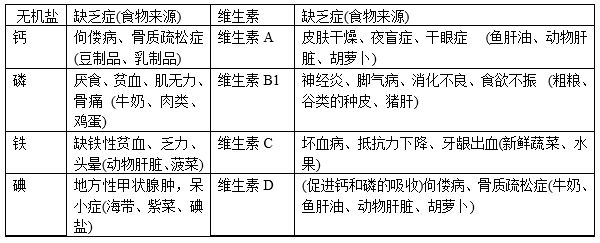
Nutrition in food
Organics:
Protein: the basic material that forms the human cell and provides energy for the physical activity of the human body
Sugar: the most important source of energy in the human body, which is also a cell component
(a) fats: energy-producing substances with the highest energy releases per unit mass; however, in general, fats are stored in the body as alternative energy substances
Vitamins: non-participation in the formation of human cells and the provision of energy, low levels and regulation of human life activities
Vitamin a: promote normal human development, enhance resistance and maintain normal human vision. When lacking, rough skin, night blindness
Vitamin b1: maintain normal metabolic and neurological functioning of the human body. When it's missing, it's neurotic, it's foot gas
Vitamin c: maintain normal metabolisms, maintain normal physiological effects of bones, muscles and blood vessels, and increase resistance. When it's lacking, it's bad blood. It's less resistance
Vitamin d: promote calcium, phosphorus absorption and bone development. When lacking, osteoporosis (e. G., chicken breast, x-shaped or o leg), osteoporosis
Water: about 60% - 70% of body weight, the main cell components, and all physical activity in the human body。
Inorganic salt: material that forms important elements of human tissue, such as calcium: a child's lack of abdomen, chicken breast, o-legged legs, osteoporosis among middle-aged persons, phosphorus: lack of anorexia
Iron: constitutes haemoglobin, lack of which leads to anaemia iodine deficiency: goitre swelling or mental development disorders in children
Composition of human digestive systems
The digestive system consists of digestive tracts and digestive glands。
(1) indigent: oral oesophagus stomach intestine. The door
(2) the digestive gland: saliva, stomach, liver, pancreas, enteric glands。
Saliva gland (saliva, saliva starchase digestion into malt sugar)
Stomach gland (continental fluid, initial digestion of proteins into polyazine)
The liver is the largest digestive gland in the human body (drinking cholesterol, without digestive fluid, turning fat to fat particles)
Pancreas (circumcinary glucose, amino acid, glycerine and fat acid) with various digestive enzymes that completely decompose nutrients such as starch, protein and fat
Intestine gland (circle of intestinal fluid, containing various digestive enzymes, completely decompose nutrients such as starch, protein, fat into glucose, amino acid, glycerine and fat acid)。
3. Food digestion and nutrient absorption processes
(1) indigestion of food: the process of decomposition of food into absorbible ingredients in the digestive tract。
1 starch digestion (oral, intestines): starch — saliva — raspberry sugar — enzyme (intestine, pancreas) — glucose (starting in the mouth)
Indigestion of 2 proteins (attitudinal, intestine): protein - enzyme (atlas, pancreas, intestine) - → amino acid (starting in stomach)
3 fat digestion (intestine): fat — gall (hepatic) — fat particles — enzyme (intestine, pancreas) — glycerine + fatty acid (starting in intestine) (reactive condition in the middle of arrows due to page limitations)
(2) absorption of nutrients: the process by which nutrients enter the circulatory system through digestive walls. The intestines are the main organs of the human body that digest food and absorb nutrients。
Characteristics of the intestines:
1 small intestine length
Within 2 there is a wrinkled ring on the surface and a small intestinal velvet on the wrinkle, which significantly increases the interior area
3 the variety of digestive fluids (with intestine, pancreas and cholesterol)
4-flue-wall thin, with only a layer of skin cell formation. The fuzzy hair contains a wealth of fine blood vessels and fury lymph tubes。
4. Concern for food security
Food safety: preventing food contamination; preventing food poisoning。
Prevention of contamination of food products in the production process, such as pesticides, and the cleaning of vegetable nuts
No poison food
Prevention of contamination of foods by bacteria and so forth
Maintenance of kitchen and utensils
Purchase of quarantine qualified foodstuffs
Composition of the human blood circulation system
Blood circulation system: consisting of blood, blood vessels and heart。
(1) composition of blood: plasma and blood cells
The role of plasma: carrying blood cells, transporting substances and wastes necessary to sustain human life。
Blood cells include red cells, white cells and platelets. The structure and functions are as follows:
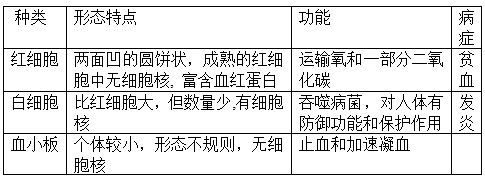
Hemoglobin: a red iron-containing protein contained in red cells。
Characteristics: combining with oxygen at high oxygen levels and separating from oxygen at low oxygen levels
Blood function: transport, defence protection, regulation of body temperature。
(2) blood type and blood transfusion: the blood type is divided into o, a, b and ab groups; blood transfusion is based on the same type of blood transfusion. If the blood type does not match, the red cells congregate and block the veins。
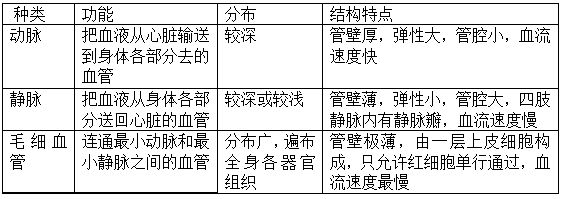
(3) type, structure and function of the vessels
(4) heart quadrants: bicardium, bicardium。
6. Blood circulation
Concept: circulation of blood in a pipe made up of the heart and all blood vessels. It is divided into body cycles and lung cycles。
Body circulation: cyclops at all levels of the arteryal artery at all levels of the body, on all levels of the veins, and lower veins in the right-hand heart chamber (blood from artery to vein)
Pulmonary cycling: cystic pulmonary pulmonary artery in the left larvae lung (from vein to artery)
7. Composition of the human respiratory system
1. Treatment of air in the respiratory tract
1. Composition of the respiratory tract:
Respiratory: nasal cavity, throat, trachea, trachea
Respiratory system, gas access to lungs, clean, wet, warm gas inhalation
Lungs: where the gas is exchanged
2 - lung
(1) location: one each inside the chest cavity
(2) structure: bread outside pulmonary bubbles surrounds the capillary veins, and the walls of the pneumatic and capillary vessels are thin and consist of only one layer of skin cells suitable for gas exchange。
(3) function: gas exchange
2. Gas exchange occurring in the lung
1) respiration includes both inhalation and exhale。
2) changes in external rib muscles, muscular muscles, ribs, thorax, chest profile and lungs when breathing peacefully:
3) rationale:
Ribs, gills
Chest profile volume
Intra-pulmonary pressure
Gas
Breathe in
Shrink
Expand
Down
Into the lungs
Breathe out
Shu zhang
Zoom out
Up
Exclusion
4) exchange of internal gases:
(1) gas exchange in lung bubbles
(2) gas exchange in the organisation
3. Air quality and health
1) the quality of air affects human health
Harmful substances cause respiratory diseases
2) knowledge of local air quality
The dust particles in the air
Gas exchange processes in human lungs and tissue cells
Carbon dioxide
(1) gas exchange in pulmonary bubbles: blood
Oxygen
Blood and exchange in pulmonary bubbles in a capillary vein: oxygen in pulmonary bubbles enters the blood through pneumatic walls and pneumatic walls, and carbon dioxide in the blood enters the pneumoculars through pneumatic and pneumatic walls. From vein to artery。
Oxygen
(2) gas exchange in tissue: blood tissue cells
Carbon dioxide
The exchange of tissue cells with blood in the capillary veins: co2 produced in tissue cells enters blood in capillary vessels, which transmit oxygen to tissue cells. Blood is converted from arterial to intravenous。
Basic ways of human neuroregulation
Neural regulation is based on reflection, which is based on a reflection arc。
(1) reflection: refers to the regular reaction of the human body, through the nervous system, to external or internal stimulations。
(2) the structure of the reflection arc is: the sensor flowes into the nervous center of the nerve, and the neurostatic effector。
(3) type of reflection:
1 simple reflection (non-conditional reflection): the reflection is born. It's like blinking, pissing, knee-jumping, shrunk.
2 complex reflections (conditional reflections): reflections formed in the course of life after the day. It's like waiting for the bell to stop thirsty, avoiding cars, ringing bells and entering classrooms。
10. Human perception of the outside environment
1) human visualization and hearing
The structure and function of the eyeball
Periphery: front of the exterior, non-color-transparent, perceivable
Magnets: white, protecting inside eyeballs
Ion membrane: front of membrane, colored, central, pupil, light
Eyeball wall, membrane, lashes: later on, there's smooth muscle in the iris, it's constricted, it's curvature of the crystal
Pulse membrane: 2/3 of membrane in the back, with blood vessels (nutrient eyeballs), chromosomal cells (light cover and formation of a “shadow room” within the eyeballs)
Inner membranes: retinal membranes, with a large number of sensory cells
Water
Thin crystals: double-comfort mirrors, reliant on lullaby and lashes
Glass
2) ear structure and functions:
External ears, ego, collect, channel sound waves
Outside ear lanes
Drum membrane: receive sound waves, produce vibrations
Mid-ear drum room: consistency between the larvae and the larvae to maintain balance of atmospheric pressure within and outside the drum membrane
Listen to the small bone: three pieces, which transmits the vibration of the drums to the inner ear
Half-regulation
Inner ear
Snails: a hearing sensor that accepts stimulation to create a nervous impulse
11. Impact of human activities on the biosphere
1. Analysis of examples of ecological damage caused by human activities
Human activities for the improvement of the ecological environment - the “thir north” protected forest
Human activity destroys the ecological environment and forests are severely deforested
Sandstorms are very dangerous
Massive hunting of wildlife
Since when is it so clear and beautiful
2. Environmental pollution:
1 concept: implications for the environment of harmful substances released from production or life
Type 2: atmospheric pollution greenhouse effects and ozone damage
Water pollution: water blooms in the lake
Solid waste pollution: effects of used batteries on organisms
Soil pollution: white garbage, industrial sludge
Noise pollution
If you think it's useful, order it or share it