It is easy to learn a little bit of physics in junior high school, but it is not obvious. It would be much more efficient to fast-track the top 10 priorities before the end of the period or the mid-level examination。
I. Basic context
It is not difficult, but the concept that is the worst fear of physical review. The basic terms such as force, pressure, density, power, heat, current, voltage, if only defined, do not say “what it is, how it is judged, how it is used in the subject”, which is easily confused。
It was suggested that each concept should be organized in three sentences: what it was defined, who it was often read with, and what it was most easily confused with. For example, “power” is not so simple as “power”, but interaction between objects; “voltage” is not “greater current”, and they are different physical amounts. The concept is clear, and all the questions that follow are well founded。
Ii. Eating common units
In middle school physics, unit conversions appear to be simple, but are often lost in disaster-prone areas. There are fixed units of length, mass, time, speed, density, pressure, power, etc. Once the title is mixed with “m, cm, km”, “secs, minutes, hours”, many students panic。
This review should not be carried out by the unit name only, but rather by establishing a “quantity-unit-common expression”. For example, speed is common per hour or hour per second, pressure is common for pa and power is common for watts. The unit didn't see it. The answer could be all wrong. It's a habit to do things in the first circle and then to calculate them。
Iii. Concluding the core structure
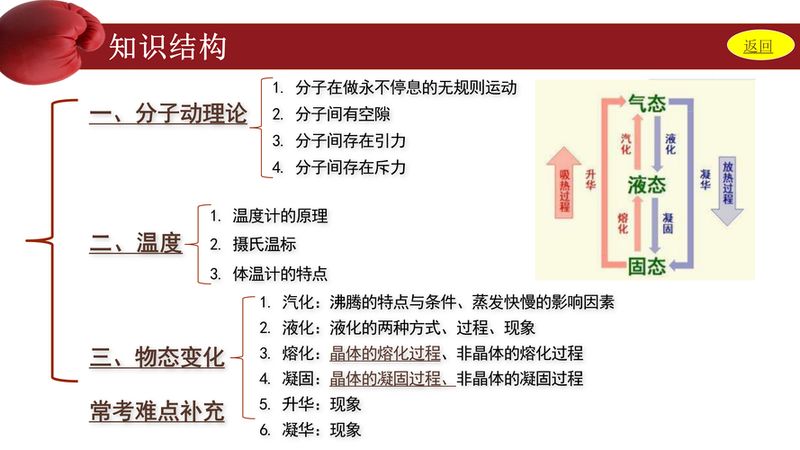
Middle school physics is not built on a dead end, but on a regular basis. For example, stress analysis depends on whether the object is balanced, drifting judgement depends on the strength and density of the object, and stringing and connecting circuits depends on whether there is only one current path. What really points is not to remember piecemeal conclusions, but to know how they come。
It is recommended that the most central pattern of each chapter be organized in the form of a “judgmental question”, such as “the balance of the object's stress” “the ease with which the conductor can conduct” “the influence of the smooth friction force”. It's more important to judge than to back the answer. Once new questions come up, they can also be pushed by pattern rather than guess。
Iv. Strengthening material
Mechanical science is the focus of physics in junior high schools and is part of the general examination of subjects. The study is not to separate force, motion, pressure and buoyancy, but to form a line: first to see what force the object is subjected to, then to see whether the motion is changing, then to see whether the surface and the area of stress affect pressure, and finally to judge the effect of buoyancy and deposition。
Many students lose points in mechanics, not counting, but analyzing processes. For example, “why does an object accelerate” “why does it have to wear a wide shoe floor in the snow” “why does the ship float” all return to the basic logic of stress and pressure. The question of mechanics should be analysed before drawing conclusions and the sequence must not be confused。
V. Learning electronics
Electric science is another high frequency test point, especially in the case of coupling, coupling, current, voltage, resistance and simple circuit failure determination. The study should focus on how the current goes, how the voltage is divided, what the switch will affect in different locations, and what changes are usually involved in light bulbs becoming darker。
The subject of electrical science is most afraid of "the image won't read." it is recommended to practice the identification of circuit elements before judging the connection and finally analysing the phenomenon. It's the road first, then the analysis, the electron. Many options and experiments would be easier if common failures, such as “breaks, short circuits, poor exposures” were identified。
Vi. Focusing on experimental methods
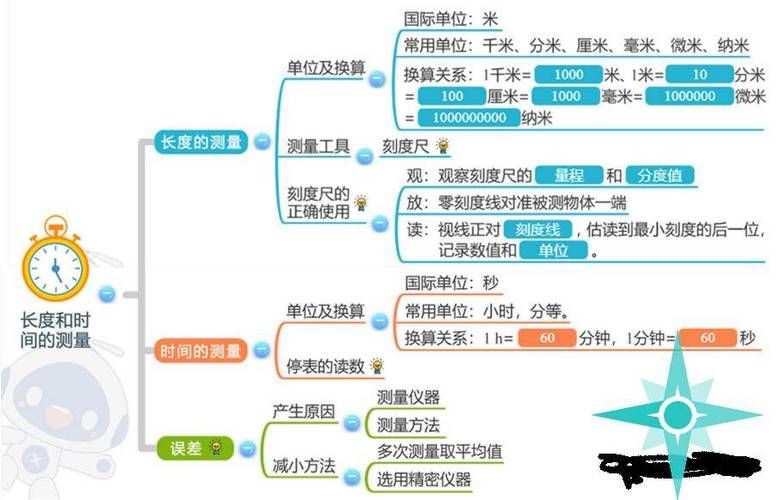
Physics at the junior high school level are not the only ones that can be painted, but also experimental ones. A lot of things don't make you remember a phenomenon, but whether you design steps, control variables, observe records and draw conclusions. Common experiments, such as measurements of density, exploration of friction, exploration of leverage balances, study of circuit law, etc., have fixed ideas。
In reviewing the subject of the experiment, emphasis is placed on the five parts of “purpose-equipment-step-conclusion- error”. Particular attention should be paid to the details of the experiment, such as why multiple measurements, why errors should be reduced and why certain conditions should be maintained. It's a high-grade secret, not to remember the answer, but to understand the method。
Vii. Corrective comparation
Middle school physics has a lot of knowledge points that look very much alike, which is the most confusing. For example, the concepts of mass and gravity, velocity and acceleration, heat and temperature, conductor and insulation, electric power and electrical power, which, if uncomparisoned, tend to become more and more confusing when studying。
It is suggested that a page be devoted to “fault-prone copies” and that each set of easy-to-mix points be presented as a comparative table: what is it, what is the difference, how is the issue judged, and what is the common trap. It would be much more effective to expose vulnerable places in advance than to regret. The closer the review is to the examination, the more the details are to be completed。
Viii. Conclusion of problems of issues
A lot of students didn't, but didn't. Keywords, such as “still” “spacing”, “enlargement”, “still” “slowly” “on the horizontal level”, are often found in the physics of junior high school, and the conclusions may differ altogether. It is easy to make the simplest mistake。
Three actions can be developed when doing the questions: looping conditions, placing keywords and checking for omissions before writing conclusions. In particular, the subject of experimentation and selection often determines the direction to be taken. The real efficient review is to turn “can do” into “right”。
Ix. Creating a closed loop
The review phase is most afraid of “too many mistakes and many changes, but still wrong”. This means that the wrong questions are only copied and not really digested. The correct approach is to divide the fault lines into three categories: errors of concept, errors of methodology, errors of subject matter, which are then dealt with separately, and not to write “the question i missed”。
Three elements should be added to each error: the cause of the error, the correct thinking, and how to avoid it next time. For example, the book is defined by mistake of concept, steps are summarized by error of approach and keywords are marked by error of subject matter. The error is not for collection, it is for fractions. If it is carefully organized, the efficiency of the later review will be significantly enhanced。
X. Catalogue of return textbooks
Many students review their studies in such a way as to be able to go straight to the puzzle and ignore the catalogue of textbooks. In fact, the knowledge structure of physics at the junior high level is very clear, and when re-reading it by chapter, it quickly shows how weak it is. The catalogue is the best review map that can help you re-link your knowledge。
It is suggested that the final phase be recapitulated in four steps by “chapters—focuss—problems—spectrums” and repeated in their own words every time a chapter is read out. If you can tell me, you really can. If a given chapter is inconsistent, it means that there is still a need to make it up here, so do not rush down。
The most important thing for junior high school physical studies is not “too much to learn”, but rather “finished”. First, the focus on concepts, units, patterns, mechanics, electron, experiments, topics, errors, and then the retrospect of textbooks, you find it easier and more steady。
If you've been studying physics lately, you might want to start with the weakest of the 10 priorities. What more do you want to review the subject? The comment section will leave a message. I can continue to untie you。