Core tip
In recent years, fresh walnuts have been popular with consumers, and many fruit-farmers have been able to take advantage of this business and have begun to move their land and contract for the development of walnut trees. However, there are a number of problems in the production of walnuts, particularly in the plastic management of walnut trees. At present, during the walnut tree trim, experts suggest that both old and new walnut trees be careful to trim the tree。
Select tree, set height
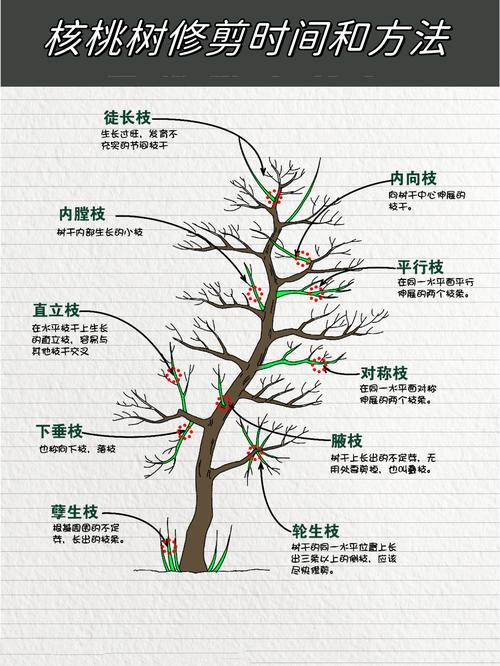
The walnut tree selection must conform to its growth properties. The walnuts are dry, the larvae branches thrive, and the adult trees and the old branches grow weak and easily descend. Therefore, walnut shapes should be selected for dry, e. G. Evacuation stratification, small coronal strangulation, hammer shape, etc。
In addition, the walnut branch has a larger angle and the side branch is easy to produce. Especially when the results are high, the branches fall. Therefore, walnut drying should give priority to species and planting density, which is higher than other tree species。
The late-resulting varieties should have a higher dry height than the earlier-result varieties. The planting density is lower than the planting density. Today, many walnuts are grown in pellets, and the new walnuts are grown, so it is more appropriate to have a dry height of 1 to 1. 2 metres. Trees that are already too dry or too low are adapted to the tree by cutting times。
Take care of the main branch
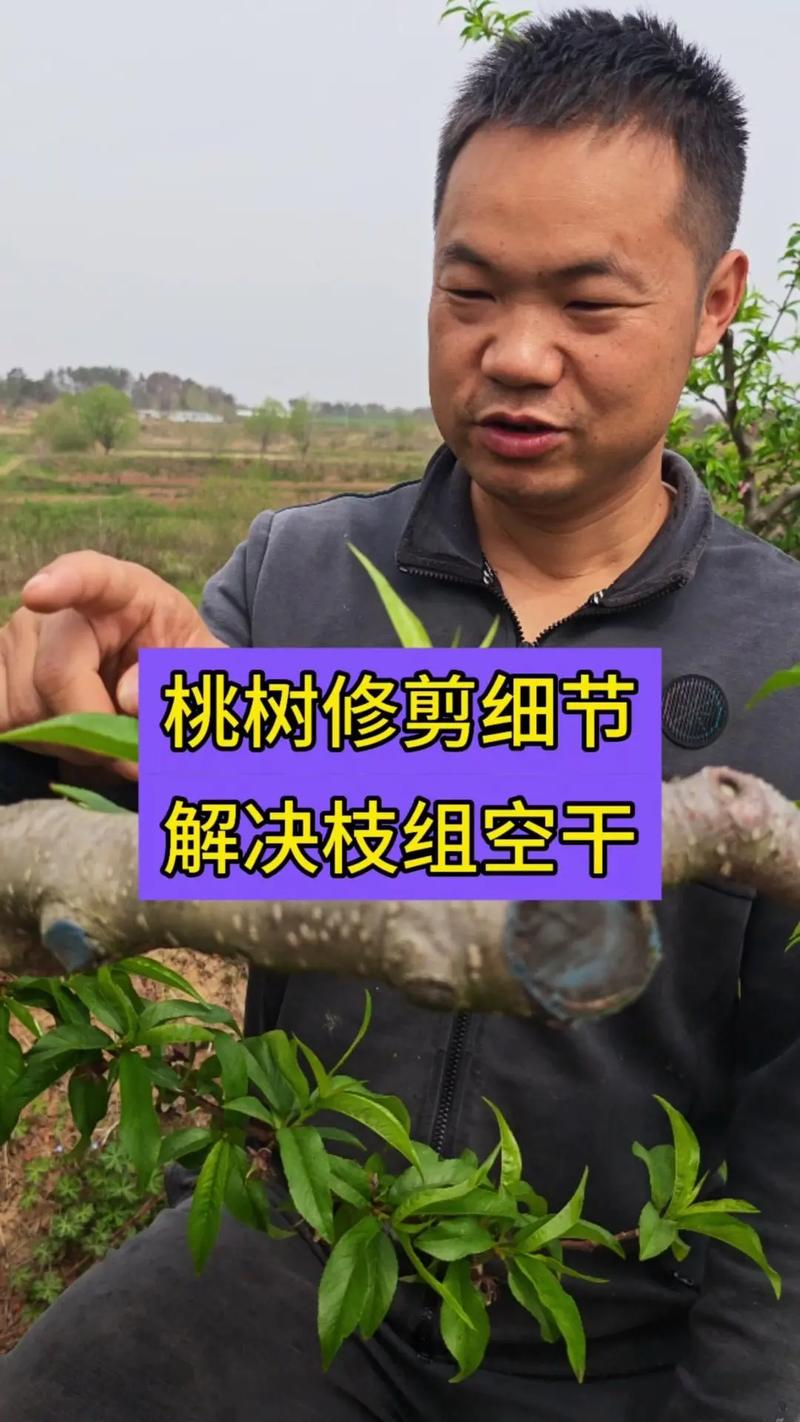
In the case of newly planted walnut trees, although their bodies do not germinate, spread leaves and post-cut wounds do not flow, it should be noted that their wounds do not heal and that they should be trimmed with fruit tree healing agents. In addition, the main branch of the walnut should be kept as little as possible during trim. The first layer of the base is best served by three branches, the second layer and above are best served by two branches, and it is more reasonable to have six to seven branches after they are formed。
There's a lot of talk about fast plastics. The central task of walnut management in the first year of planting is to find ways to improve the rate of survival, so that all new steps taken by its principals are retained and, to the extent possible, the area of leaves is increased to facilitate the storage of nutrients in branches, dry roots, roots and winters。
The walnut larvae thrives, starting in the second year and growing more in the following year than in the first year. Therefore, every effort is made during this period to use the new year as a biennial one. When new branches are grown up to 50 to 60 centimetres, the branches as a result must not be short-lived in order for them to produce early results。
We have to trim it
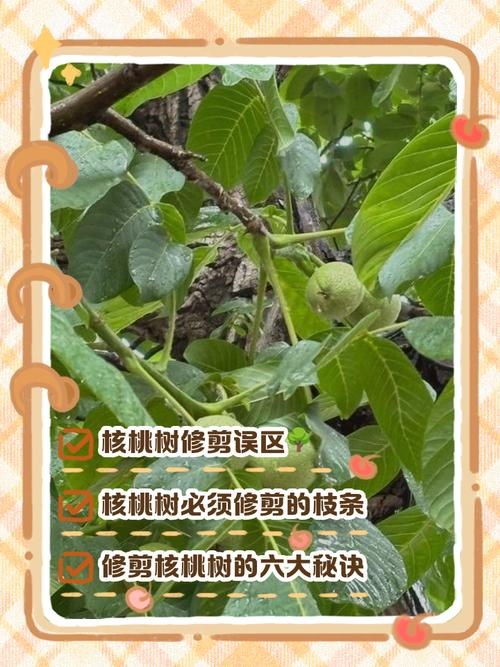
Unlike apple trees, walnuts cannot be trimmed during hibernation, otherwise there are injuries affecting the tree, and the wounds cannot heal or even cause the death of the plant. The correct period of cut-off is when, after the spring leaves, the adult tree is better trimmed before the later leaves are turned yellow, i. E. Between mid-october and early november of each year。
Adult trees, especially old walnut trees, should be trimmed and condensed to the periphery. Walnuts grow by branch, the branch grows weaker and results in reduced capacity and a marked increase in drying rates, so branch sizes should be minimized by year-to-year cutting. In the case of walnut trees that have not been trimmed for many years, the focus will be on the removal of over-heavy branches, the side branches on the main branches, and the removal of the walnuts from their parts。