Technical exploration of iron platinum platinum cultivation
Technical exploration of iron platinum platinum cultivation
Li xian
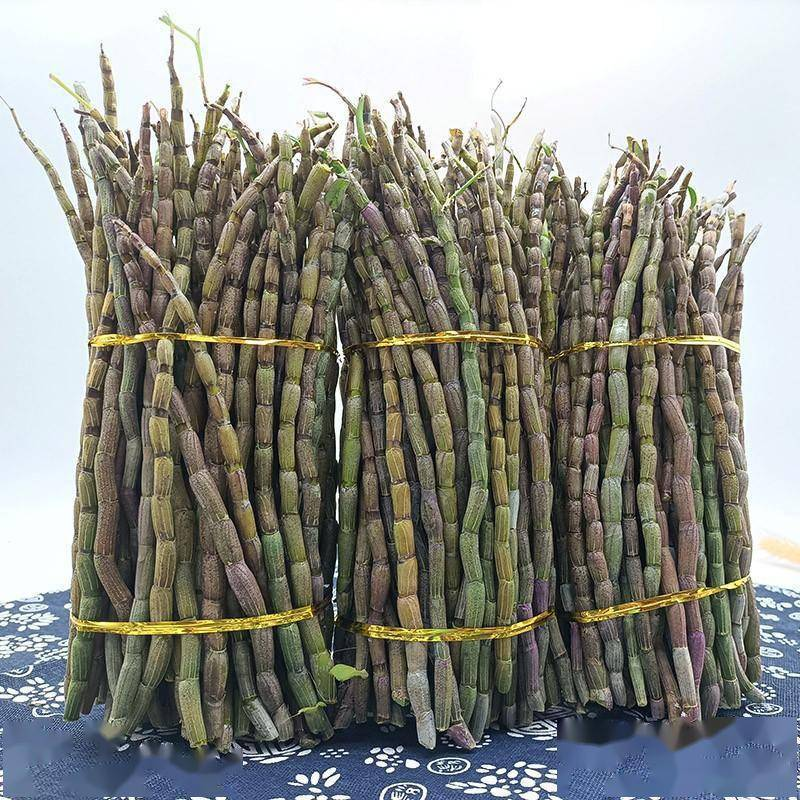
As a traditional medicine in our country, which has very high medicinal and economic value and which is classified as the third level of protection of wild medicinal species under the regulations for the conservation of wildlife resources, the provinces of yunnan, anhui, zhejiang, fujian, sichuan, chongqing and guangxi (autonomous region, municipality directly under the central government) are being cultivated on a large scale. Iron platinum has very strict requirements for the growing environment and is vulnerable to insects and insects during growth, leading to uncertainty about actual yields. An analysis of the optimization of iron platinum cultivation techniques, which is key to improving real production and achieving the desired economic benefits, is presented here。
1 selected sites for seeding
1. 1 cropland selection
In general, iron platinum is planted in an empty masonry bed in a high standard shed. During the construction of the high standard sheds, large skeletal skeletons were constructed using steel-stretched pipe materials, plastic-free sheeting was fixed on top of the sheds, shade-covered nets were laid at around 70 per cent, and water fertilizer integration systems were installed in the sheds to regulate the temperature and soil fertility of the surroundings. In setting up an empty bed of bamboo, a number of wooden rods with a diameter of not less than 10 cm are prepared, a wooden stick is assembled into a triangle tilted framework, 30 to 40 mm wide bamboo bars are laid inside the frame, and a 1. 5 cm gap is reserved for the adjacent boundary of bamboo and wood, and a base is laid on the masonry bed. If you choose to plant iron platinum in the field, the planting grounds need to meet the conditions of not less than -5°c in winter, half-enormous in the environment, average annual temperatures of 20-30°c, etc., and to clear the surrounding weeds and weeds。
1. 2 sapling readiness
As seedlings, which are produced by the relevant institutions, or are grown by artificially divided strains, as much as possible, are selected to grow, grow and grow over a period of between one and two years, to cut out the long roots, to keep the main and auxiliary troughs at around 60 mm and 40 mm, respectively, to remove dust stains from the roots and to decorate them and to cover the roots with materials such as wet mosses. When preparing a bottle of iron and stone, the staff member should remove the bottle plug at the first time and place the seedling in a cool air-breathing environment in order to discharge the excess water in the bottle. After the leaf has dried up, 1,000 times the amount of methyl tobuzin is sprayed on the leaf, while regular water is sprayed on the blades to keep them wet, and the surface is repeatedly washed with adhesive nutrients, pending the pre-treatment of the bottled seed。
2 planting matrix preparation
Iron platinum is highly demanding in terms of the performance characteristics of the planting matrix, which requires the preparation of a well-ventilated and water-preserving matrix with a wide range of sources and easy access to raw materials to control its planting costs. In general, the main selection of water moss, coconut skins, wood crumbs, peanut shells and wood blocks as planting matrices, which break them into particles of 2 to 3 cm in particle sizes, such as “triple-plastic” planting matrices using three types of materials, such as shredded bark, broken leaves and broken red bricks, will be limited in proportion to 4. At the same time, the matrix raw materials are pre-treated, the water used for the scavenging of the tree bark is re-washed and re-soft for 2 to 3 months, and the foliage leaves are cut into 12 cm and fermented for 2 to 3 months to form organic fertilizers, and the broken red bricks are broken into more than angular granulates, so that the iron platinum is attached to the broken red bricks. The use of maize straws, sawdusts, high-alkali stones, animal manure fertilizers, etc. Is prohibited in preparation for planting. For example, when maize straw is used as a planting matrix, the high sugar content of such materials tends to breed pests and pests, while when fine sawdusts are inserted in the matrix, it tends to follow the occurrence of base plate knots that reduce the aerobic performance of the matrix layer。
3 cultivation methods
In the provinces of yunnan, zhejiang and henan, where cultivation takes place, appropriate methods of cultivation need to be selected, taking into account the significant differences in climatic conditions and environmental quality between different regions. These methods include bed planting, ground planting, empty shelf cultivation, wild imitation and ecological cultivation。
3. 1 bed plant
The beds are mostly used in areas with high summer temperatures and high air humidity. In the application of the bed-planting method, a seedbed of 0. 4 to 0. 8 m must be built in advance of the ground, with a matrix laid in the bed, and iron pebbles planted in the matrix。
3. 2 land plantations
Much of the land is planted in areas with relatively low winter temperatures or year-round temperatures, and ground levelling is done, with specific sizes of planting beds made directly on the ground, with water filters and substrates laid over the bed, and iron plumes planted。
3. 3 stereostering
Space-planting is mostly used in areas where the climate environment is not suitable for the natural growth of iron platinum. For specific applications, high-standard sheds must be built on site to create an environment suitable for the growth of iron platinum and to create an empty shelf bed for the planting of iron platinum on the floor. This method is used mainly to plant iron platinum, which has been in production for longer than 10 months and is within 25 cm, taking into account both product quality and production。
3. 4 modelling wild cultivation
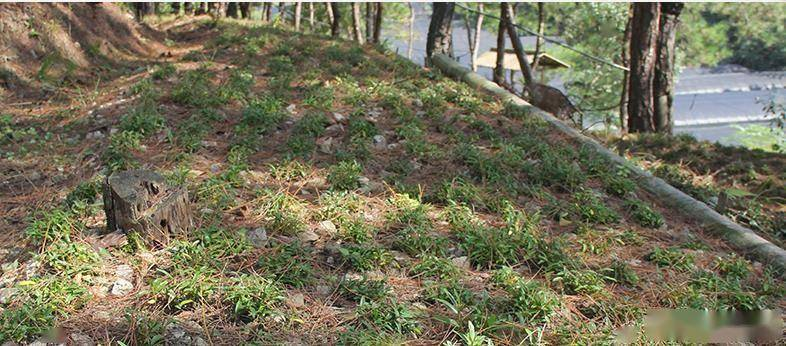
Modelling wild plants means planting three to six months of iron platinum on rocks or trees far from urban areas, in direct contact with the surrounding ecological environment. For example, in the form of tree planting, broad leaves with rough, robust and moss-growing barks are selected, local trunk barks are removed, cattle dung and mud blends are plastered on the surface, iron platinum is planted in the parts of the broad leaf tree, and sequestered by materials such as mackerel。
3. 5 ecoculture
Eco-planting applies to areas where climatic conditions meet the natural growth of iron platinum and the environmental quality of iron platinum, which is established directly on trees or stones, followed by no artificial intervention and left for natural growth. Based on actual growth, the heavy metal content and the value of the platinum platinum have been significantly reduced and the value of the platinum platinum has increased significantly, but the growth cycle has been slow, generally for 18 months and more, and most plume are within 20 cm length。
4. Care management
In order to ensure the healthy growth of the iron platinum and to avoid diseases caused by external environmental effects, care must be performed during planting in the areas of moisture, light, temperature and humidity regulation, fertilization and artificial pollination. 1) in the field of water management, the new transfer of platinum platinum is sensitive to moisture, and if water is scarce or overdrive, problems of slow growth or bad root will arise, thus requiring watering once the new roots have begun to develop, and the first watering will be done in accordance with the principle of dry-wetting, with a second watering operation to follow the whitening of the matrix. At the same time, taking into account variations in temperature and air moisture from season to season, water-watering programmes should be developed for seasons, such as appropriate reduction in water-watering during winter, increased water-watering during summer and increased frequency. 2) in the area of light regulation, the installation of transparent plastic film and shade net at the top of the shed to ensure natural light can be injected into the shed environment and to control shades by adjusting the number of shaded net. In general, the intensity of light in the sheds is kept at 6,000 to 15,000 lx and in the sheds at 10,000 to 30,000 lx。
5 types of pests and their control
5. 1 physically transmitted diseases
5. 1. 1 yellow leaf
Iron platinum yellow leaf diseases are common in the winter year, as evidenced by the large number of yellow leaves planted, and yellow leaves formed normal under the capped plants, not yellow leaf diseases. Among the causes of this disease are over- and in-time water control, such as the need for strict control of the planting of water in areas where iron platinum is planted in less rain-dry climates, and the occurrence of yellow leaf disease due to the planting of water over-alignment and loss of water if the frequency and the quantity of single showers are unreasonable. For this type of disease, the air moisture of the cultured environment needs to be kept at around 80 per cent, with regular foliage refilling and strategizing operations, synchronized measurements of the water content of the matrix, and adjustments to the frequency and single rinsing based on measurements。
5. 1. 2 decay
Iron platinum atrophy is common in july-august of each year, when environmental temperatures are relatively high and above the base temperature. The evaporation rate of base water, iron platinum foliage is increasing at high temperatures, and actual water evaporation is much higher than average, resulting in leaf loss. To prevent atrophy, mechanical equipment, such as air conditioning, is required to control the ambient temperature in the shed at 25-30°c and to compensate for excessive water evaporation by micro-jet where necessary。
5. 1. 3 rotation root
The root causes are common in june-october of each year, when most of the country is in the midst of a rainy season, and when rainfall increases, air moisture increases and the water content of the matrix increases, which in turn leads to the immersion of the platinum into water and to the emergence of a bad root. At the same time, during the management of iron-pry platinum rearing, there is also a risk of a disease of rot in cases where fertilization is exceeded, soil (matrix) is not decompressed in a timely manner, matrix plates, and water levels are exceeded. In order to prevent the occurrence of rote diseases, it is necessary to prepare for the rain before the onset of the rainy season, to control the humidity of the air in the shed through the installation of dehumidifiers in the sheds, and, in the case of cultivation, imitation of the wild, ground-planting, etc., to build a plastic shelter on the top of the pebbles, and to dig out drains and drains around them。
At the same time, in the light of the growth of iron platinum and the environment on the ground, care programmes have been rationalized, the optimal values of parameters such as watering, fertilization and so forth have been calculated, the base layer has been regularly defunct and the matrix sheet has been processed in a timely manner。
5. 2 reasonable diseases
5. 2. 1 black spots
Black spots are common in march-may of each year. There are tan spots of different sizes of the leaves, which, over time, continue to expand in size and gradually form black-coloured spots with clear contours and slight downslides, which eventually spread to the whole leaf, with serious consequences for the falling of the leaves. Black spots occur because of the growth of pathogens and their spread to the surroundings as a result of the currents, and therefore mainly in the form of regional spreads, which have an impact on a large number of plantations in the surrounding areas. At present, there is a widespread chemical control of black spots, with 1,000 times the amount of methyl tobutine sprayed on leaves from 7 to 10 d, or 10 times the amount of phenyl ether acetate dispersed particles sprayed on leaves from 15 d. Depending on the conditions, different kinds of agents need to be used interchangeably to avoid the associated pathogens forming resistance to individual agents。
5. 2. 2 cardiac corruption
Cardiac decay is common in the annual rainy season, with new leaf blades having a high incidence of infection, initially reflected in the formation of small, clearly bordered purple humid spots, which continue to increase over time, forming black blocks in the centre, perceiving water when crushed by external force, and eventually resulting in blackening and even decaying leaves. Cardiosis is due to the exposure of the platinum to tobacco disease, which, under high-temperature and wet conditions, is highly active and rapidly proliferating, spreading to the surroundings through the matrix, running water, etc. In order to prevent the occurrence of cardiac depravity, ventilation should be carried out and stable environmental conditions maintained to the extent possible, as a means of inhibiting the activity of pathogens and avoiding the occurrence of large areas of heart depravity. At the same time, chemical control measures are used to spray 50% of the platinum on the leaves and 300 times the fluid. In the case of sick iron platinum, the cutting of sick leaves and the spraying of 1% of the remaining leaves in bordeaux has the effect of preventing the spread of the disease。
5. 3 pests
5. 3. 1 shellworms
During the growth of iron platinum, the common insect species are dusted and shielded, and these are common in february-september of each year. In the case of the shield, for example, the mouth is punctured in the root of the platinum or in the blades, which continue to suck juice, slows the growth of the platinum, destroys the chlorophyll or causes other diseases, such as coal pollution, causing the death of the platinum in serious cases. For shell pests, the response needs to be selected according to the density of the insect and the extent of the impact. For example, in cases where the infestation of the insect is excessive or the fall of the iron pebble leaves, the strain must be completely destroyed so as to avoid the spread of residual shellworms on the strain to the surroundings; and when the infestation level is relatively small, 25% of the pure emulsifiable cream must be sprayed on the leaves every 7 d, 1,000 times more, for one month。
5. 3. 2 aphids
Aphids are common in january-march of each year, and the type of attack on the platinum is more similar to that on the midshells, where the aphids puncture their mouths into leaves, buds, flowers, etc., and constantly extracts the nutrients of the leaves, as evidenced by the slow growth of the pelicans, the marked transformation of the flowers and the occurrence of coal contamination as a result of the continuous distribution of the nematode. In order to prevent aphid problems, there is a need for early ventilation and moisture management, regular lifting of the upper plastic film and shade net to speed up air circulation, spraying of water during drying of the environment and wetting, and inhibiting aphid growth and erosion by improving the quality of iron and platinum cultivation. At the same time, for aphids that have already been eroded by aphids, seven percent of the pepper spray is sprayed in leaves and flowers。
5. 3. 3 slashed night moths
Slashed night moths, commonly found in february-september of each year, are muscular pests that gnaw the sprouts and blades of iron platinum at night, with a focus on the distribution of larvae in the planting area with dark browned oranges or larvae with brown and white stripes on the front wing. In the case of slashed night moths, physical control can be used to avoid adverse effects of chemical agents on the local ecological environment and the growth of iron and stone. In general, the choice is made to install insect-resistant nets around the sheds, planting beds or lighting lamps to prevent tilted night moths from entering and driving them away from the cultivated areas。
6 concluding remarks
In order to achieve the goal of high production of iron platinum, the health of our iron platinum cultivation industry is promoted through the provision of quality products of higher pharmaceutical value. Staff need to increase their focus on high-yielding cultivation techniques and pest control, to gain a full understanding of the technical elements, to strictly control the quality of the chain-planting operations and to respond to the symptoms and symptoms of typical pests and diseases and to treat them accordingly。