


Timing
Tea mushrooms are grown in springs and autumns on a seasonal basis. In the spring, suitable temperature protection is required for the filament culture phase, which increases the temperature of the sub-entity in the later stages of its growth, is fast growing, is smaller in size, is relatively low in quality and is vulnerable to pests; and in the autumn, after vaccination, the filament culture is more appropriate. Sub-entities formed at lower temperatures are larger, better-quality, less contaminated, more biotransformation and more economically efficient. Under natural climatic conditions, the choice is to plant mushrooms in the 20°c - 25°c season, which are usually produced in february - march in the spring of far-ann county, after june, after september - november and after april。
Ii. Cultivation methods
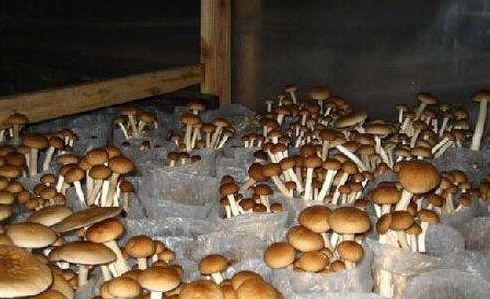
Cultivation is either indoor or outdoor, and is organized in the form of layered bags, walled bags and bed-covered earth. Tea mushrooms are grown using 15 x 30 x 0. 004 cm polyethylene bags. Indoor bags can be planted in greenhouses, mushroom houses and empty houses, and spontaneous fungus to mushrooms are done in the same premises. Indoor bags of small ambient climates are easily man-made, manageable, accessible, high-quality, productive and suitable for plant cultivation. Local choice is available。
Iii. Institutional materials
All by-products containing cellulose and wood, teacuit powder, wood crumbs, corn cores, cotton seed shells, etc., can produce tea mushrooms, but the fragrance, colour and medicinal value of products produced with tea seed shells and tea seed cakes added to the culture are not less natural and special. Trees with broad leaves are the best, with higher production of tea mushrooms and faster growth of mycelium. Whichever type of wood crumb is used is better than fresh, and wood crumbs are stacked outdoors, with long periods of sun and rain, so that resins in wood crumbs are volatilized and hazardous substances are completely eliminated. Scrumbs without piles of wood are grown with slow growth and low yields. The formula is enriched in cotton seed shells, with high proteins and fat content, and has a better culture base, which can almost double the yield。
Iv. Nuclear production
Formula 1: 9% wood crumbs, 70% cotton seed shell, 20% gill, l% plaster
Formula 2: 89 per cent cotton seedshell, 8 per cent gill, 2 per cent corn powder, 1 per cent lime powder
Formula 3: 30 per cent wood crumbs, 30 per cent cotton seed shells, 20 per cent maize cores, 19 per cent beryllium or rice mills and 1 per cent plaster powder
These formulations, which contain about 60 per cent of water, naturally ph, plus 10 per cent of tea seed powder, can increase production appropriately。
V. Sterilization of mushroom houses
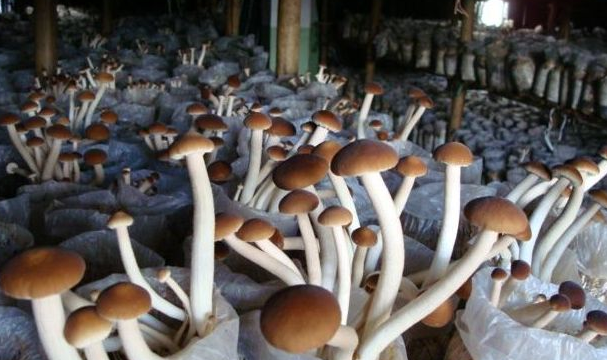
The mushroom shed requires clean, dry, ventilated, light-shielding, distance from workshops, warehouses and animal and livestock complexes, with a good temperature and lighting. Pre-plantation must be preceded by a full-scale insecticidal and disinfection, first by cleaning and then spraying insecticides, and then three to five days later by fumigation with formaldehyde in order to prevent bacteria from breeding. During the period of training, 1 disinfection is performed every 1 week。
Vi. Combination, fermentation, bagging, sterilization
Combination
According to the selected plant formulations, various raw materials are to be taken and the wood, skin, corn powder, plaster or lime powder is to be spread in turn over the cotton seed casings evenly (the cotton seed shell needs to be pre-wetted) and then added to the required water, bringing the amount of water to about 60 per cent, and the method of detecting the water content is to apply hand-strangling to the culture, with water marks and no drops on the finger, and stretching the finger into clusters, falling in the ground and dispersing the material, indicating that the material is dry. Combination requirements: (1) aim for "triple homogeneity " , i. E. Even mix of primary and secondary materials, even of dry and wet, even of acid alkalinity. (2) the clear-day water evaporation is large and should be increased with water; the cloudy air is so wet that the moisture is not evaporable that less water should be added. (3) the matrix which is dissolved in water shall be soluble in water, e. G. Potassium phosphate, magnesium sulphate。
2. Cultivation of culture
Cultivation without fermentation, slow growth of mycorders, and fermentation can increase the growth rate and pollution rates of myctics. The method is blending by formula, with a water content of about 65 per cent, evenly balanced, holding a culture by hand, with water drops between fingers but not drops. The build-up is best carried out on the concrete floor, with a hole in the centre of the build-up, with a few paddy covers on it, and a brick-centric build-up of the culture materials into a pile of 100 to 120 centimetres high and 150 centimetres wide, a flat surface of the material, and a wooden rod to the middle of the brick hole to prevent anaerobic fermentation. When plastic membranes are covered and the temperature of the observation material reaches 60°c, the second day can be turned over and the water content can again be adjusted at about 65%. A further day after the temperature is 60°c can be filled in bulk. The pile is fermented for about 7 to 8 days, with flexibility depending on the fermentation。
Packing
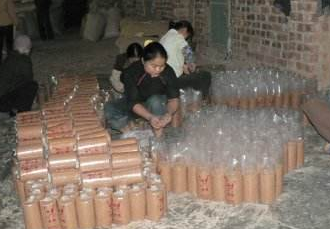
When prepared without fermented nutrients, bags should be packed immediately in order to prevent acid deterioration and heat. 15 x 30 x 0. 005 cm low pressure polyethylene bags (e. G. Polypropylene selected for high-pressure sterilization) are selected to be assembled by hand or by bagging machines, which will be loosely and coherently fitted, the fabric will be flattened, the material will be at an altitude of 20 cm or so, and plastic wired into the pocket. When packed, each bag weighs about 1. 6-1. 8 pounds wet。
Beware:
(1) if it is critical, the bag should be packed in a way that the contents of the bag are solid and that the surface is flat. If there is a sense of dimplement in the hand grab or if there is a fracture in the bag, the material is too loose. It's too loose, and it's a series of problems:
One is that the bag is deformed, the bag and the material are emptied, and that the inoculation can result in a difference in internal and external pressure of the thin film, and the fungus can enter the bag with the current and cause pollution
Second is the difficulty of maintaining the moisture of the fungus out of the bag
Third, mushrooms will grow from the side of the sack, causing difficulties in picking mushrooms。
(2) when puncture, remove the culture attached to the pocket, and close to it with plastic wires to bind the pocket。
Sterilization
Once the bag is completed, it must enter the stove and there should be space between the bags and around them to facilitate the flow of steam. (b) commence a rapid rise in the temperature of the fire and raise the temperature to about 90°c within four to six hours, at which point the vent is to be opened and the cooling in the stove is to be released until a very hot heat is produced. The recording of time starts when the temperature continues to rise up to 100 °c and remains at 100 °c for more than 14 hours, allowing for a cease-fire and a suffocation of the night. At the end of the sterilization, the temperature in the pot is reduced to 60-70°c before the heat handling bag reaches the inoculation room. The plastic bags are softened by heat and are punctured by wood crumbs, so they are carried lightly. The infection of the tea mushrooms is less resistant to impurity, and therefore the eradication of the fungus must be complete。
Vii. Inoculation
To be inoculated at temperatures below 30°c. While the temperature of spring planting is low and generally inoculated during the day, higher temperatures during autumn plantings are used to inoculate early and at night. Inoculation kits or inoculation rooms are required in advance, with a pack of aerosols fumigated per cubic metre, a group of two persons being vaccinated, bags are unloaded and each bag is bound to a fungi. As far as possible, the strains are in block form and are not broken to prevent death. The selected seedlings are thick, strong, disease-free, 10 days from the age of the fungus, and then inoculated when the fungus is fertilized。
Development
The inoculation bag is to be placed on an indoor shelf for 45-55 days at about 25°c, and the fuse is to be fully distributed. During the fungi, the interior stays as dark as possible. The main operations during this period were:
1. Temperature and ventilation control
The management focus is on promoting the growth and rapid spread of mycelitis so that it can be covered as quickly as possible in order to reduce pollution rates. The bacteria are in the recovery stage within three days of the infection, so there is no need to enter the culture room within three days, and after three days the bacteria begin to grow and mycelitis is designed to feed. It is best to control temperature between 20 and 26°c during the growth phase of the fungus, to cover the light and to ventilate. The operation is based on weather, room temperature and the growth dynamics of myctic silks, which are ventilated at 2-3 p. M. Each day at temperatures below 20°c; at morning and evenings, at morning and evenings, at one hour at a time, when temperatures are above 26°c, when doors and windows are closed during the day and open at night; and at 20 to 26°c, at noon, the temperature is increased from one hour per day to two hours per day. Winds open the doors and windows so that the sun is not projected into the culture room and the windows and doors are covered with shades。
2. Inspection and stacking
When the fungus cover starts to flourish and the amount of breath increases, the temperature of the fungus rises. This is done by compressing the temperature of the stacks, preventing the burning of the fungus, by compressing the speed of the upper and lower fungus, and by checking the fungus by combining them. Recycle is generally required every 20 days or so, and the fungus process is conducted three times。
3. Rat and pest prevention
A culture room must be protected from rats, even if only one mouse is in danger, which can create an impossible situation. In the case of a bacterium bag, there will be chain aroma and a large area of infection. There is no room for complacency. In addition, the smell of alcohol phenol when the fungus is eaten leads to insects, so it has to be prevented in advance。
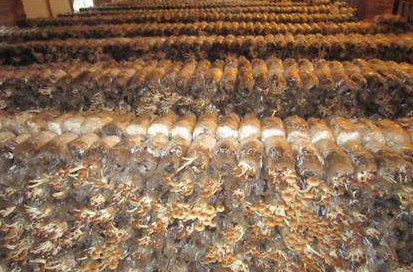
Ix. Shroom management
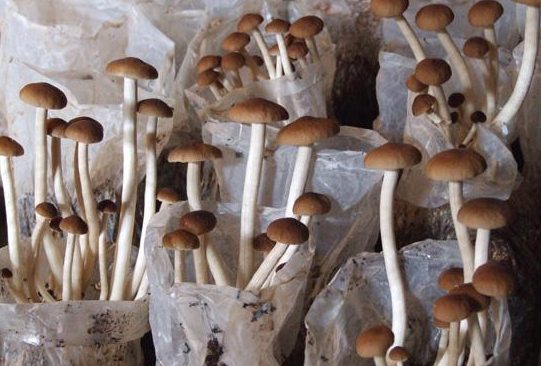
When the bag is full of fungi, it can be moved into a pre-sterilized field shed at 1,600-2000 degrees, or indoors, where the mushroom drums can be washed with 0. 5 per cent pp liquid to clean the dust and bacteria on the surface of the bag, dried with blades to remove about an inch of small mouths at the top of the inoculation, i. E., the fungus bag, covering the thin membranes and keeping the temperature at 20-28°c; and around c, where the relative air humidity of 85 to 90 per cent is within 85 to 90 per cent and cannot be sprayed directly for 10 days after the opening, so that the fungus is not infected, after five days the mouth is opened, it is wet enough to pass through high, early and late, generally 10 to 15 minutes, wet over and low enough to increase the humidity of the water spray. The filament changes from nutritional growth to the colour of the fabric at the reproductive stage, with yellow water at the beginning and dark brown spots on the surface. There was then a small mushroomlet, which usually began to come out within 15-20 days after the bag was opened, provided that the temperature was suitable. Collection from mushrooms usually takes 5-7 days. The first phase of mushrooming does not require excessive spraying. The first round of mushrooms should stop spraying for 5-6 days so that the fungus can recover and accumulate nutrients for the next round. After 15 days, the temperature increases gradually to the second stage of mushroom growth, with an interval of approximately 5-15 days. The third stage of mushrooms will be produced later, following the above management method, and the third stage of mushrooms will be taken, and if the bag is dry and water is lost, a bag of water will be sprayed, humidity added and a second stage of mushrooms will be produced。



